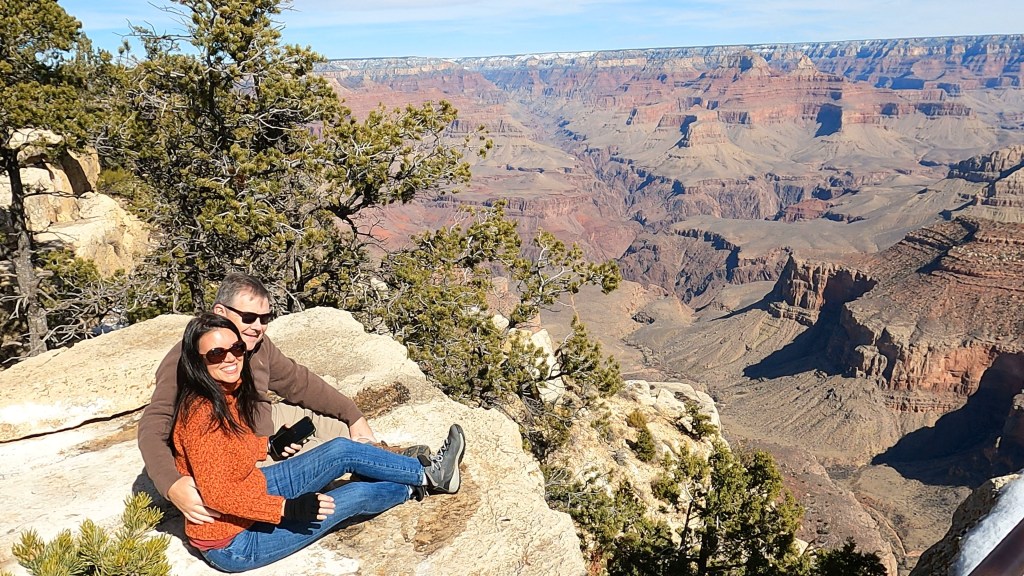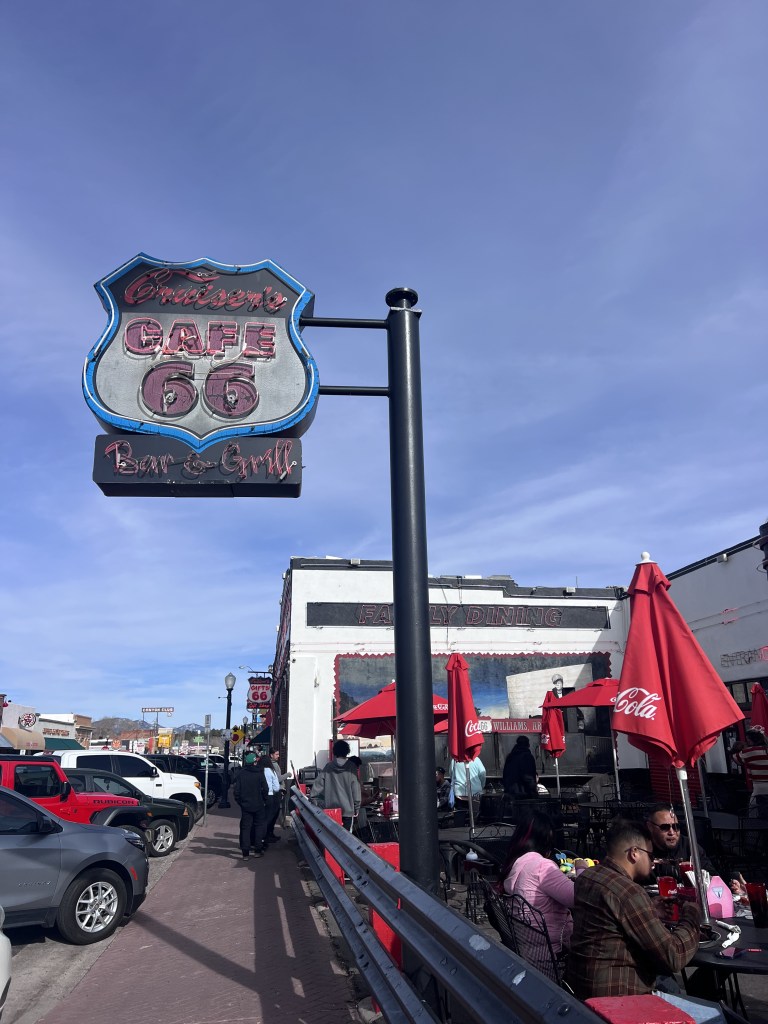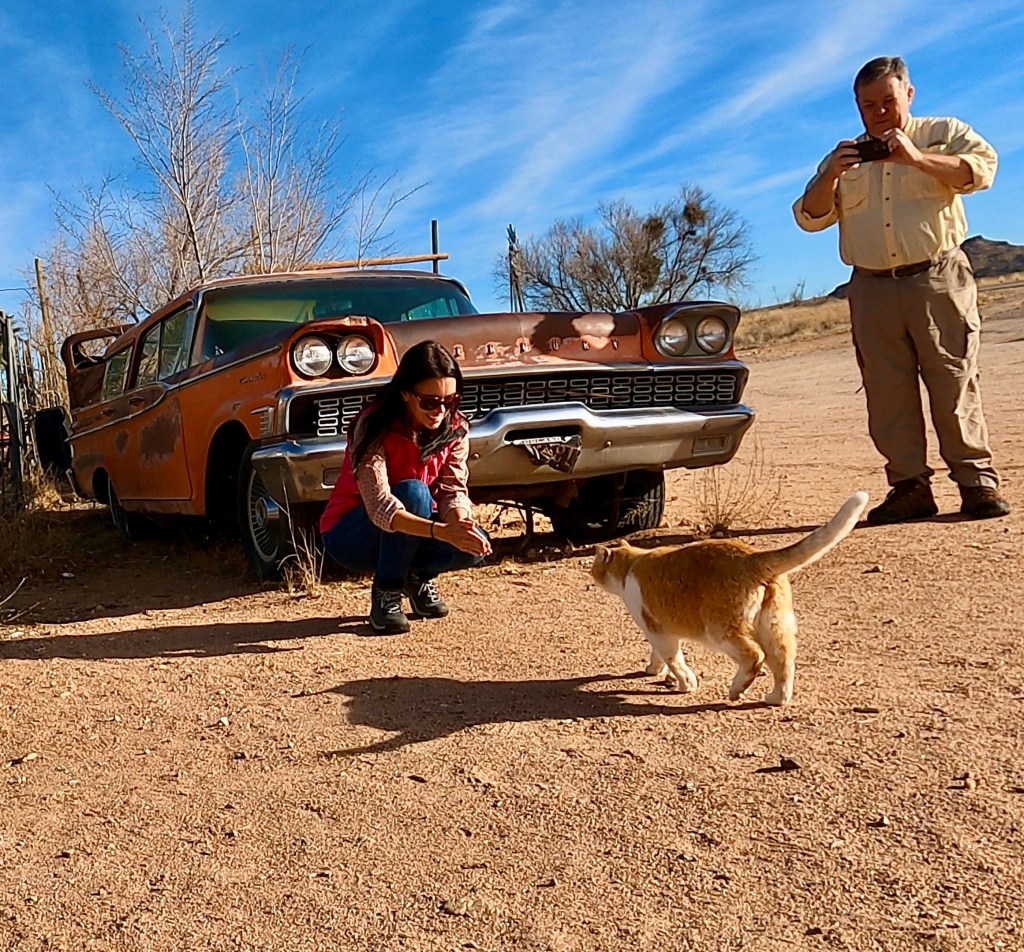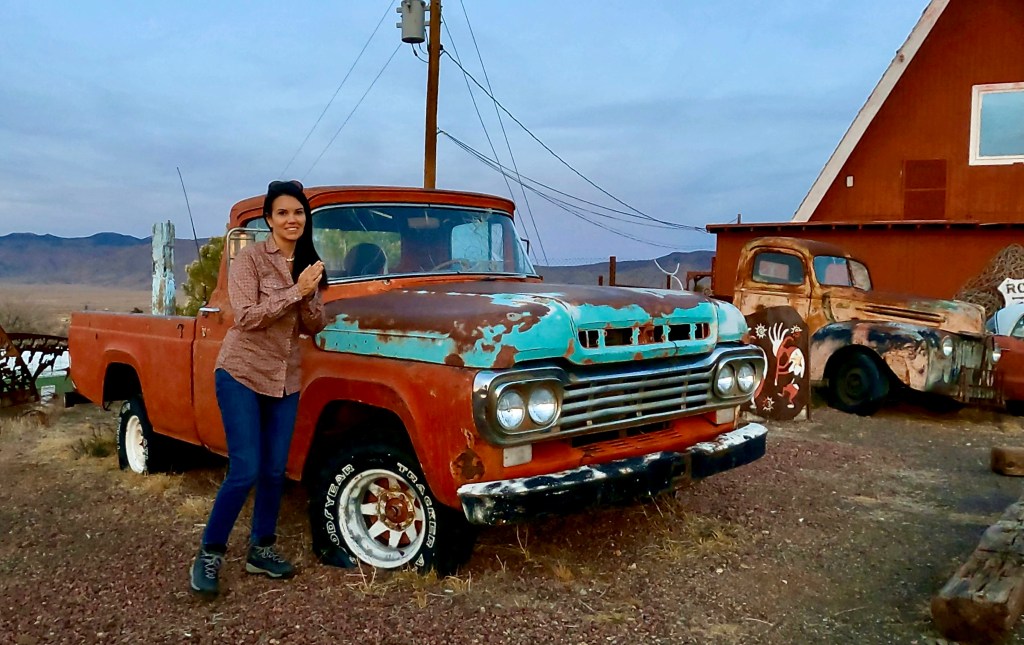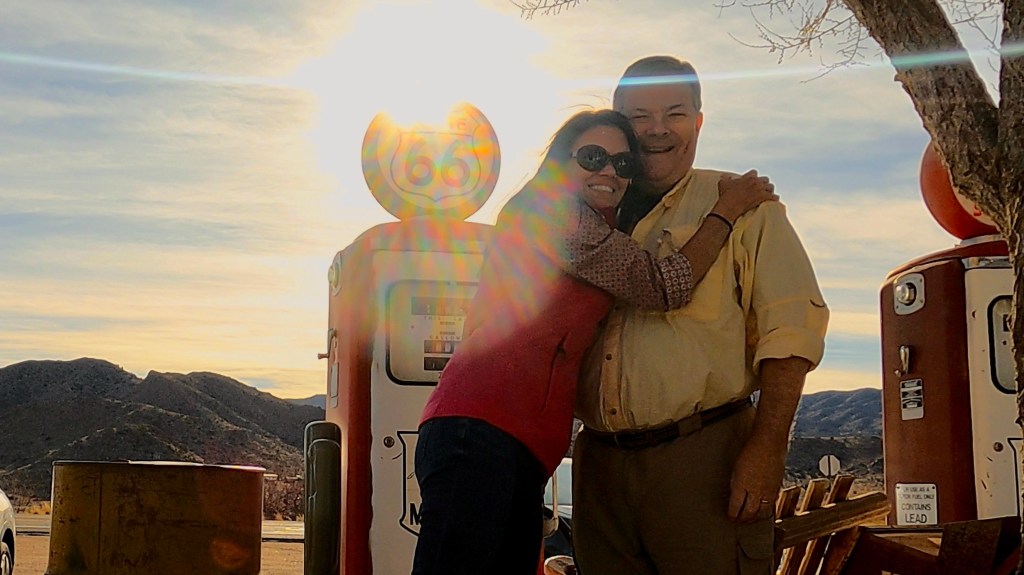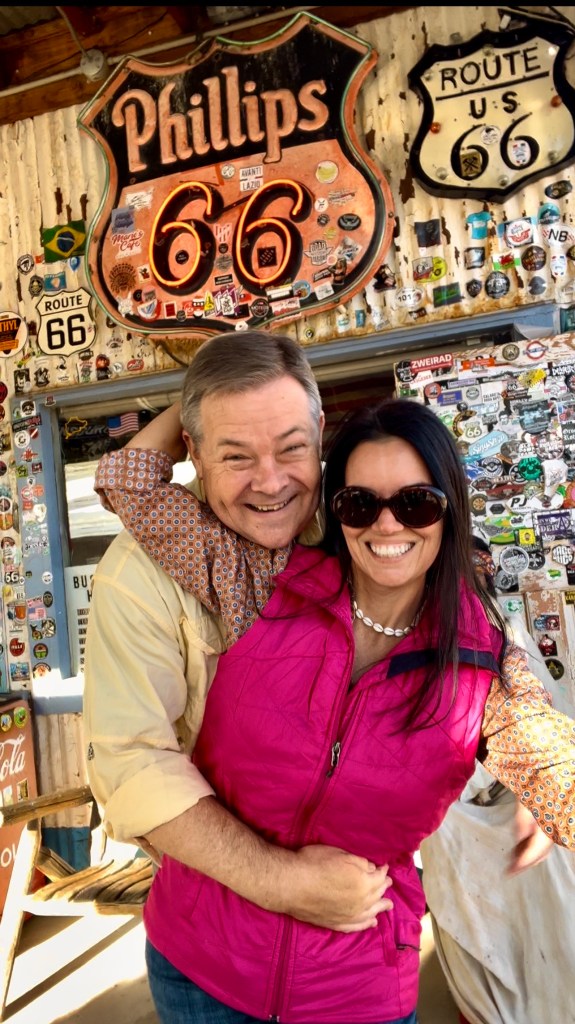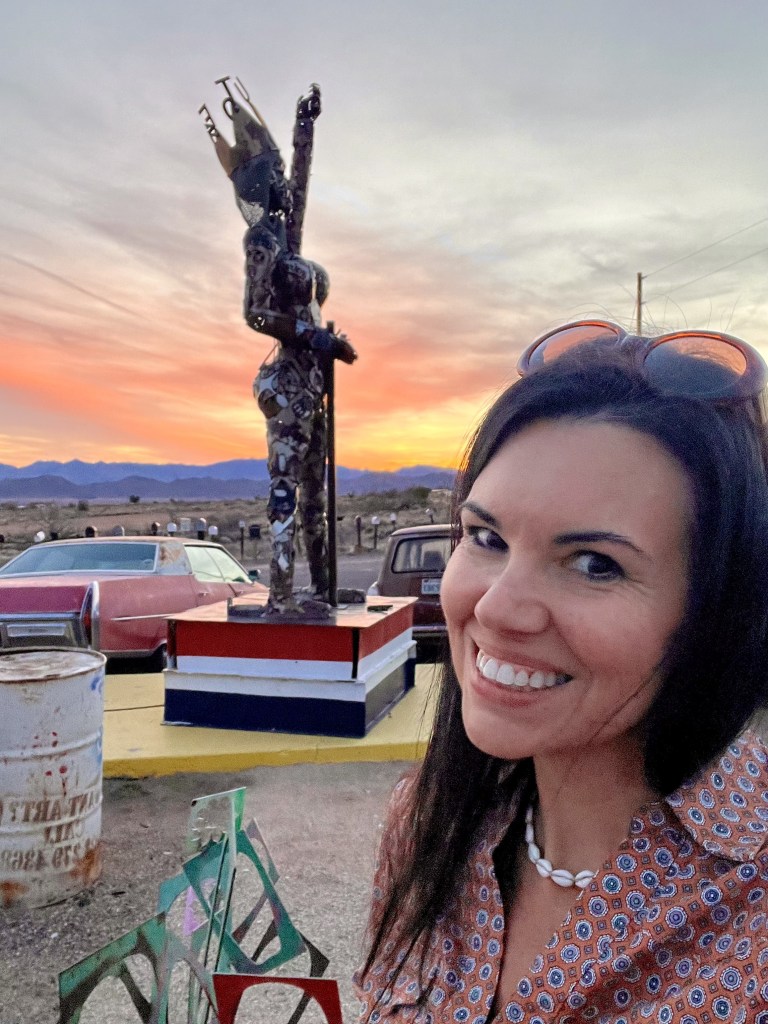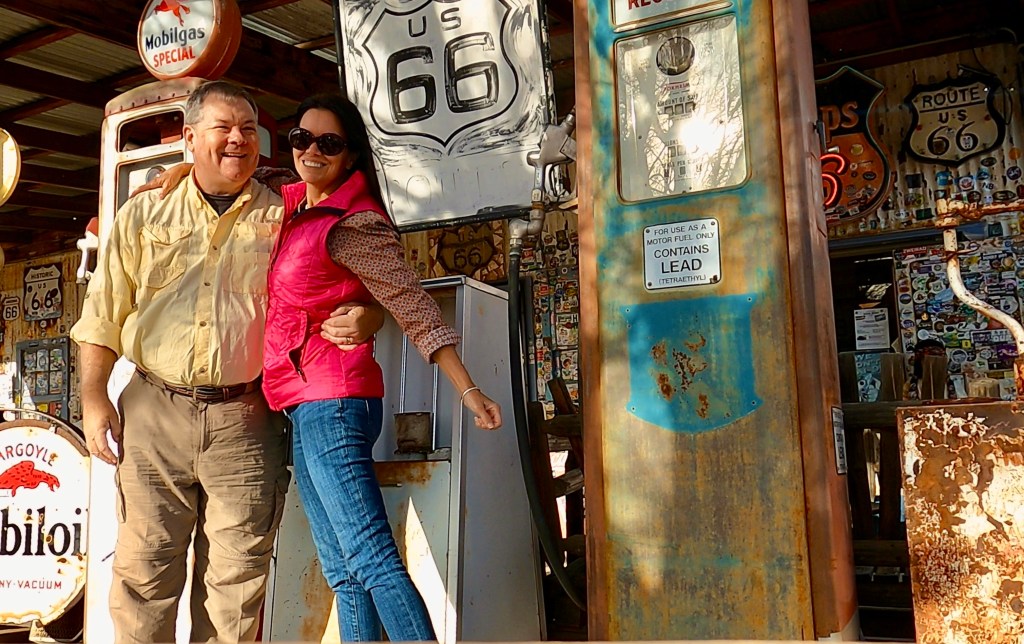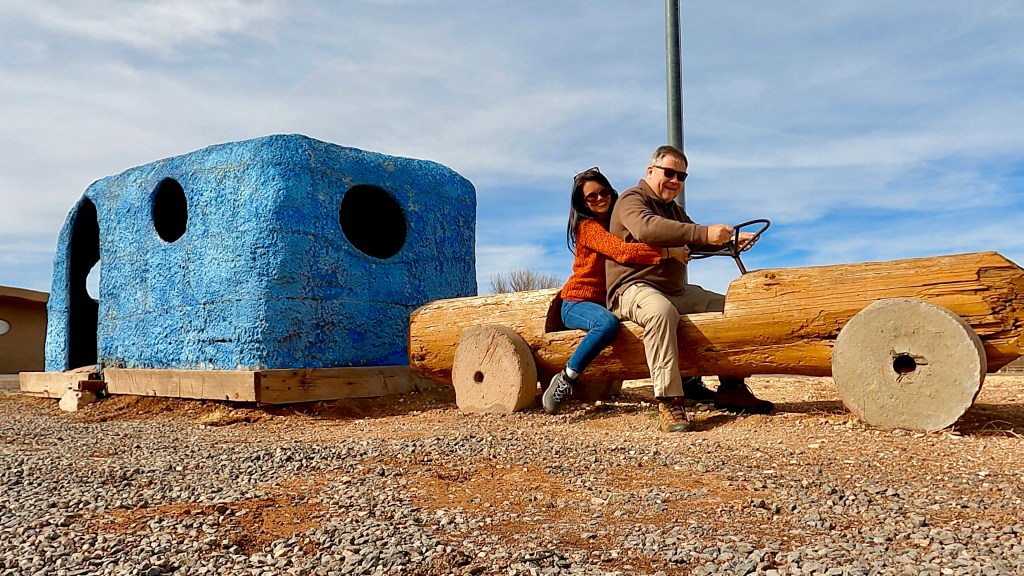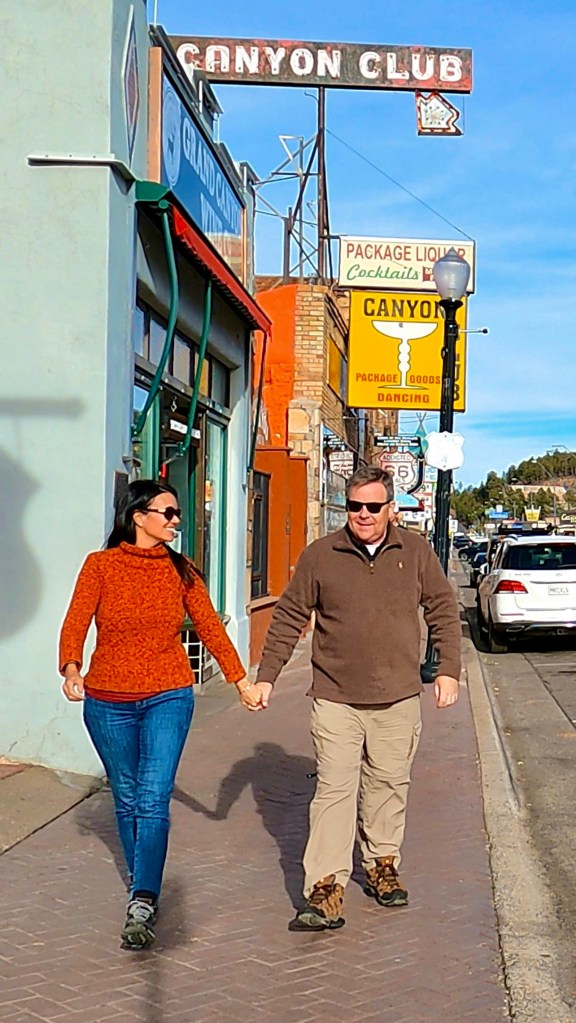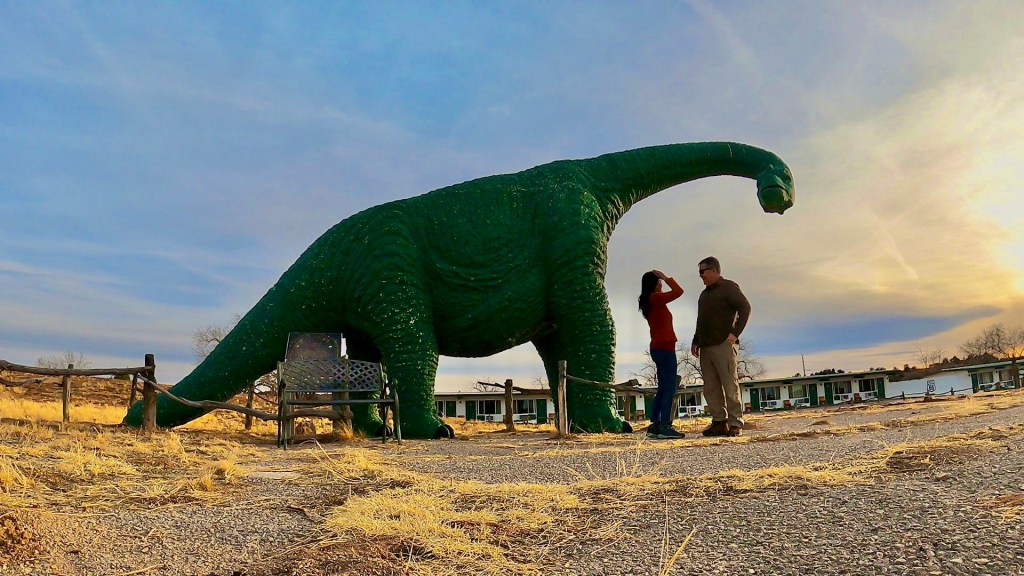
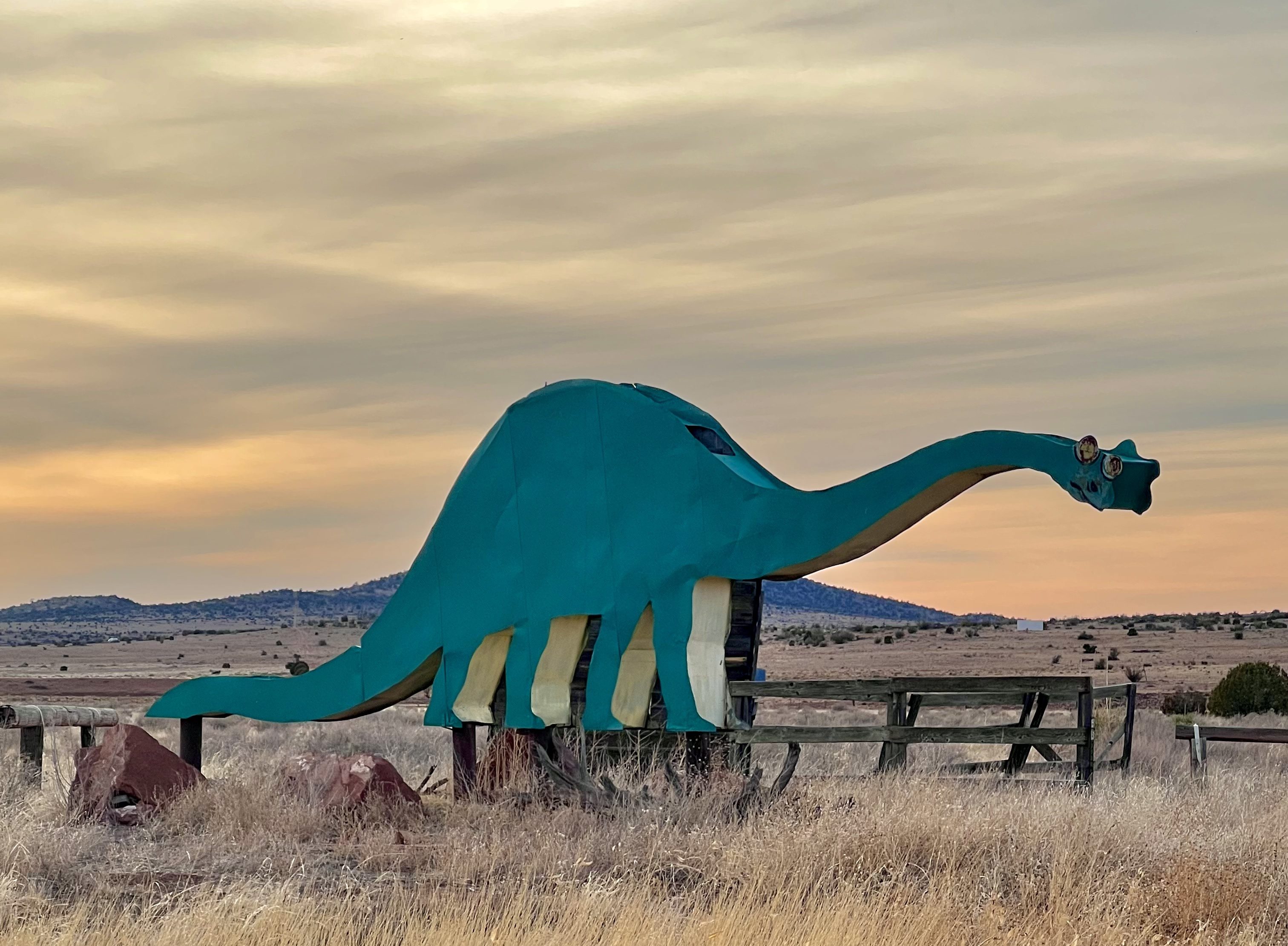
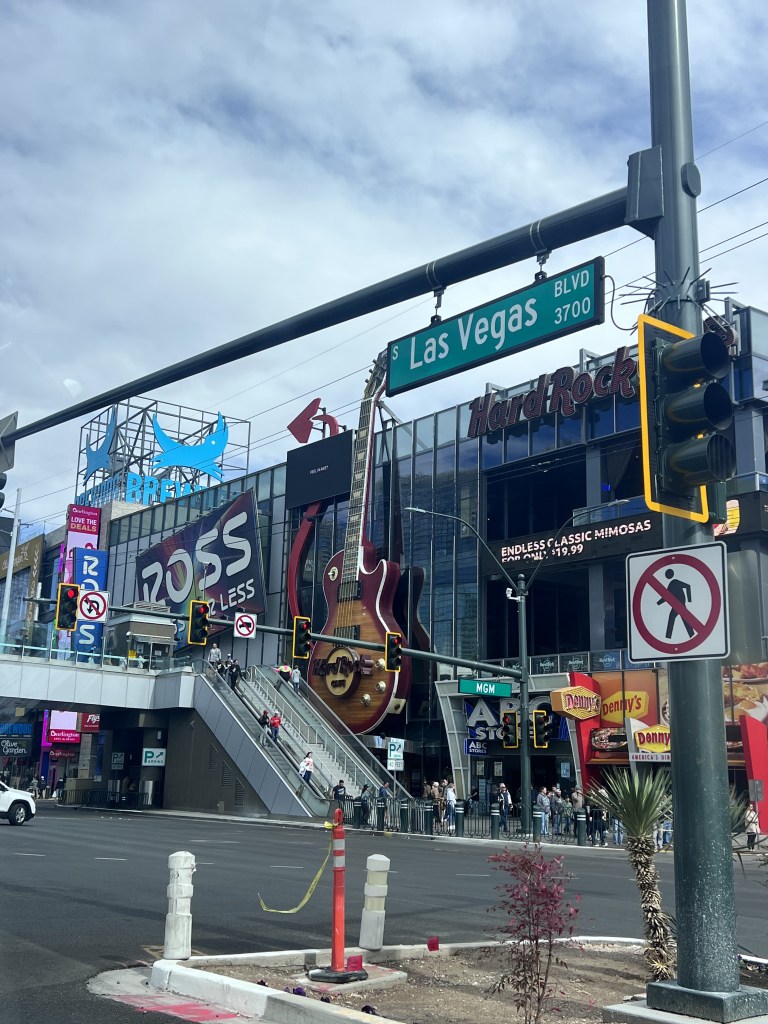
• I am not a Las Vegas person. The older I get the more I want nature. And calm. and quiet. No shade to the people who like Vegas, but the obvious need for continual maintenance on all the man-made structures and amenities, coupled with the sense that I’m surrounded by many people who are on the verge of making regrettable decisions, puts me on edge. By contrast, nature and the wide open road relax me.
    How lucky that the South Rim of the Grand Canyon is a few hours’ drive from Vegas and Route 66 is one way to get there!

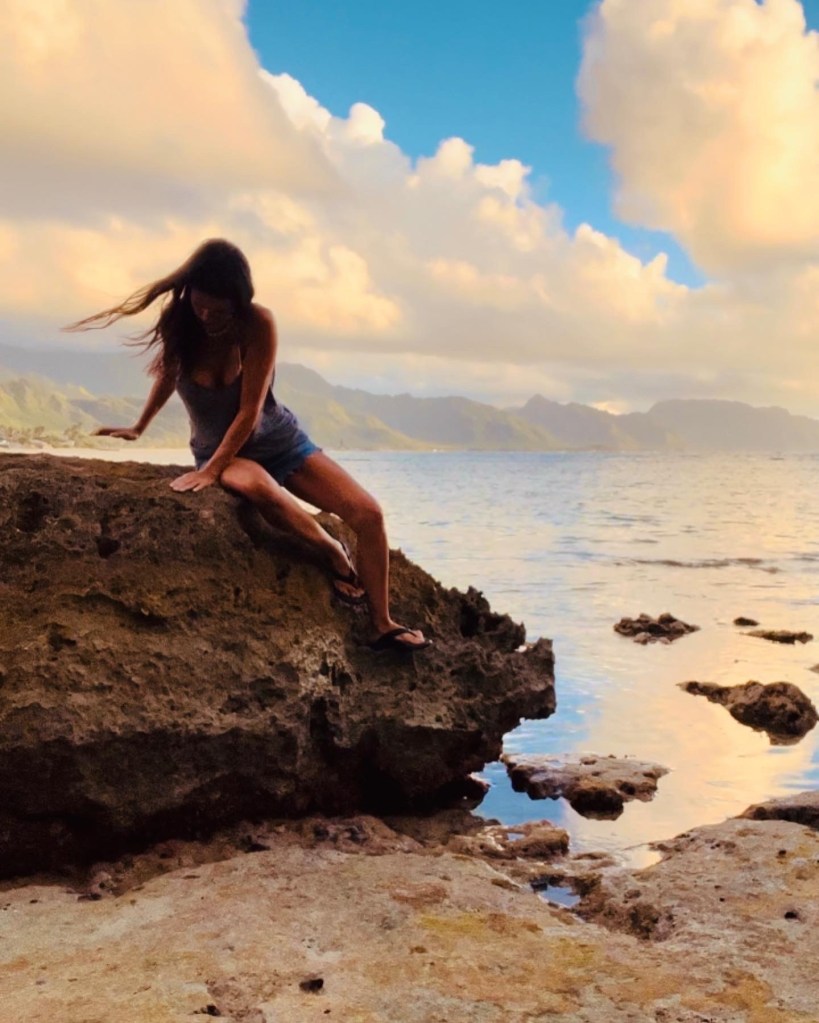
    When we made our plans, though, I had not thought a lot about the ways in which Las Vegas raises my cortisol. I’d been in Hawaii for an extended visit with friends, relaxing in the slow-paced countryside of the North Shore. Mitch didn’t join me for that trip but we’d decided to meet in Las Vegas on Valentine’s Day – which sounded romantic when we planned it. Mitch had never been to Vegas, so he went a day early to play golf and explore. I’d been once on a trip with my besties in 2013 – the year we turned 40 – and what a fun trip that was! I was thinking of that kind of energy. But girl’s trip energy is different from 30-year married couple energy. Also, we’re not gamblers, but I remembered the food in Vegas to be uniquely delicious. I was not wrong about that part.
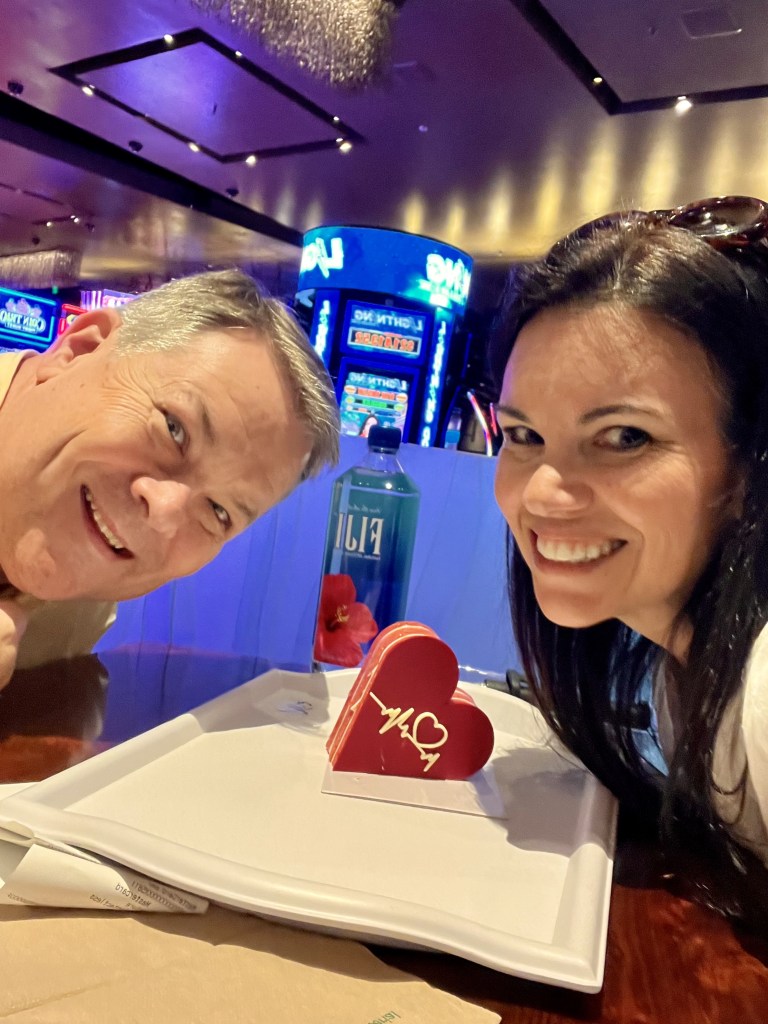
    To make it short, I arrived and joined him. We walked around and absorbed the nervous energy, had a decadent dessert at the Aria, a lovely French meal at a Mon Ami Gabi, . . . and decided we’d get out of Vegas as fast as we could and head to the Grand Canyon the next morning – with a side trip to The Hoover Dam.
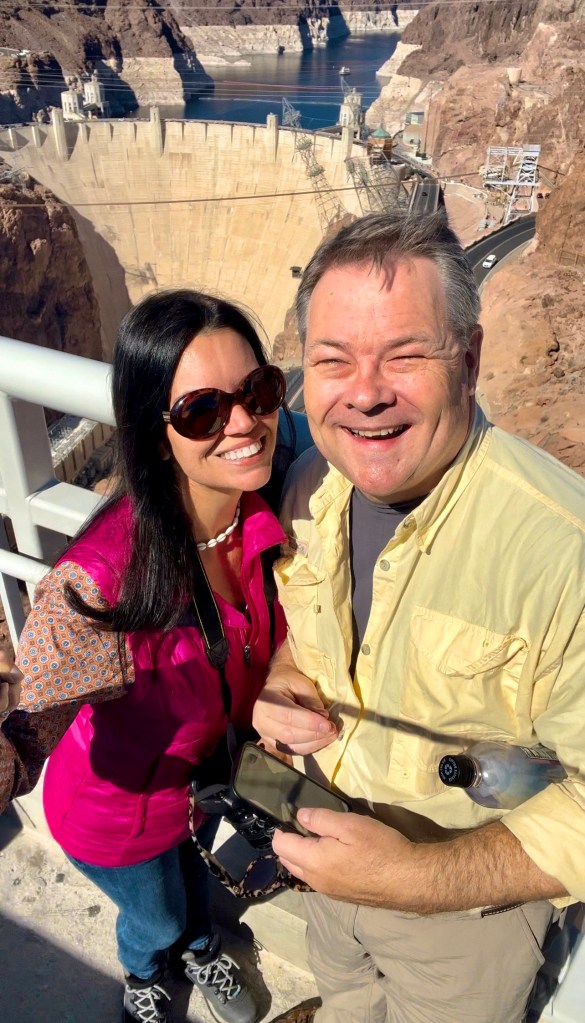
    At the Hoover Dam, we sang The Highwayman song in our heads – the part Waylon Jennings sings about a guy who “slipped and fell into the wet concrete below” while helping build the Hoover Dam. It was an impressive feat of engineering, but we were itching to get to the Grand Canyon, where we had dinner reservations at 8pm (more on that below), and I wanted to see as much of Route 66 in the daylight as we could, so I don’t think we enjoyed the Hoover Dam as much as we otherwise might have. It is objectively impressive though.

    Interstate 11 will take you to Interstate 40 where you can choose to remain on I-40 or drive Route 66. You will have that choice again in Kingman and in Seligman and the two roadways are almost parallel from there. But when you get to Williams, you’ll take Exit 165 and head to the South Rim of the Grand Canyon. There is a lot more of Route 66 to see, but this is the exit to The Gateway to the Grand Canyon – and it’s about half-way through the route in Arizona.
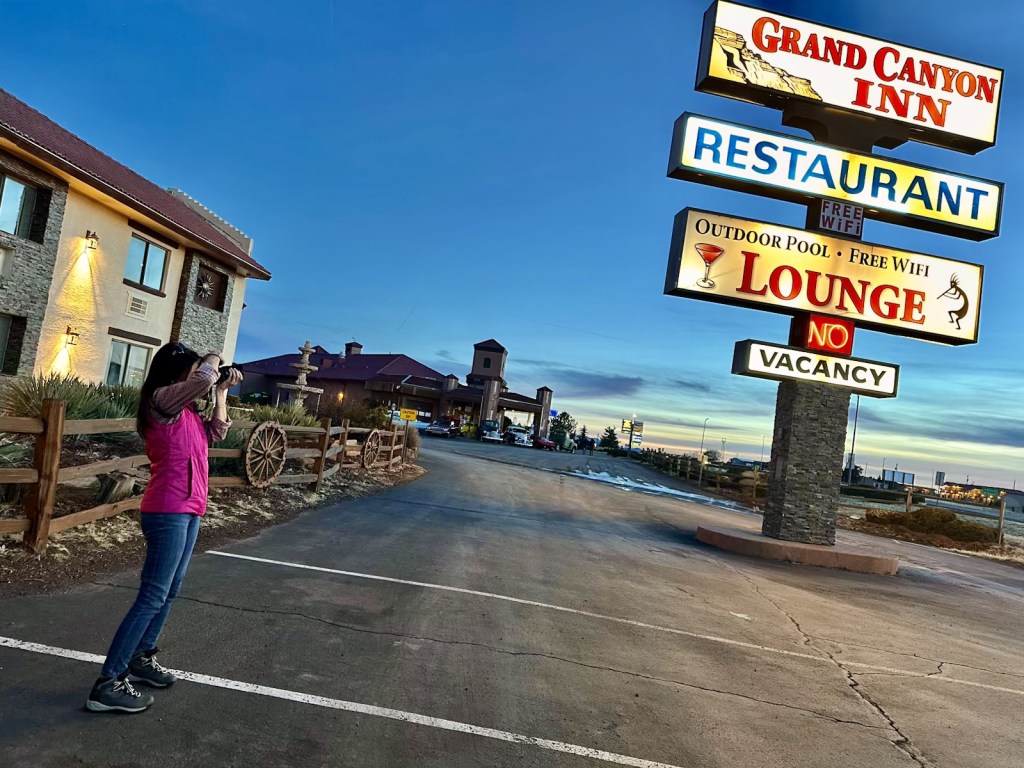
    We wanted to see the sunrise on the South Rim in Arizona the next morning, so we booked a room at The Grand hotel (not the Grand Canyon Inn pictured here – that’s just a cool photo). The Grand is about as close to the entrance to the Grand Canyon National Park as you can get, without being inside the park. And we were very lucky to get a room there. But don’t expect luxury. The luxury is that it is clean and comfortable and friendly and CLOSE to the Grand Canyon. Close beats luxurious hands down in this scenario and this place is a five-star hotel in our books because of its location.
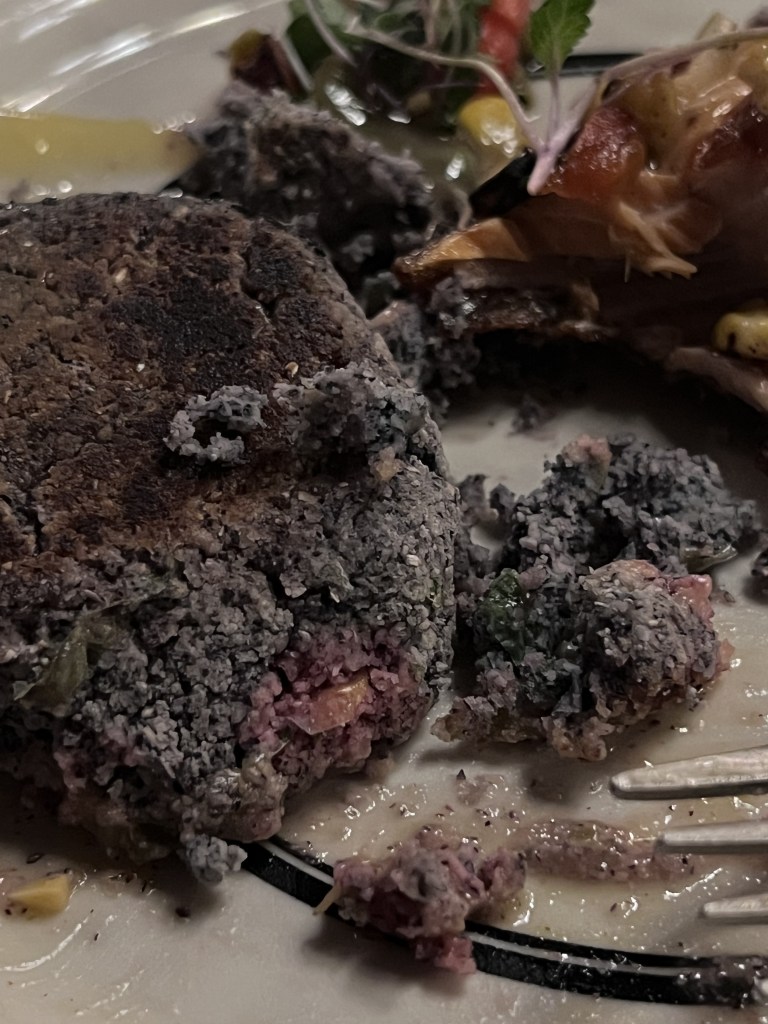
    And I would not dare complain about the The Grand Hotel when I saw the food quality at the “upscale” restaurant El Tovar. Mitch booked us a sunset dinner at El Tovar, an alleged fine dining restaurant inside the park. First the good: the cocktails were good, as well as the garlic butter for the rolls, and the butternut squash bisque. But then the entrees. . . . Oh my goodness! Mitch had the lemon garlic pasta, which lacked both lemon and garlic and looked like a “kids meal” in a mid-grade eatery. I ordered the trout. It also lacked flavor, but the showstopper was the dry thing under it called a “blue corn pancake.” I took a photo of it just because at that point, it was comically bad. The side carrots had the unmistakeable cut of the GreenGiant Steamers. We are typically so easy to please, but we didn’t eat much of these entrees and the server didn’t ask how we liked the food. I have a feeling she’d heard it all before. We weren’t going to let a bad meal ruin an otherwise lovely day, so we enjoyed the best parts of it and chalked the rest up to a memorable story. If you do find yourself in El Tovar though (it does have a very pretty dining room), I recommend making a meal of the appetizers and desert. But if we could do it again, we would have opted for a picnic in the car in a parking lot with a good sunset view.
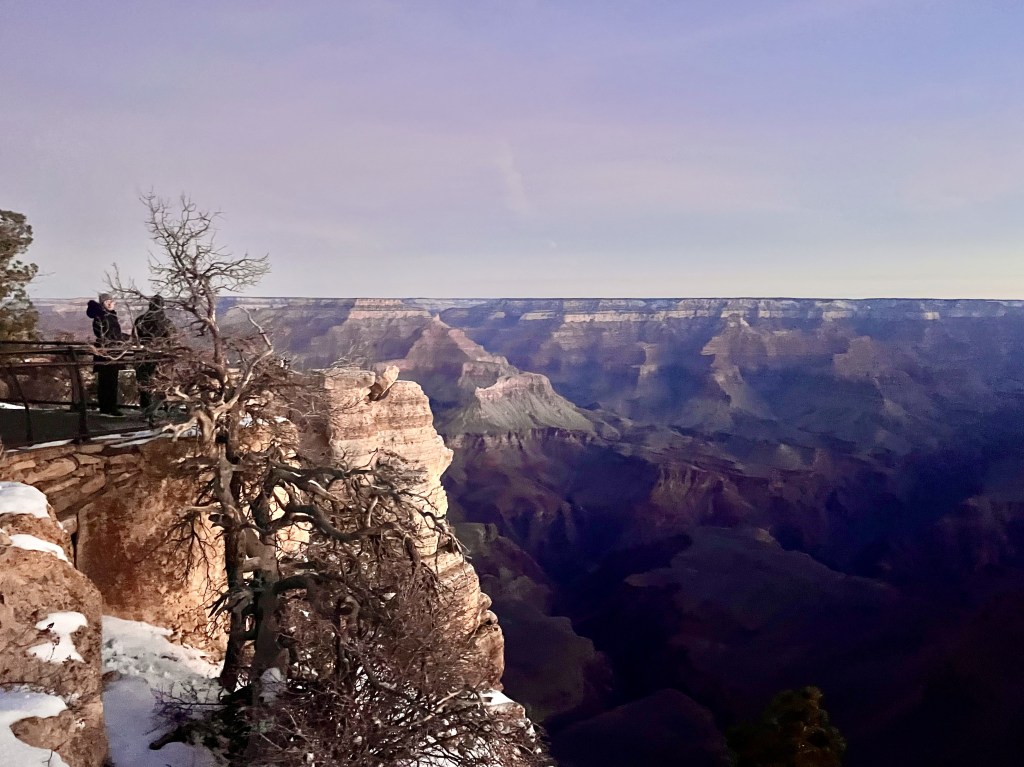
    We got up in the dark that next morning and headed out. Mitch bought a National Park Lifetime Senior Pass, which is a great value for people of a certain age. And we followed the dozen or so cars to the appropriate parking lot. And then we followed the two dozen or so friendly adventurous people on foot through the paths to the lookout point. On the walk through snow in the dim blue light of early morning, we saw several moose up close. They didn’t seem to mind us, and by the time we saw them, it was too late for us to mind them. We walked on and staked our spot at the rail, and we waited for the sun to light up the canyon.
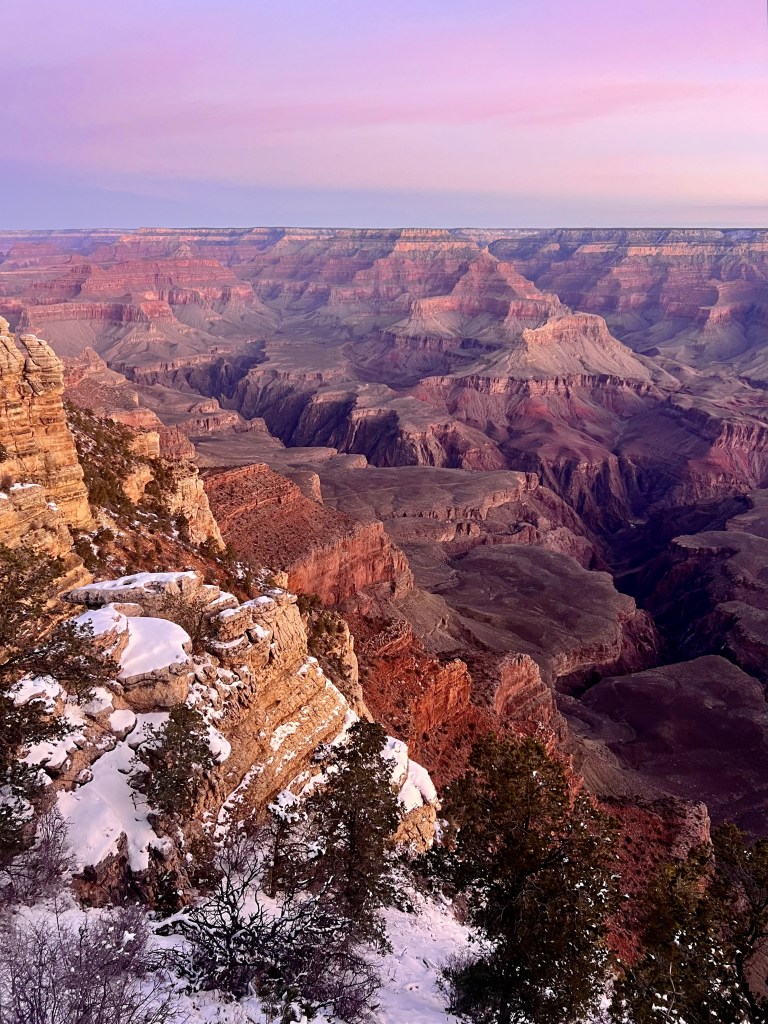
    We had so much space… and then the crowds came. It seemed like they showed up all at once. I was glad we got there when we did. A late-comer man in a red jacket took a spot beside me to my right. There was more space to his right, but he got up against me and after a few minutes more people started filling in the open spaces and he began pushing me with his left arm. I guess he thought my spot at the rail was the best because we had gotten there first and chosen it. And it wasn’t enough to be *next* to my spot. He wanted to stand exactly where I was standing. I guess he thought I’d be passive and let him push me away. Well, he didn’t know me. I stood firm and pretty soon he started yelling that *I* was pushing *him.* It felt comically ridiculous because (1) it was not true, and (2) we were in this majestic place where lots of people had assembled in quiet reverence to one of the great miracles of this amazing earth. I told him, “I’ve been here all morning and haven’t moved from this spot. You’re getting upset because I won’t let you push me out.” He got louder and I was joined by others in staring him down . . . and he left and went to the other end of the overlook. I wonder about people like him. Has that kind of energy been working for them in life? I have to assume it has or they wouldn’t be doing it in adulthood. Oh well, he was not going to steal my joy. In fact, he kind of added to my joy because – on top of seeing one of the most incredible wonders of nature – I could be proud of how I stood up for myself and refused to be bullied. I am always mindful of the fact that I am my closest friend and the only person in this world whom I’ve known my whole life. I have to stand up for my friend. And I’m proud I did.
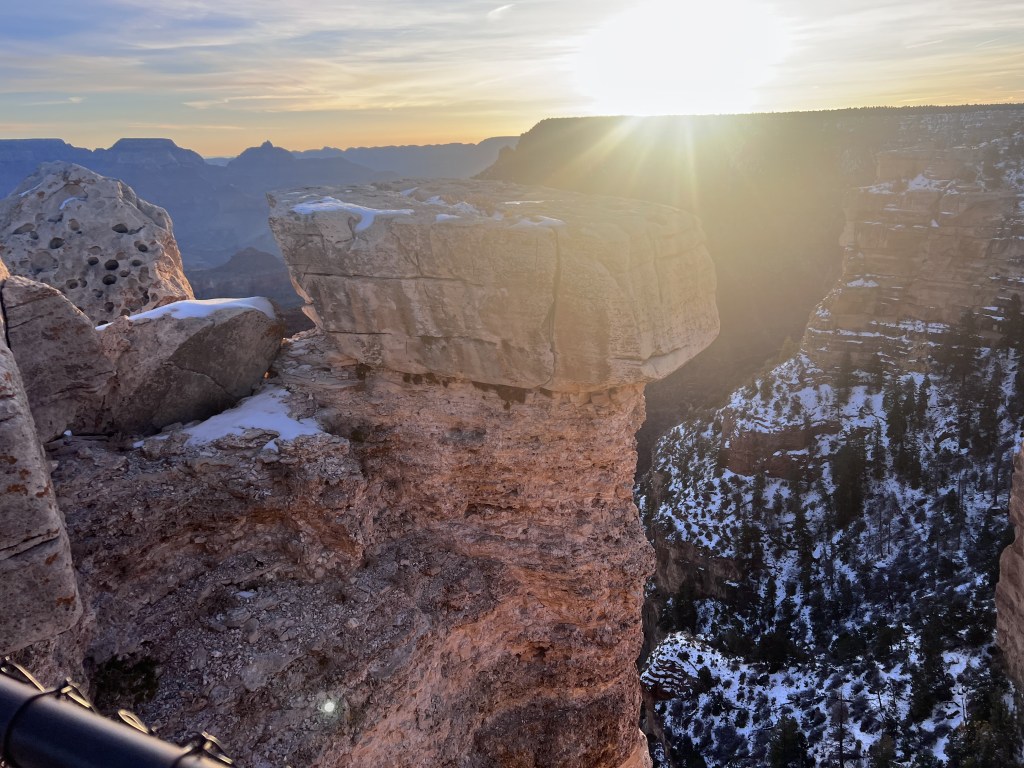
    And then the sun came out. And we were awestruck. And red jacket man was gone, so Mitch and I could enjoy it fully with a crowd of good hearted people all around us. There are just no words to describe something as beautiful as the Grand Canyon at sunrise, so I am thankful for photos.

    We returned to The Grand Hotel and took a wonderful and blessed nap and then came back to the Canyon for another walk before heading back toward Las Vegas via Route 66. This time, coming back in, there was a long line of cars at the entrance.
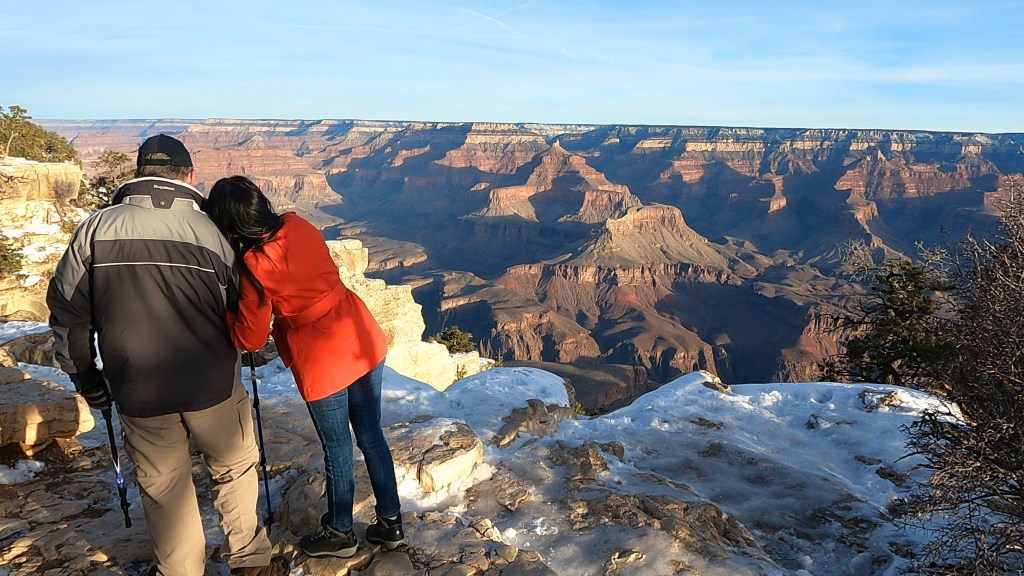
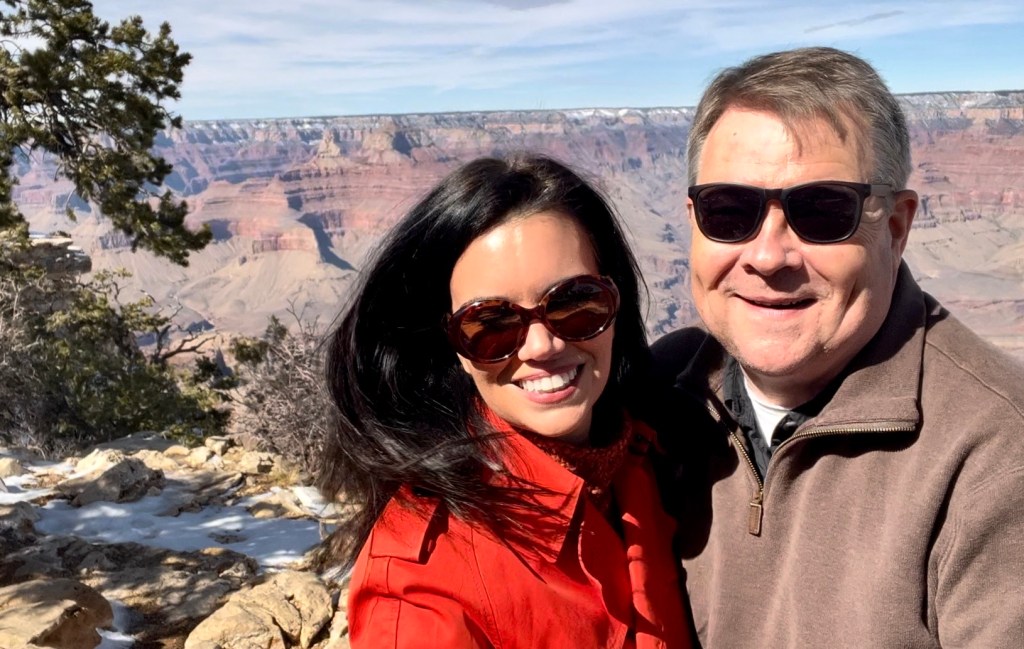
    I was so nervous about slipping on the ice and snow.
    After a nap.

    We had made a few stops on Route 66 on the way there, but those only made me more excited about the many places we could visit on the way back. So let’s now get into it. Note this is only about half of the Arizona Route:
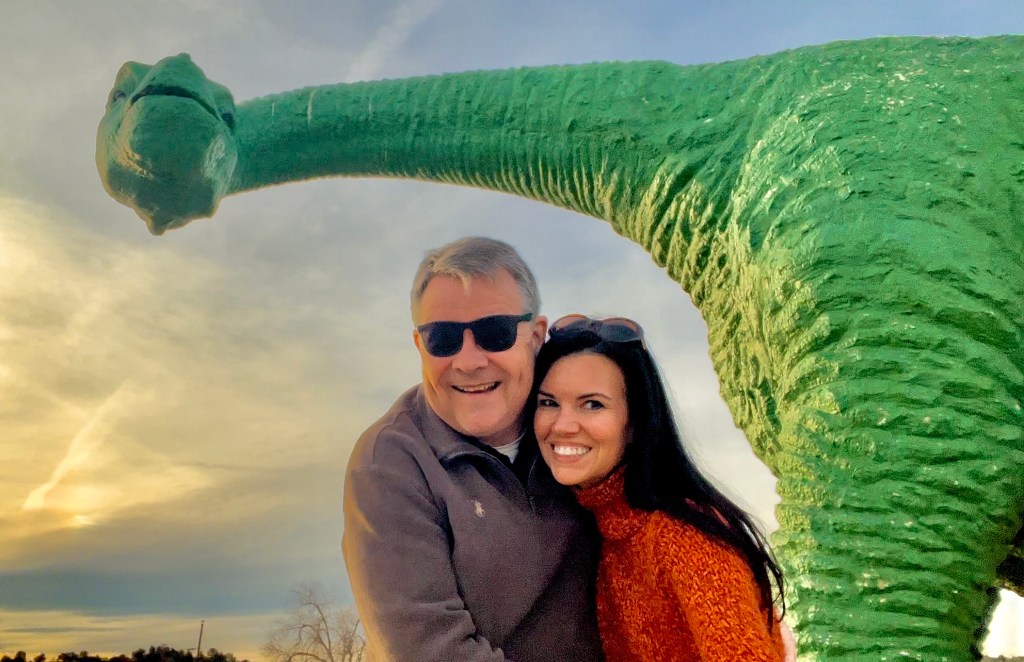
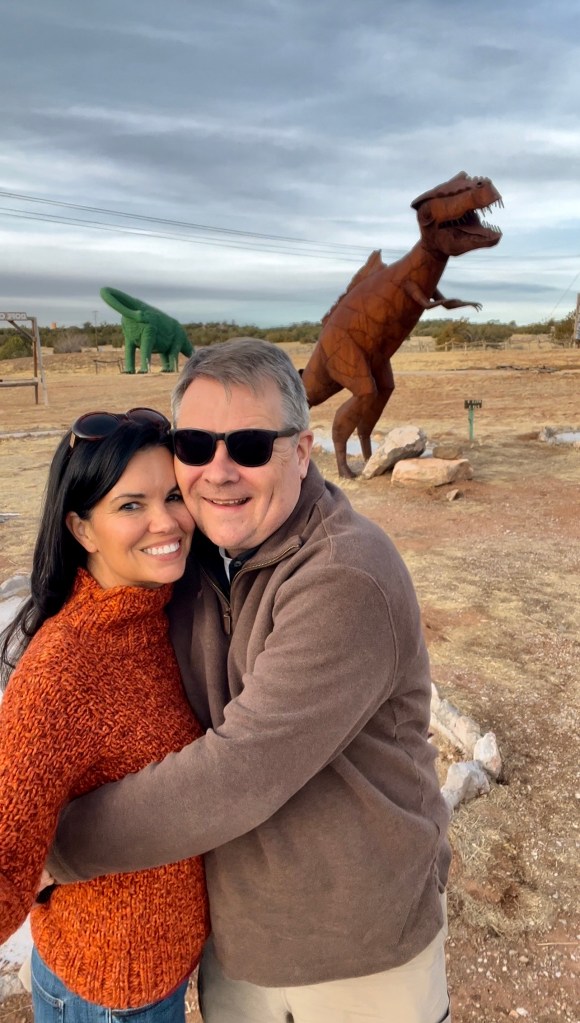
    Route 66 is hard to put into words—it’s a feeling. Running parallel to the interstate, it moves in the same direction but at a completely different, unhurried, country pace. But the speed isn’t the real difference. Clearly, things are valued on Route 66 that are not valued on the faster routes in life. It’s old world nostalgia. It’s memories of childhood. It’s not discarding things because they are rusty or worn – or weird. Route 66 is the *opposite* of Las Vegas. Route 66 is my jam. I am definitely not a Las Vegas person.
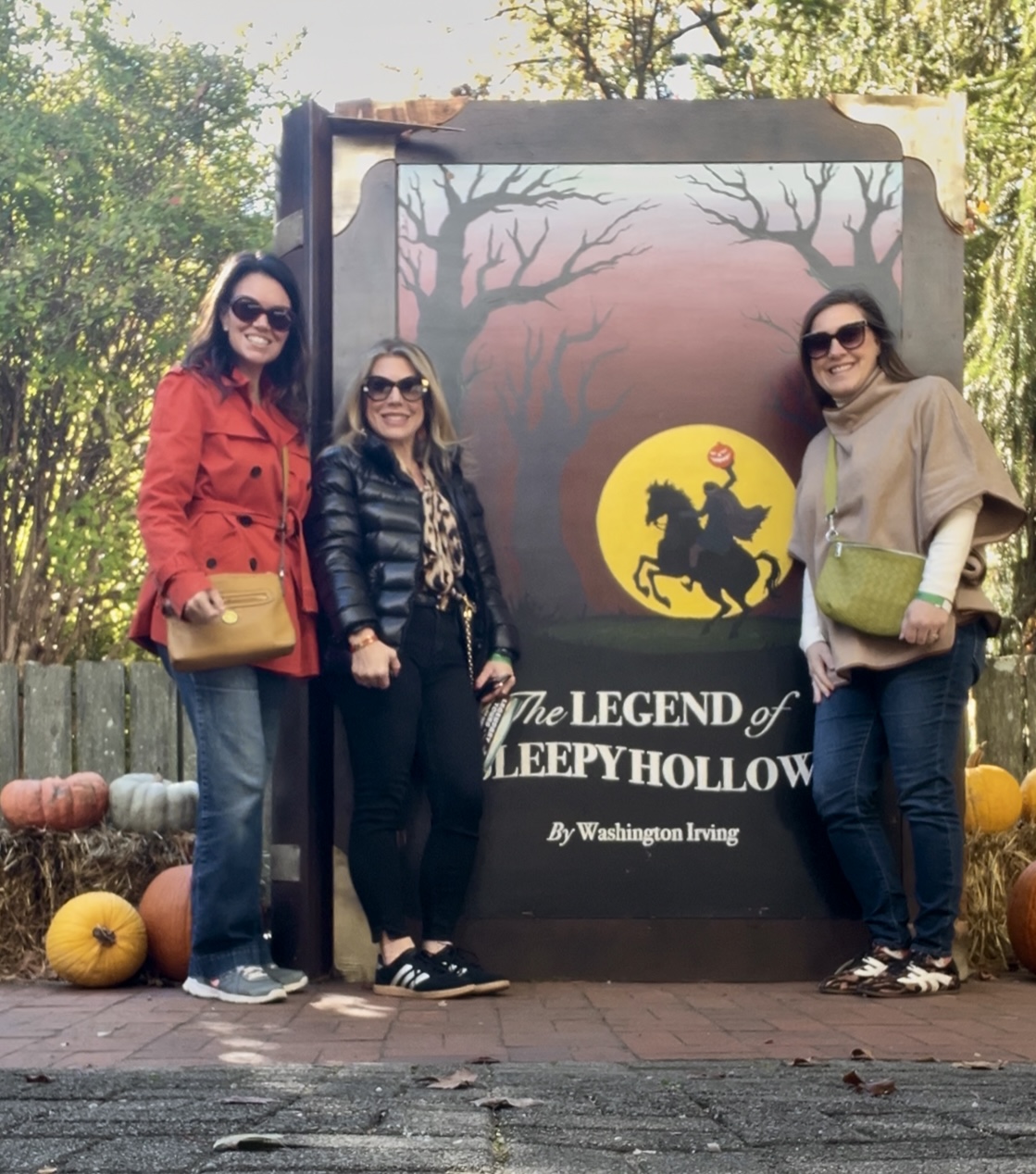
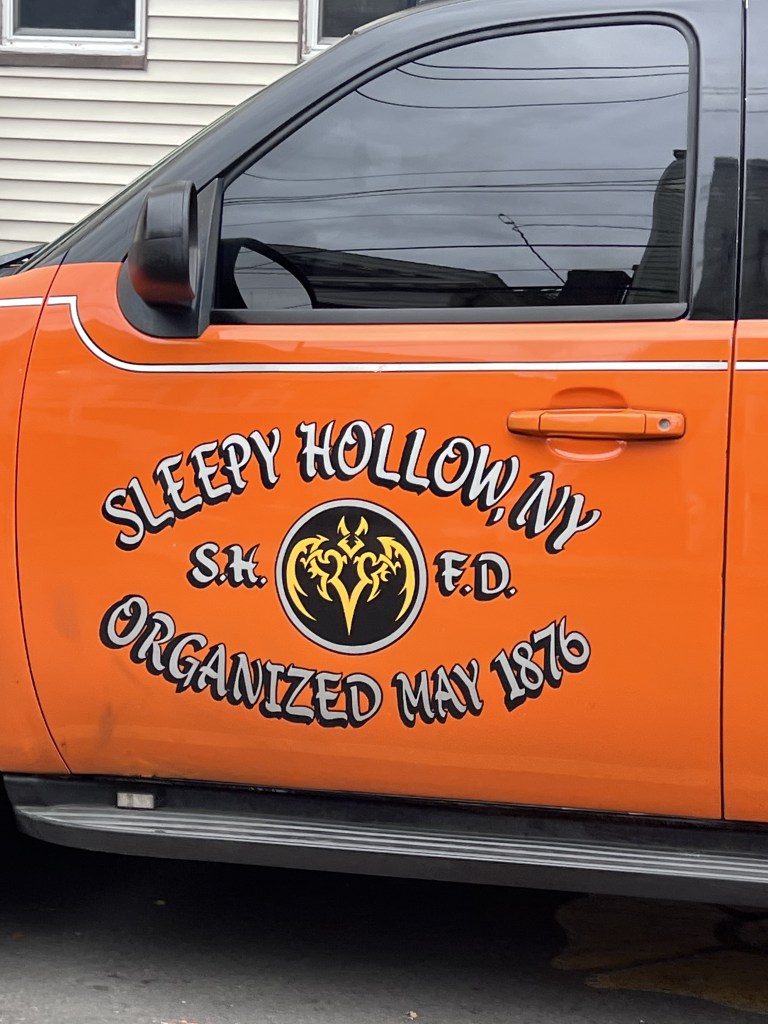
  • My friend Mary texted our group chat one day and said “let’s go to New York!” I said “Is a bean green?” And we planned it. Actually, she’s the most Type A among us, so *she* planned it. It was not what I would have planned . . . and I am glad. I’ve been to Manhattan many times, and while there is always something new and exciting to experience in a city that is forever changing, those visits start to run together in my memories. And I love new adventures! Even though I was an English major and took classes in early American literature, I had not given much thought to whether Sleepy Hollow and Tarrytown were real places as opposed to fiction in the mind of Washington Irving. They are real.

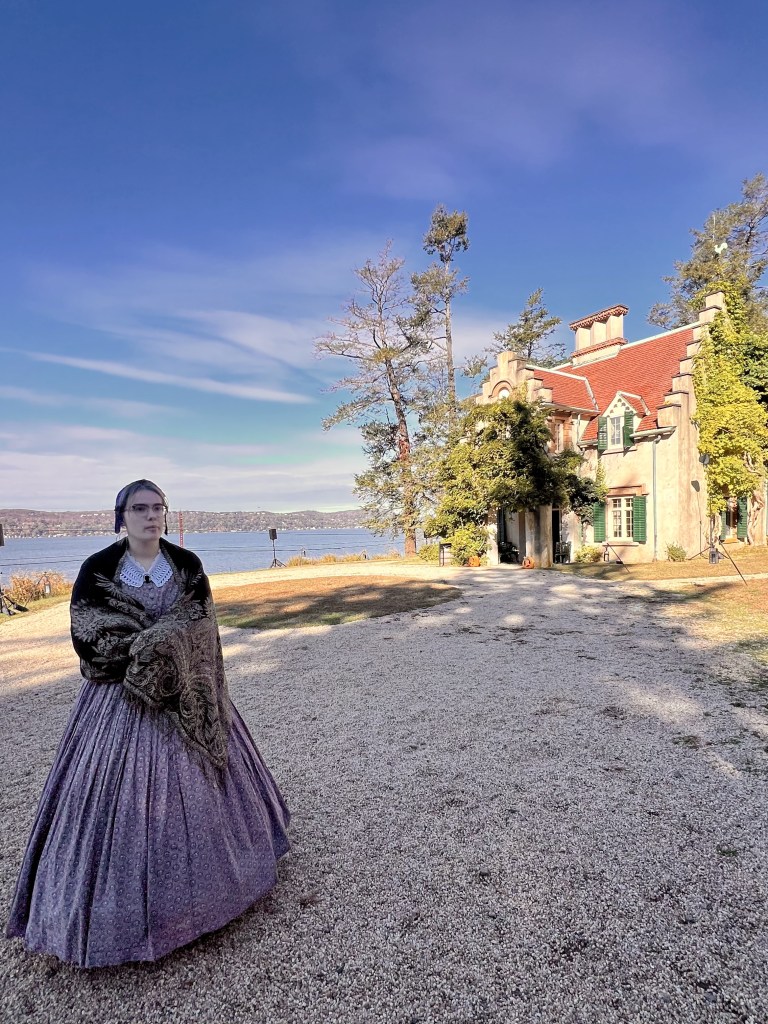
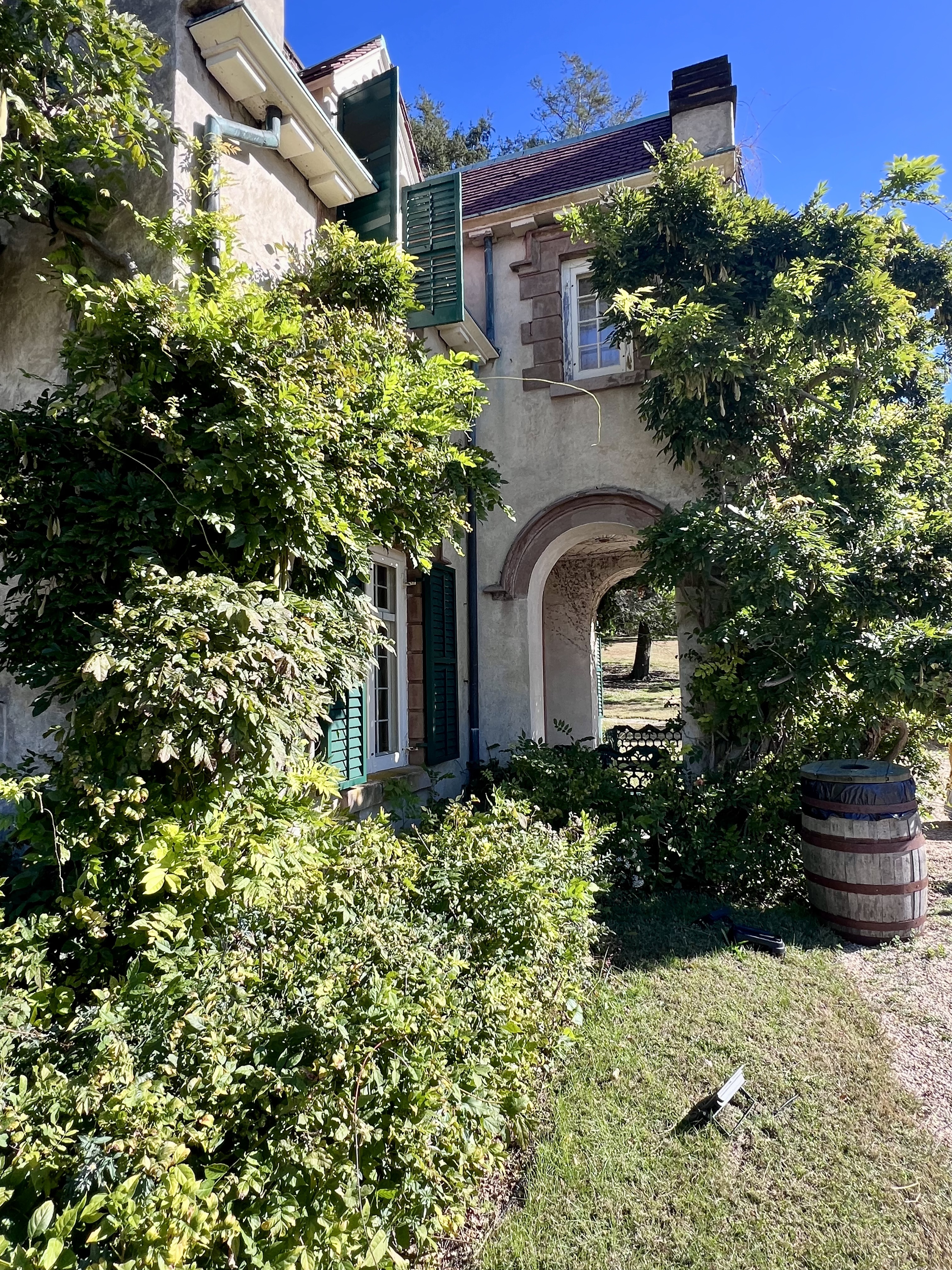
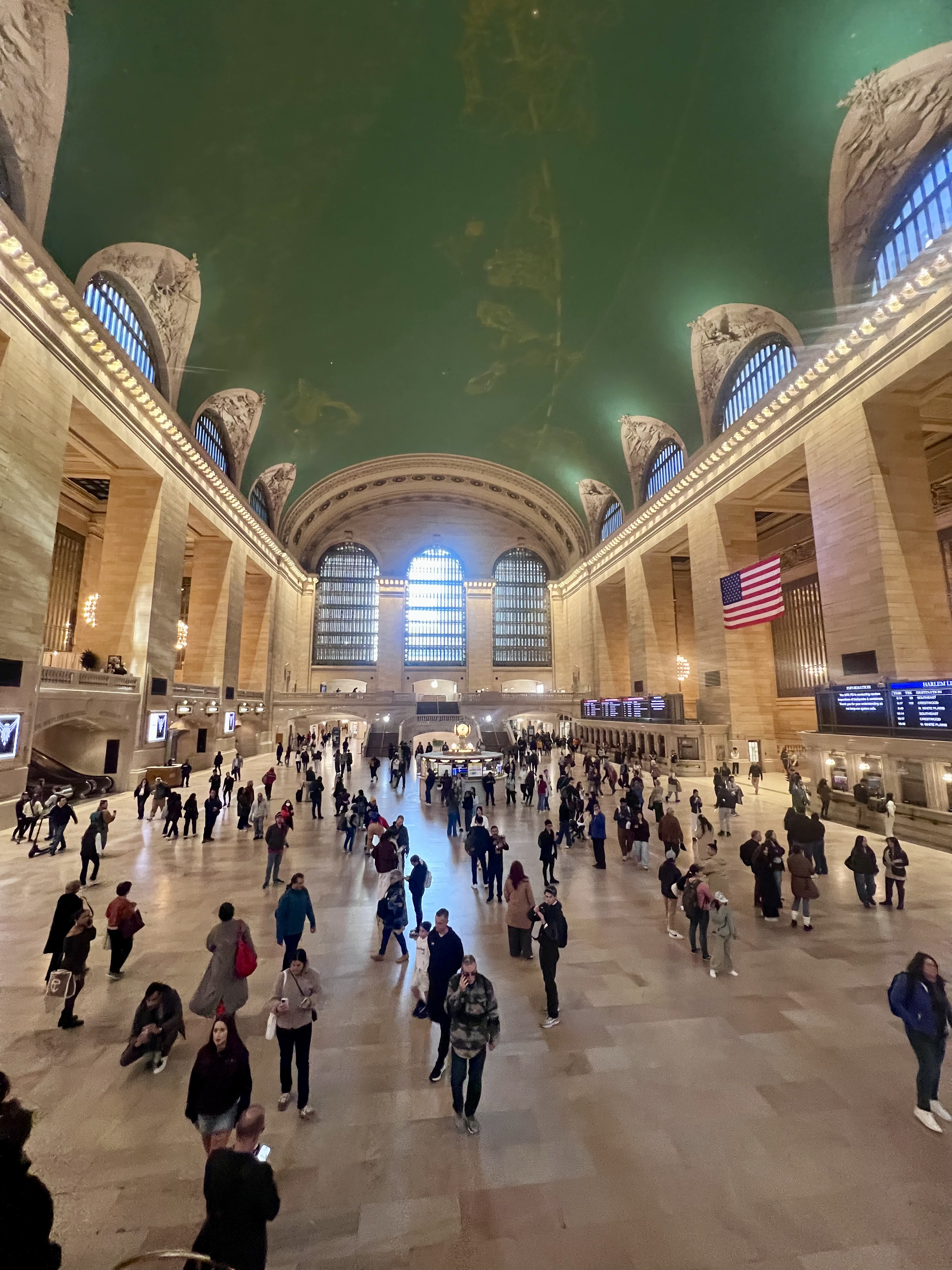
    But first . . . along with our friend Elizabeth, we visited Manhattan – of course. We felt the rush of the City. We went to a taping of an amazing show, we had a delicious dinner with one of my best friends from childhood and his wonderful wife, I shopped at the Chelsea Flea while Elizabeth saw a matinee and Mary went to lunch with a friend, we walked around Times Square, and we absorbed the NYC energy. And on the morning of our Sleepy Hollow Adventure, we walked to Grand Central Station and caught the Metro-North Railroad Hudson Line train to the Irvington Station. It’s a beautiful ride that takes less than an hour. And very close to the train stop is an organic coffee shop called the Red Barn Bakery with organic pumpkin ice cream and blueberry scones. We got our provisions and ordered our Uber to take us to Sunnyside, Washington Irving’s homeplace in Tarrytown – where we had tickets to tour the grounds and home.

    I am writing this like an expert, but truly none of this is anything I knew before Mary planned this trip. It was Halloween weekend and apparently tickets to Sunnyside become scarce this time of year because lots of people want to see the home of the man who imagined the headless horseman. If you want tickets to Sunnyside, be like Mary and book them here ahead of time through Historic Hudson Valley. They give you a time slot to show up, so it was super important that we were on time – and we were. Because Mary. Apparently this ticketing thing was news to a few people who showed up around the same time we did – and were not pleased with the fact that they could not get in. In that moment I was very glad Mary is such a planner.

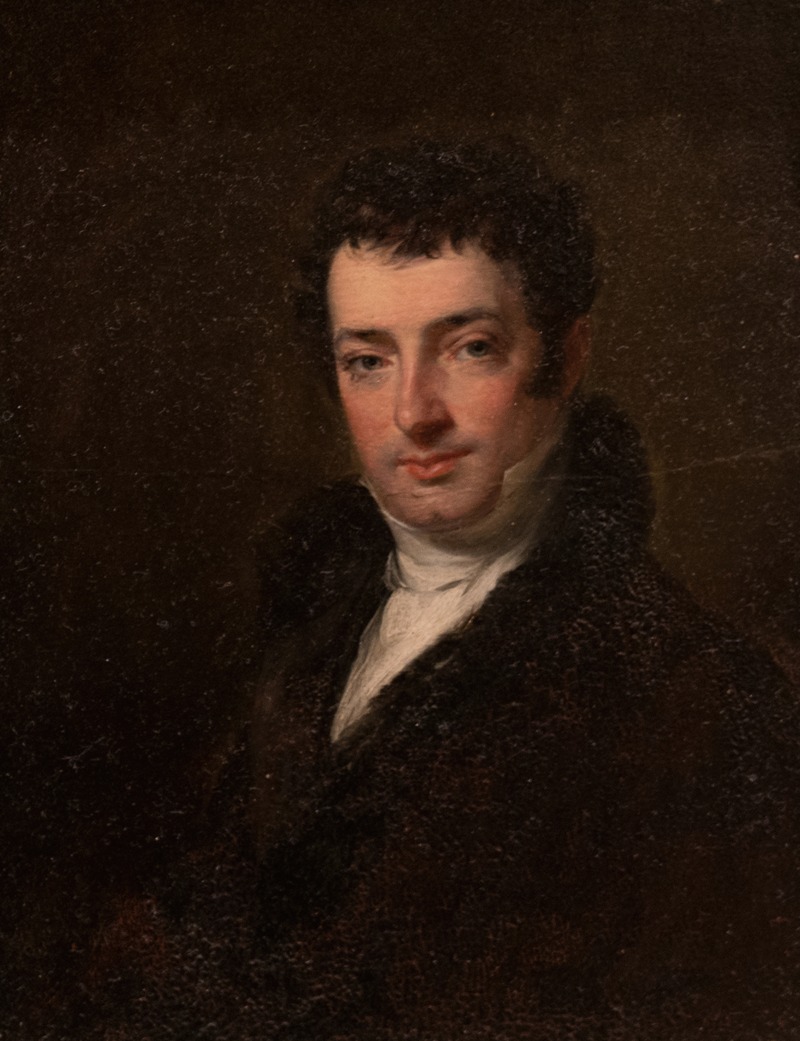
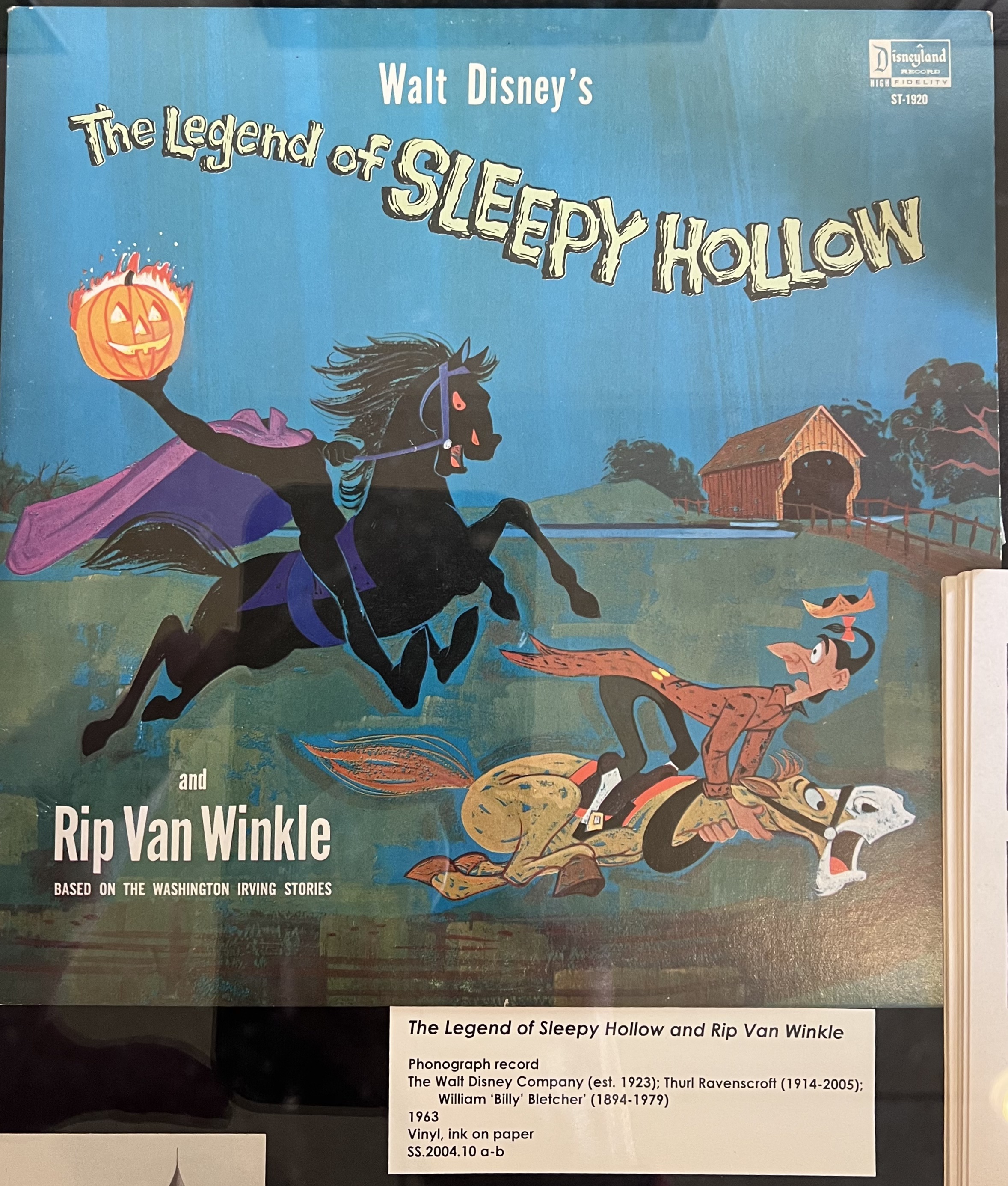
    Washington Irving was born in 1783. He was a lot of things, including a lawyer and a diplomat, but mainly he is known for writing the short stories “Rip Van Winkle” (1819) and “The Legend of Sleepy Hollow” (1820). If you don’t remember, Rip Van Winkle is the very relatable story of the guy who went to sleep and didn’t wake up for a really long time and everything changed while he slept.

    And The Legend of Sleepy Hollow was the one with the unrequited love and the headless horseman and the questioning of whether or not it was really real. It is also about how men are afraid of women:

    “All these, however, were mere terrors of the night, phantoms of the mind that walk in darkness; and though he had seen many spectres in his time, and been more than once beset by Satan in divers shapes, in his lonely pre-ambulations, yet daylight put an end to all these evils; and he would have passed a pleasent life of it, in despite of the devil and all his works, if his path had not been crossed by a being that causes more perplexity to mortal man than ghosts, goblins, and the whole race of witches put together, and that was – a woman.”
    ― Washington Irving, The Legend of Sleepy Hollow

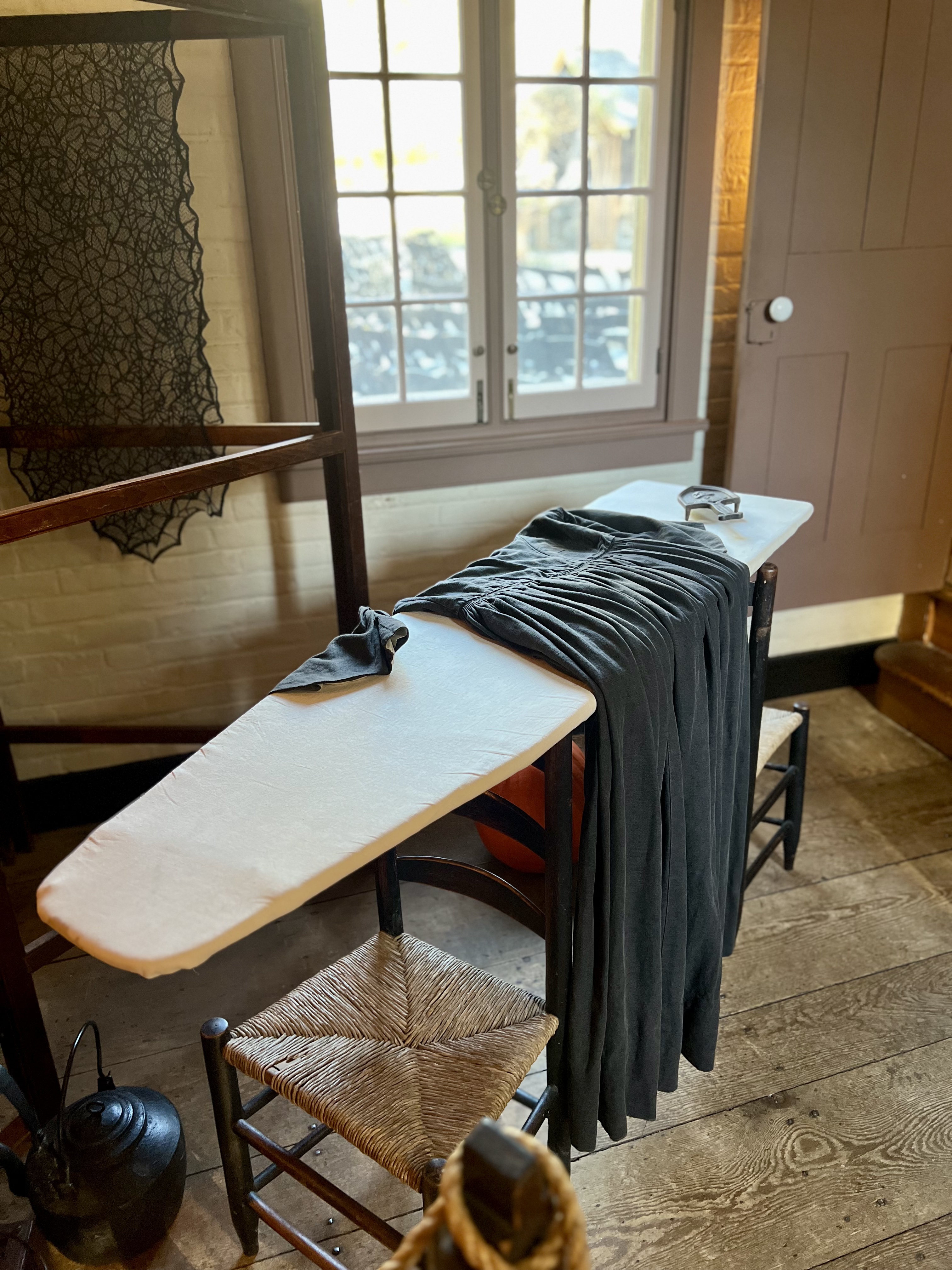
    His house was especially cute and the tour guides enthusiastically knew all about Washington Irving and his life. They had many activities for children there too. It would be a wonderful side trip for young parents with children who would like a bit of peace and tranquility in an otherwise hectic New York City vacation.

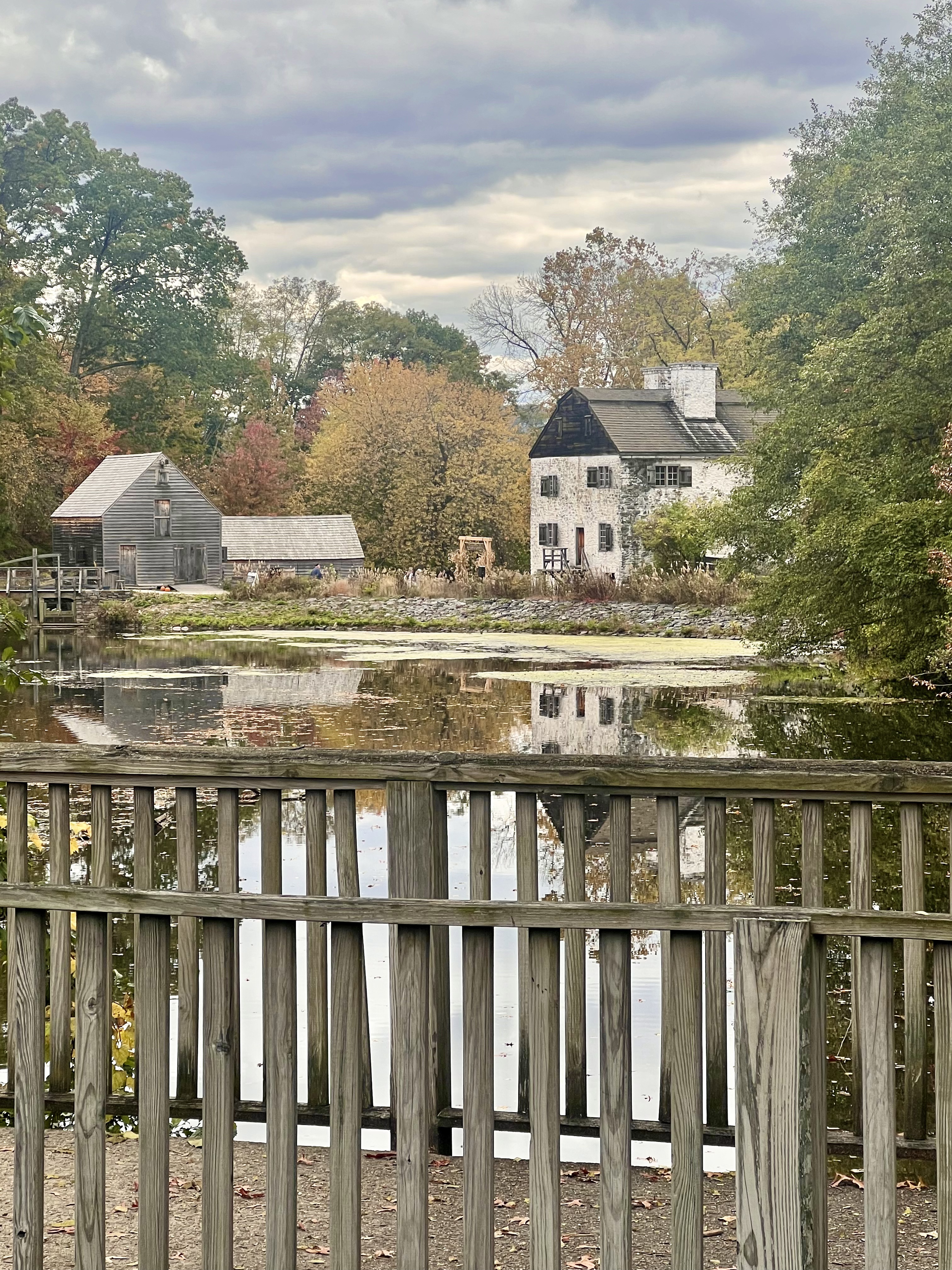
    But Tarrytown is a small hamlet compared to Sleepy Hollow. That was our next stop. Here’s how Irving described Tarrytown from the point of view of a Sleepy Hollowian:

    “Not far from this village, perhaps about two miles, there is a little valley or rather lap of land among high hills, which is one of the quietest places in the whole world. A small brook glides through it, with just murmur enough to lull one to repose; and the occasional whistle of a quail or tapping of a woodpecker is almost the only sound that ever breaks in upon the uniform tranquillity.”
    ― Washington Irving, The Legend of Sleepy Hollow

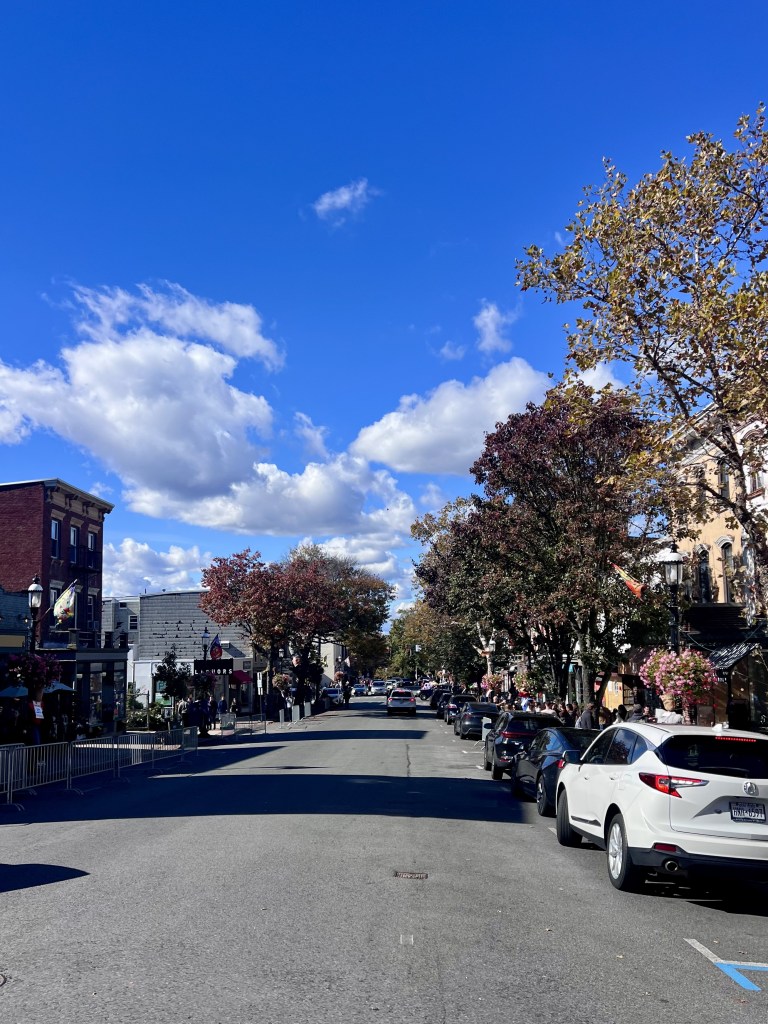
    This is the comparatively bustling Sleepy Hollow:

    So . . . we were soon on to the big city where they were gearing up for their annual Halloween Parade.

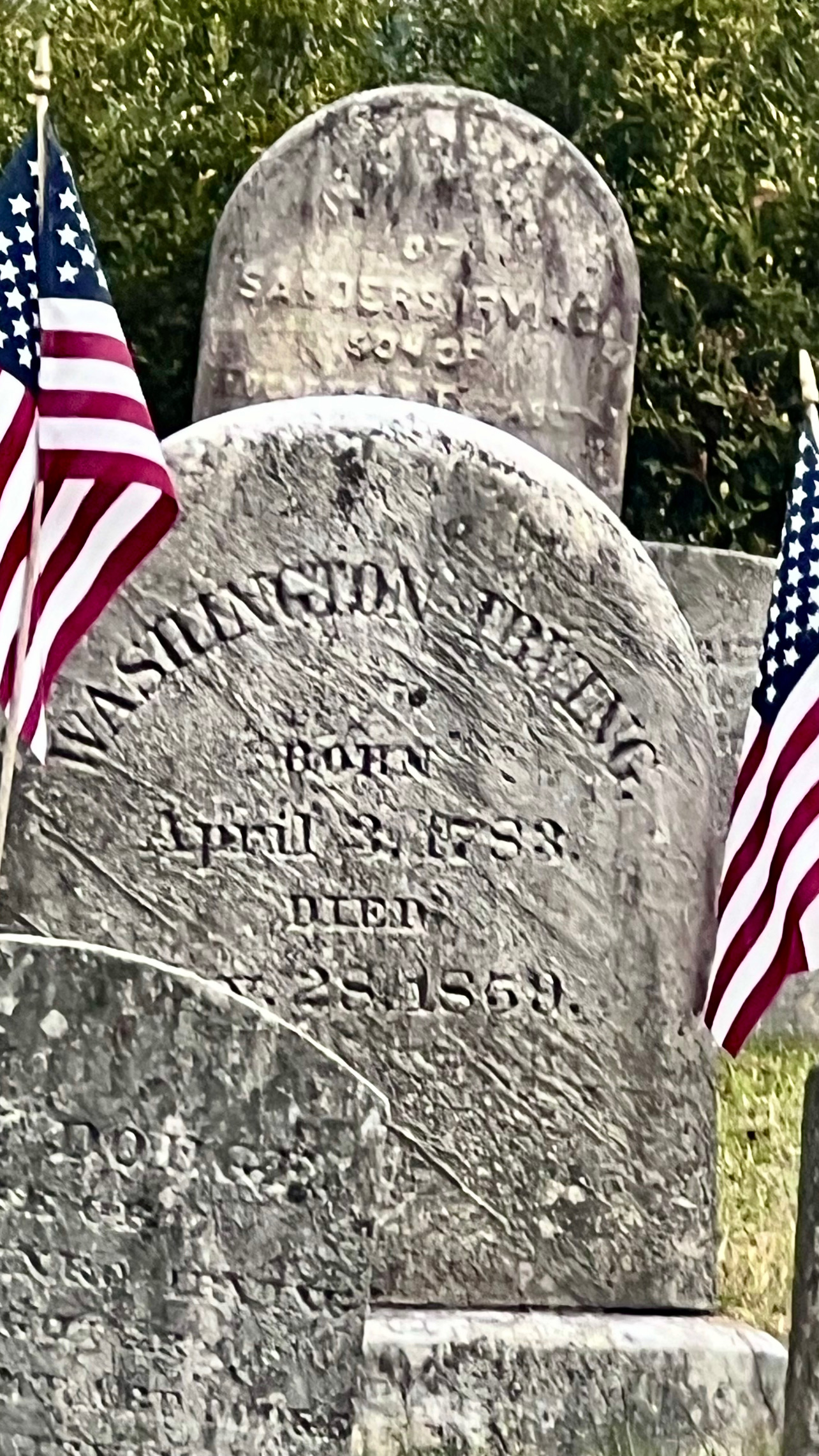
    The Halloween Parade in Sleepy Hollow, as one might imagine, is a very big deal. But my friends and I are not big fans of crowds, so we walked on to the Dutch Church and cemetery, where we were able to see Washington Irving’s final resting place.

    I highly recommend this excursion from Manhattan – especially this time of year. I also recommend reading or listening to The Legend of Sleepy Hollow. It challenges the mind in a way I don’t think we’re challenged often enough these days.

    This is also an appreciation post for friends like Mary who plan things so the rest of us can enjoy them as if they’re just unfolding like magic.

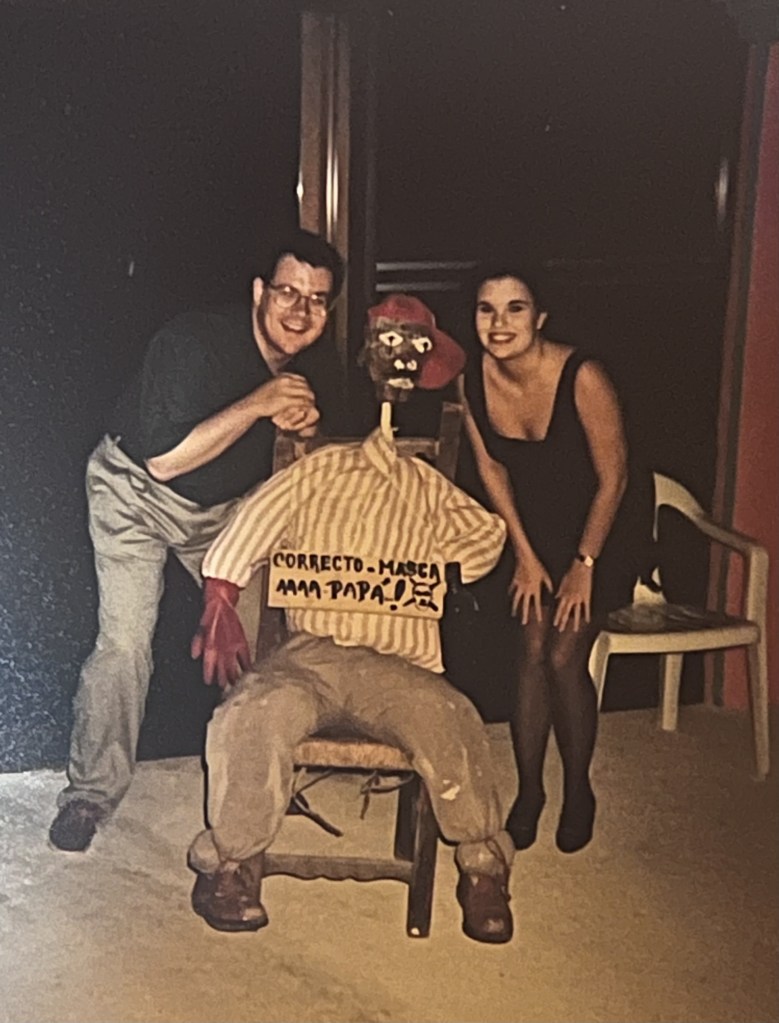
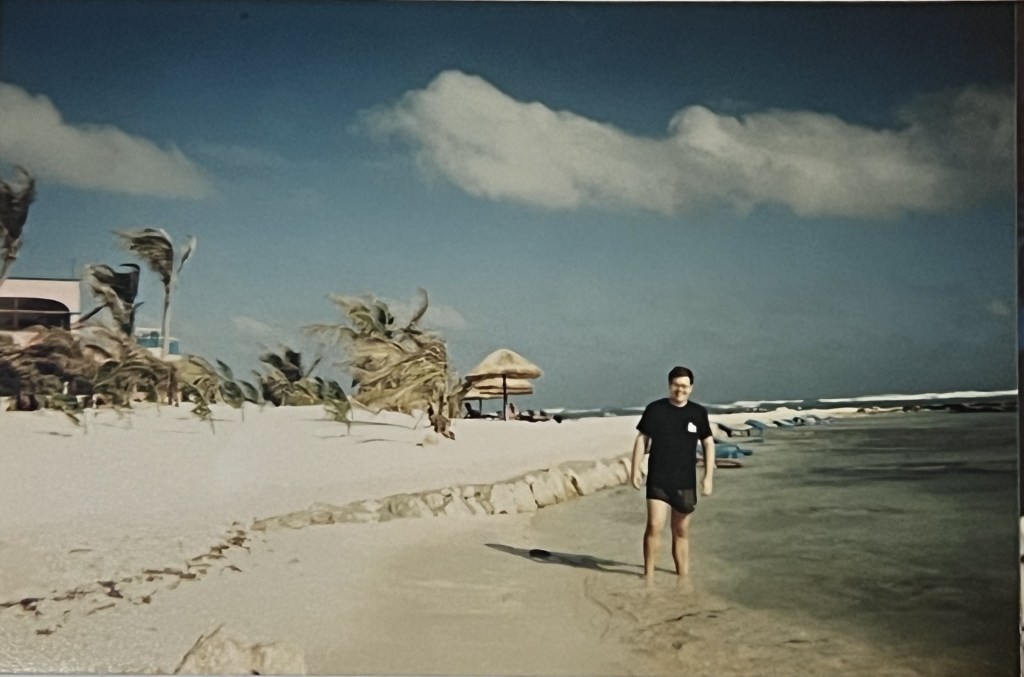
  • A few months after we got married, Mitch and I celebrated New Years 1996 in Mexico. I was about to start my first year of law school at USC and (side story) was working for the inventor of the 3-D Printer at a little start up in an office center. Mitch said “let’s go somewhere for New Years!” Part of my job at the company had been to work with a local travel agency as the company sent people all over the world to show off this amazing new invention. I said “I know a travel agent!” And we visited them on my lunch break. They had just learned about a resort in the Yucatan Peninsula in Mexico called El Dorado. It had recently opened and was offering good deals. So we booked it.

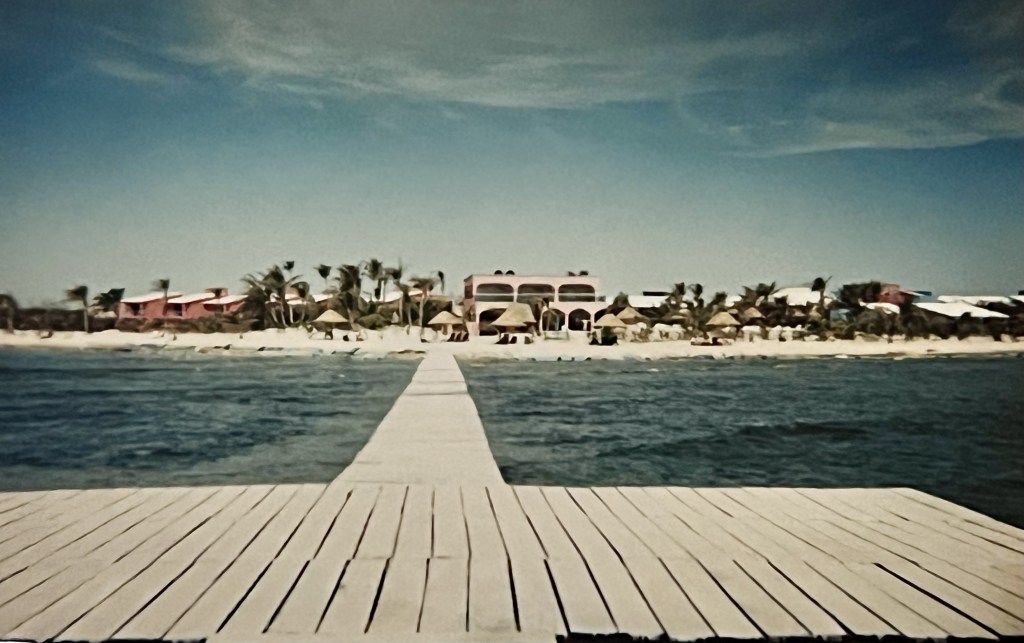
    El Dorado Resort 1995

    We flew on an airline called FunJet. As we recall, the plane was made from parts of planes that had be decommissioned. Some were from bankrupt airlines. I remember one panel had logos from Eastern Airlines. We hadn’t seen an Eastern Airlines jet in a very very long time. The plane seemed rickety and no one on board seemed to care. Everyone was there for a good time.

    When we arrived at the Cancun airport, I recall it was semi-out doors and smelled like tortillas, which I thought was very exotic. It was our first time in Mexico and everything felt exotic. We were picked up by three laid-back guys driving an old school bus with three big coolers of Dos Equis. Dos Equis felt exotic. I had one (one-half of one / I cannot make myself like beer), and Mitch had one. The other occupants had more than one.

    After about a half-hour on the bumpy road after sunset, I noticed the headlights on the bus were going dim. I told Mitch. He looked out the window and (Mitch knows some things about cars) and said “the alternator is going out… I hope we get there soon.” The driver knew it too. We got to a standard guerrilla check point where the military would board the bus and – I guess – check to see if we were a threat. The bus driver, rolling slowly, told these men with large guns that he could not stop the bus because it would not start again. So we just slowed down for the check. The militiaman jumped onto the bus, looked at us all, said something in Spanish, and quickly jumped off before we rolled too far from his station. I assume we all looked very much like tourists and could never be mistaken for rebels.

    Pretty soon, a man on the bus who’d drank too much Dos Equis informed us all that he really really REALLY needed to relieve himself. The hosts refused to stop the bus, but said he could pee out the door as we traveled. The head guy said, “No one will look (hehe) …. Everybody get your cameras!!!” Beer Man continued to complain – and we all hurt for him but no one wanted that bus to stop. We told him he could pee out the door and it would be okay. But he held it until we were almost there . . . whereupon the bus slowed down, he jumped from it, peed in the woods for a (long) while and then ran to catch up and jump back on the bus.

    This was the way they celebrated New Years 1996. They stuffed this guy with firecrackers and set him on fire at midnight.

    We checked in and I noticed that an older man and woman there were clearly on a secret rendezvous. He’d been drinking too and said some things that made it clear that he was married . . . to someone other than the woman who was accompanying him. As Karma would have it, though, he drank too much at the New Years celebration that night, and broke a bone and had to get medical attention. We didn’t see them again. I have often wondered if that event resulted in his wife finding out what he was doing… and I’ve also wondered what he’s doing now.

    That New Years Eve was also my first experience with sea turtle hatchlings. Hundreds bubbled out of a nest nearby and were, sadly, making their way into the restaurant where we were eating dinner. People were scooping them up and taking them back to the beach so they would have a chance at survival. That was over 30 years ago and I like to think that some of those sea turtles are still swimming in our oceans today.

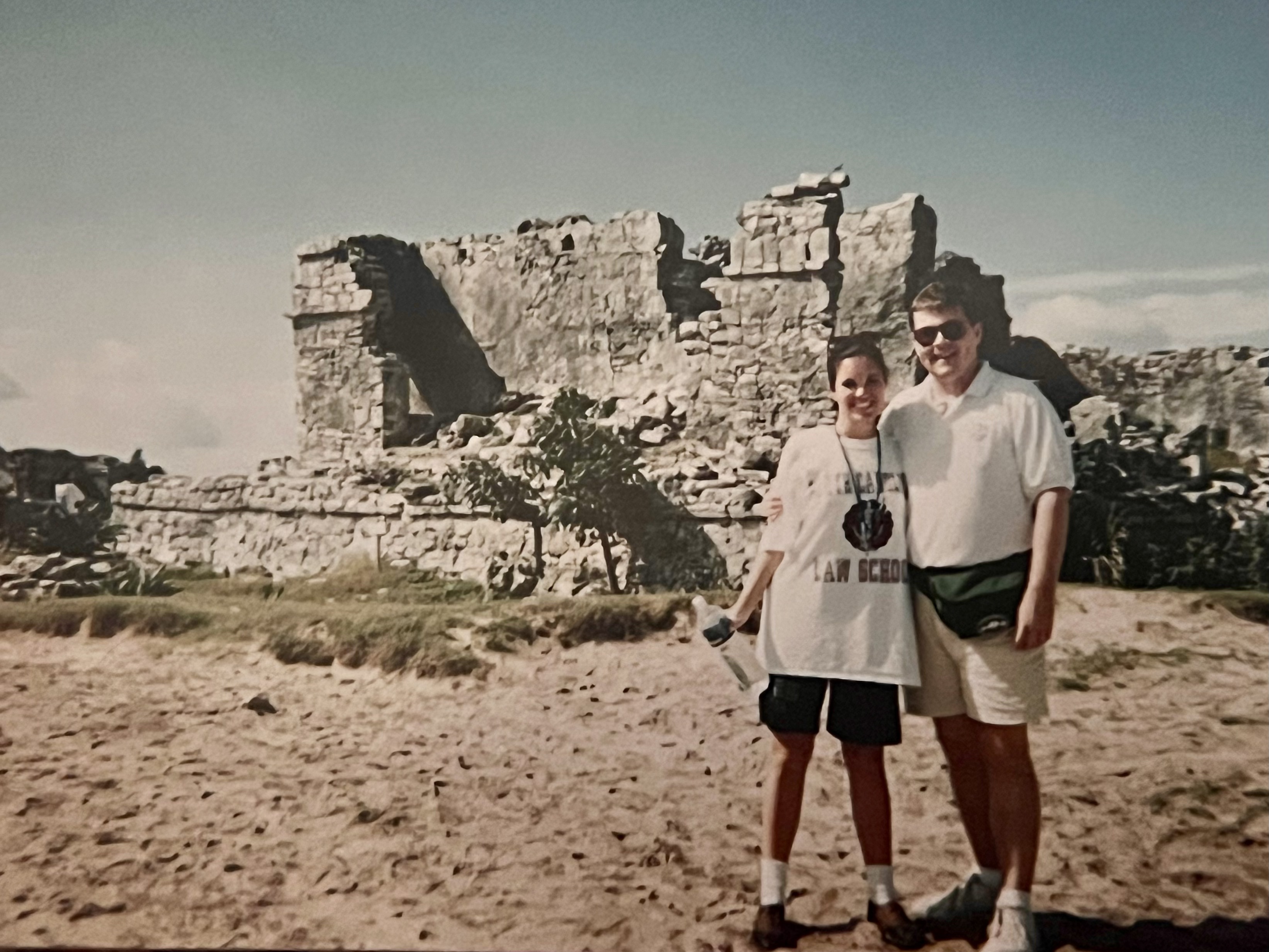
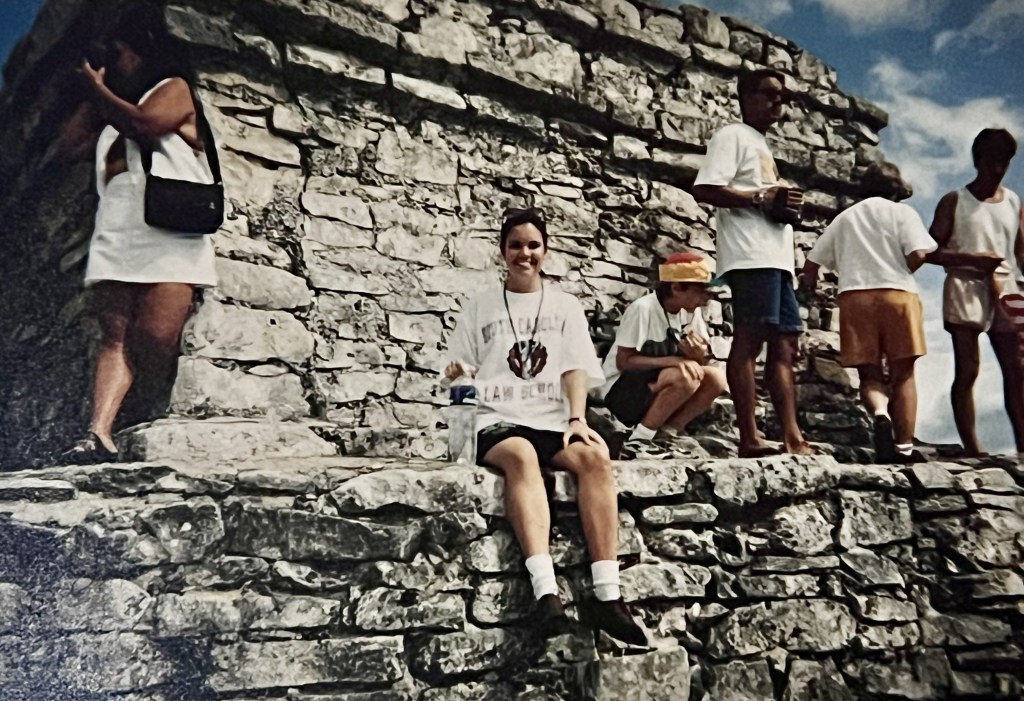
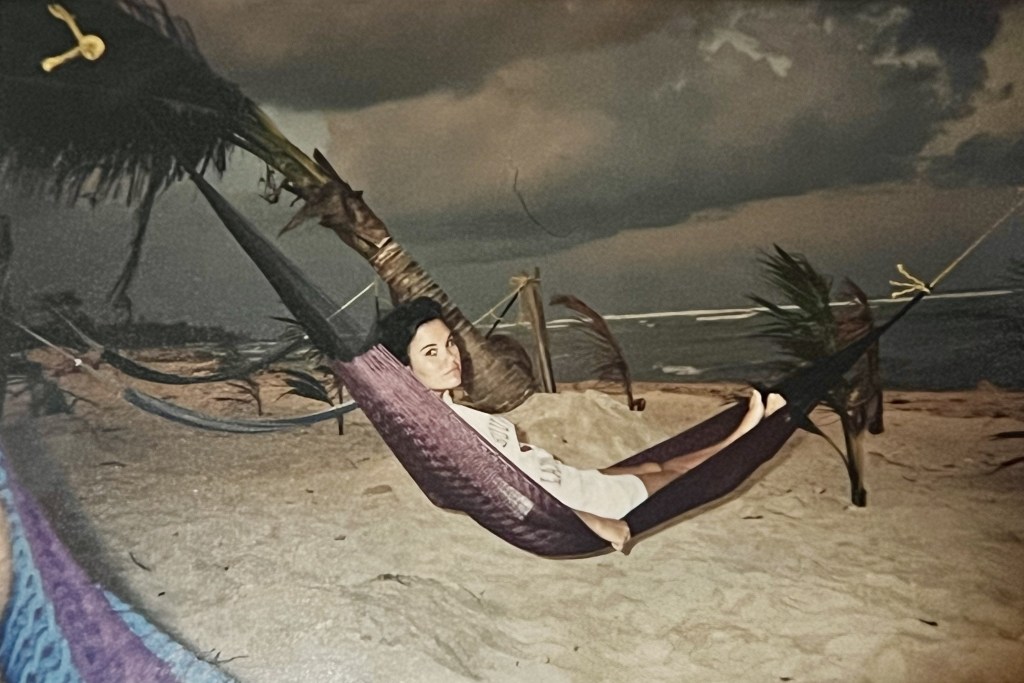
    This is me at Tulum – just sitting on some ruins. I like to think maybe this is no longer allowed.

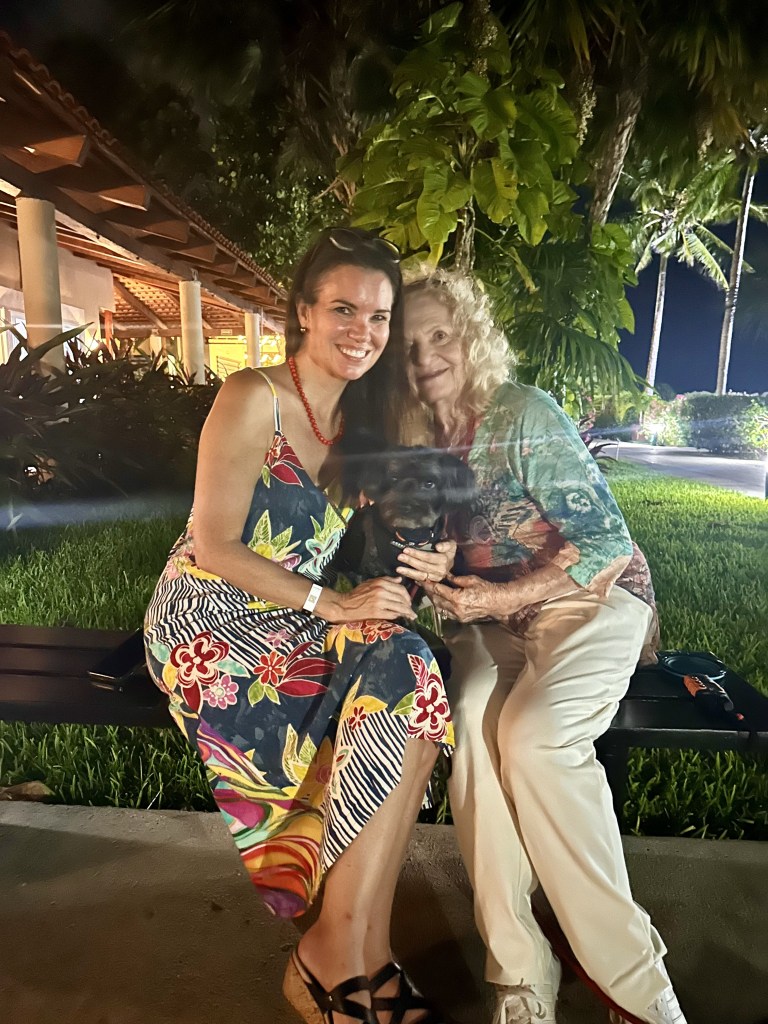
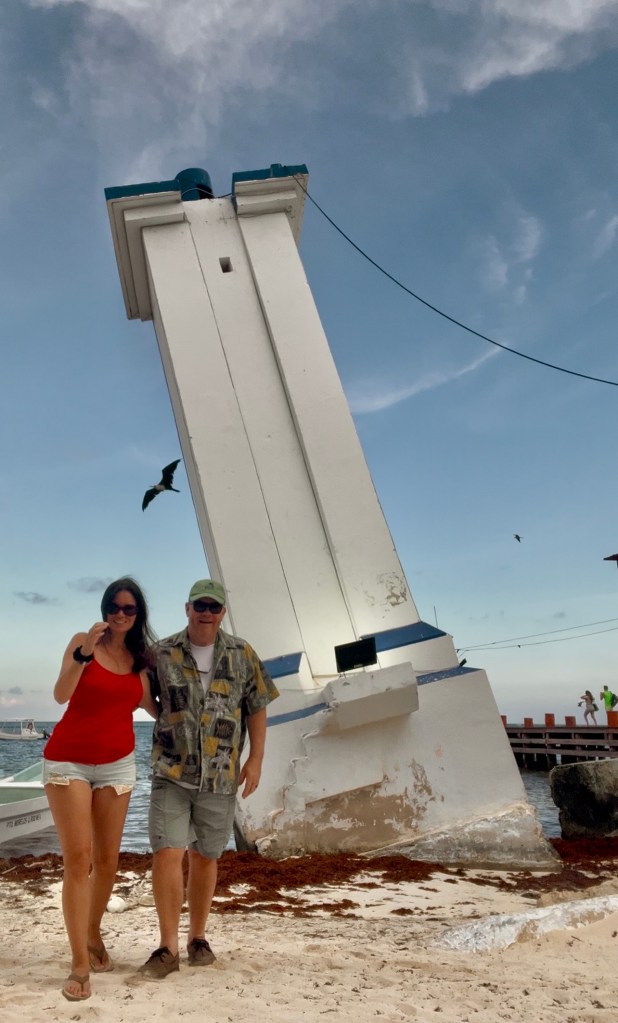
    Fast forward 30 years and 6 months and here we are back on the Yucatan Peninsula for the week of July 4th 2026 as the guests of a dear friend, Karole, who has a membership at an amazing resort called El Cid in Puerto Morales. Every night, we had a gourmet meal with Karole at a different five-star restaurant… and her puppy, Romeo, was a super star everywhere we went!

    El Cid had not been built when we were there in 1995/96. Like so much of the Yucatan at the time, that area was undeveloped. El Cid has built a second section more inland from the beach front section. It’s called Ventus Ha, and it is more focused on biodiversity and ecology than the typical resort. It has a distinctively calm and peaceful vibe.

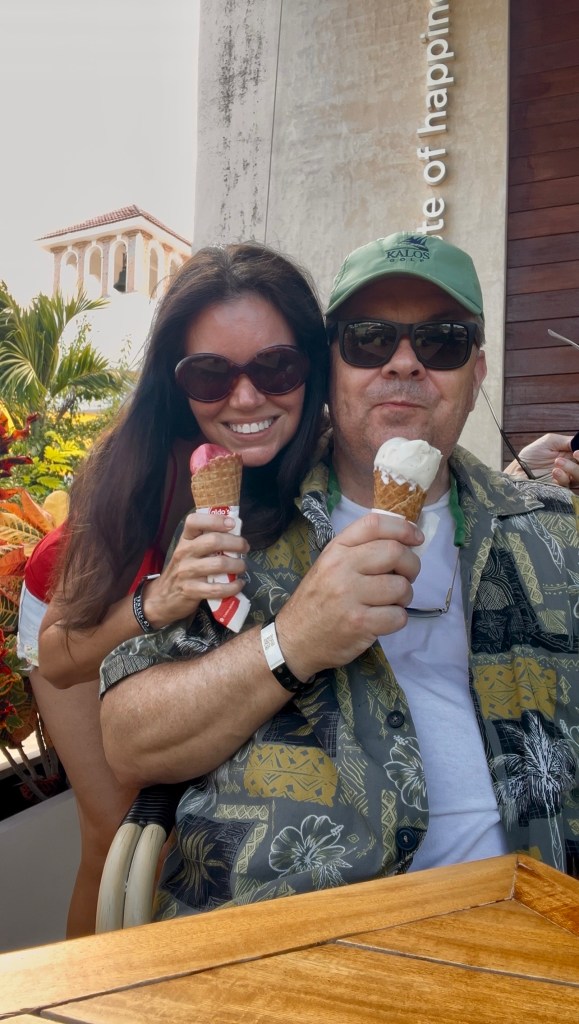
    Ice Cream outside the Catholic Church in Puerto Morales

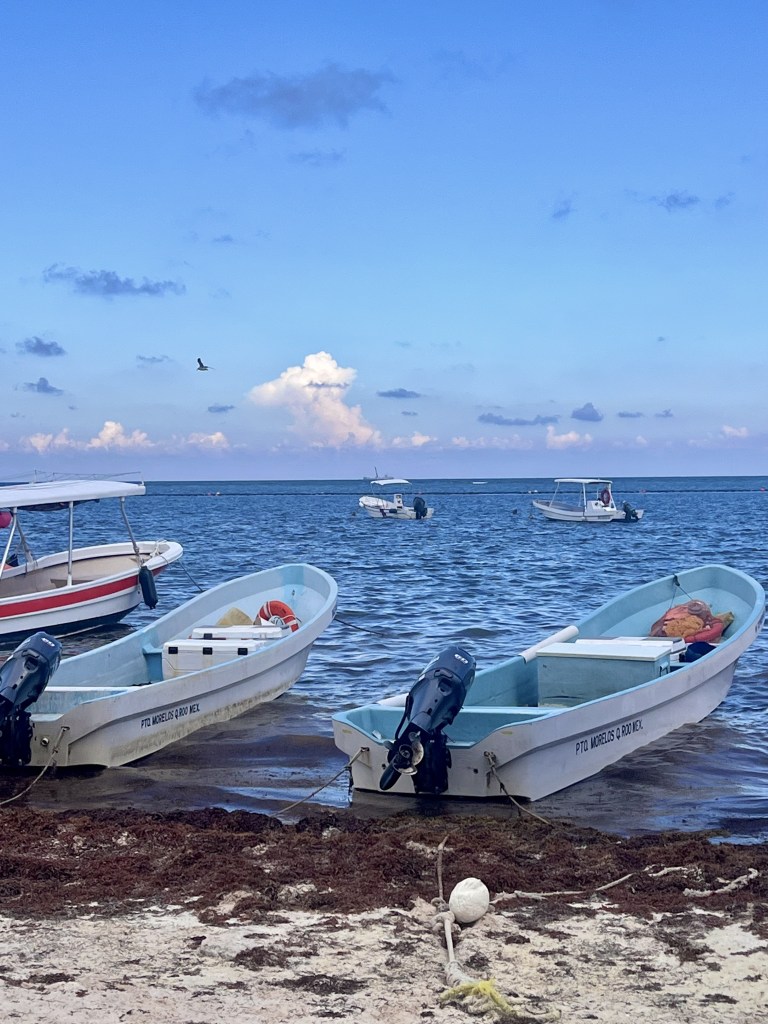
    Meanwhile, outside the El Cid resort is the quaint town of Puerto Morales. Puerto Morales has some of the same ubiquitous jewelry stores and T-shirt and souvenir shops you see in all coastal tourist towns, but it’s also a real working fishing village with a culture you can feel.

    The best thing about this trip was spending time with our wonderful friend, Karole, who loves to laugh and who has had so many adventures and has the best stories from them. We laughed for hours every night at these amazing dinners where I felt like I was eating all the food in Mexico, but I could not stop. It was SO good! Karole lost her amazing husband last year – a wonderful man we all adored – and it was as if we felt his presence the whole time we were there, laughing and story-telling along with us. The resort employees all knew her by name and treated her like family.

    Another great thing about the trip was waking up every morning to the same conversation: “What do you want to do today?” “How about nothing?” “Nothing it is.” We never had plans (other than dinner), and that never bothered us. In truth we conducted a two-day mediation and I filed a few cases while we were in Mexico, but it just didn’t feel like work since we were in such a beautiful setting.

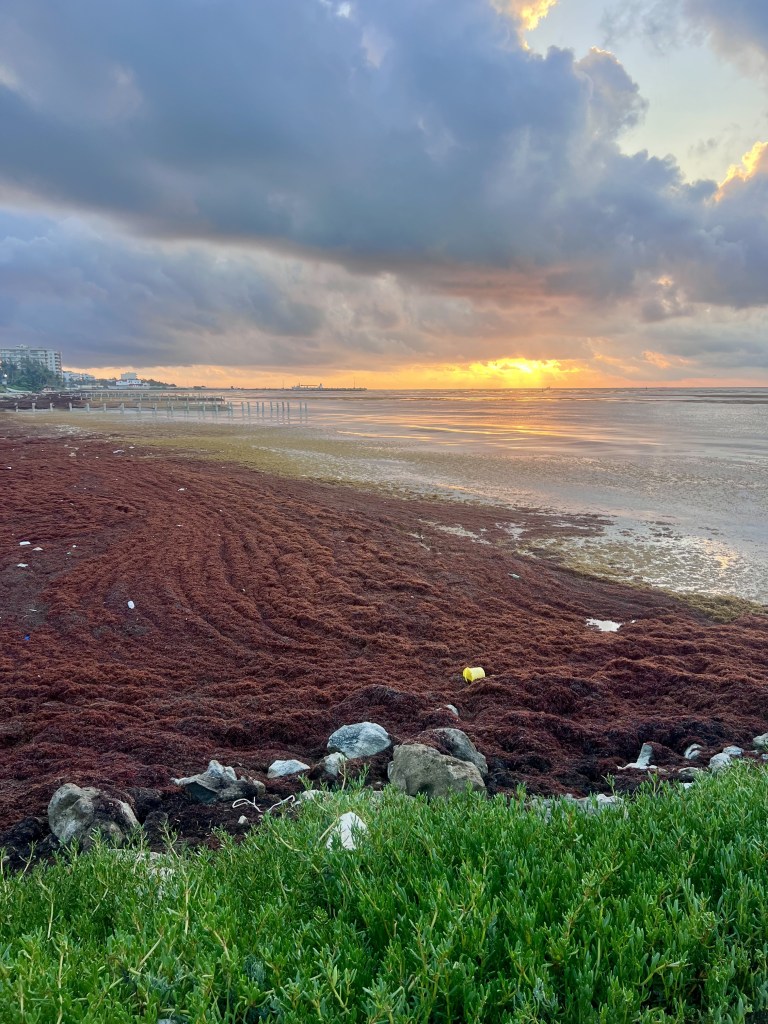
    Now on to one of the Yucatan’s most recent and more significant problems: Sargassum. It is affecting not just Mexico but many islands in the Caribbean and has even gotten to Miami.

    What is sargassum? It’s seaweed that – unlike most every other seaweed – lives on the surface of the water. When sargassum breaks, it multiplies – like a Gremlin! When I was in college, I read a book titled The Wide Sargasso Sea and that was the first time I realized there was a section of the ocean in which surface seaweed was big enough to have a name. After some significant storms around the time of the pandemic, the Sargasso Sea got a lot wider. Now the Sargasso Belt, which stretches between Africa and the Caribbean, is so large, it can be seen from space. As you might expect, sargassum is hurting the tourism economy because it affects one of the biggest draws of the Yucatan and the Caribbean – the crystal clear blue ocean. When Sargassum is around, people do not want to get in the water. 2026 has been an especially bad year for sargassum. Each day, people would pull sargassum from the waters and use it for mulch. But it comes faster than it can be harvested. There is hope that the earth will take care of this issue because human solutions are not able to keep up at this point.

    If the sargassum belt keeps growing at the rate it is now, we will be hearing a lot more about it soon. I suspect it is already starting to have significant effects on the economies of tourist-dependent areas.

  • It has been decades since Mitch and I were last in Nassau. I returned this weekend, and I was amazed at its transformation.

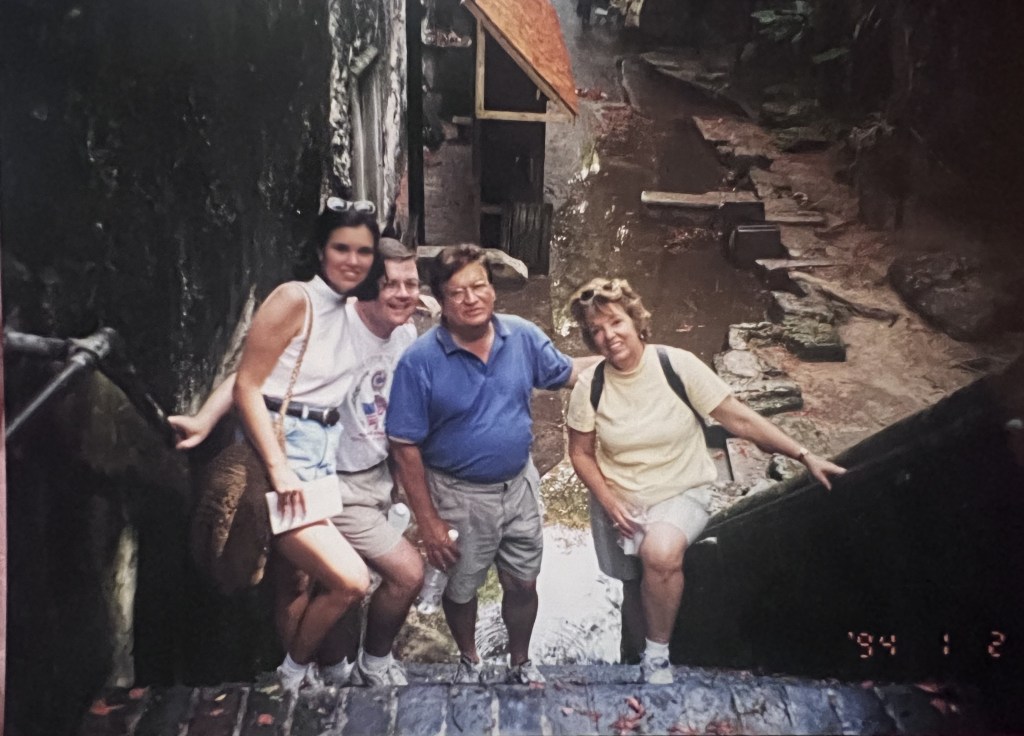
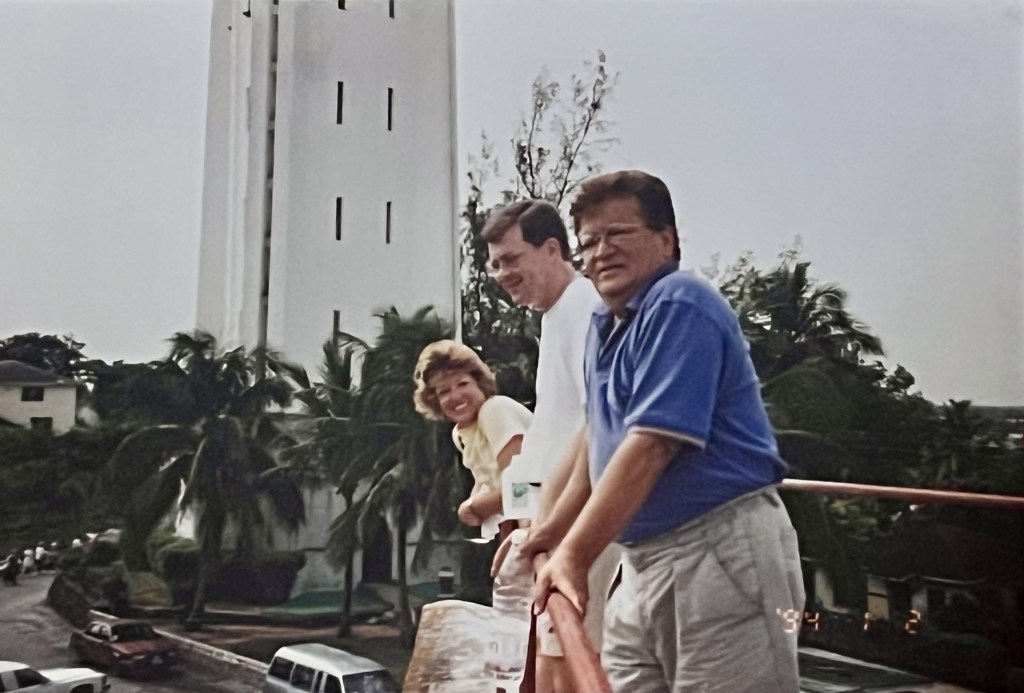
    This is a photo of us and our precious friends Kathy and Pierre at the Queens Staircase in the mid-90s.
    This is a photo of us and our precious friends Kathy and Pierre at the Queens Staircase in the mid-90s.

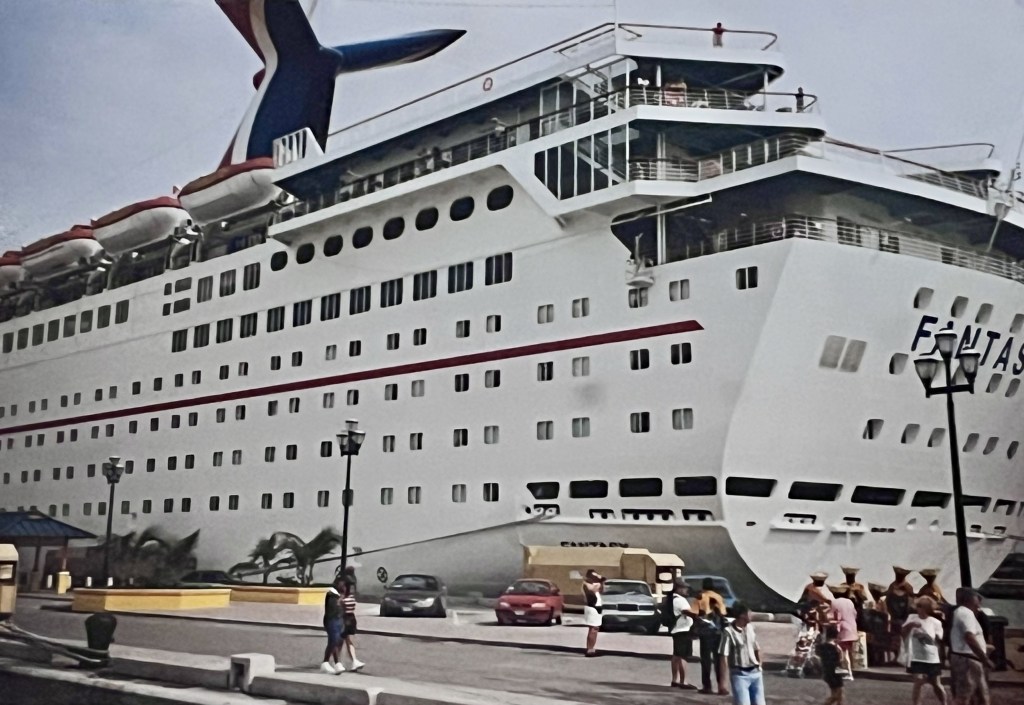
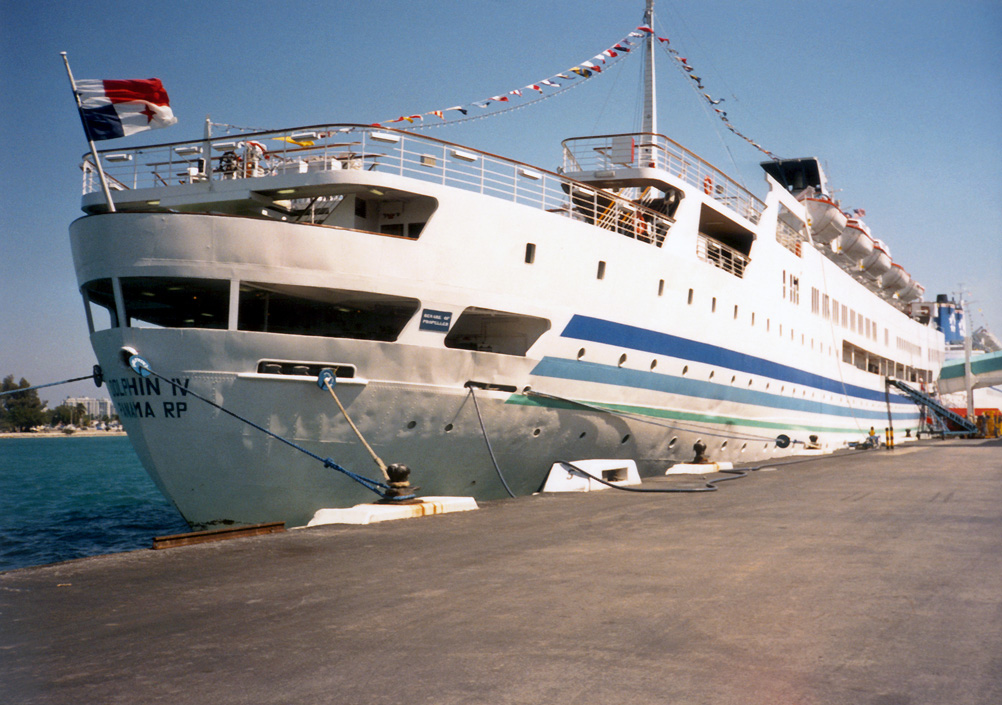
    In the mid and late 90s, we went on a couple of cruises to the Bahamas. One on the Carnival cruise ship Fantasy and the other was one of the final voyages of the Dolphin IV. I will try to find a photo of that ship (The Carnival ship is below), but for context, the travel books called the Dolphin IV “a battered by seaworthy vessel.” That cruise cost $99 for a four-day cruise. And, as we left port, the ship was rocked so wildly by the waves that the water splashed out of the ship’s swimming pools! The Carnival Fantasy seemed enormous by comparison. It is dwarfed by today’s ships.
    Carnival Fantasy mid-90s in port in Nassau

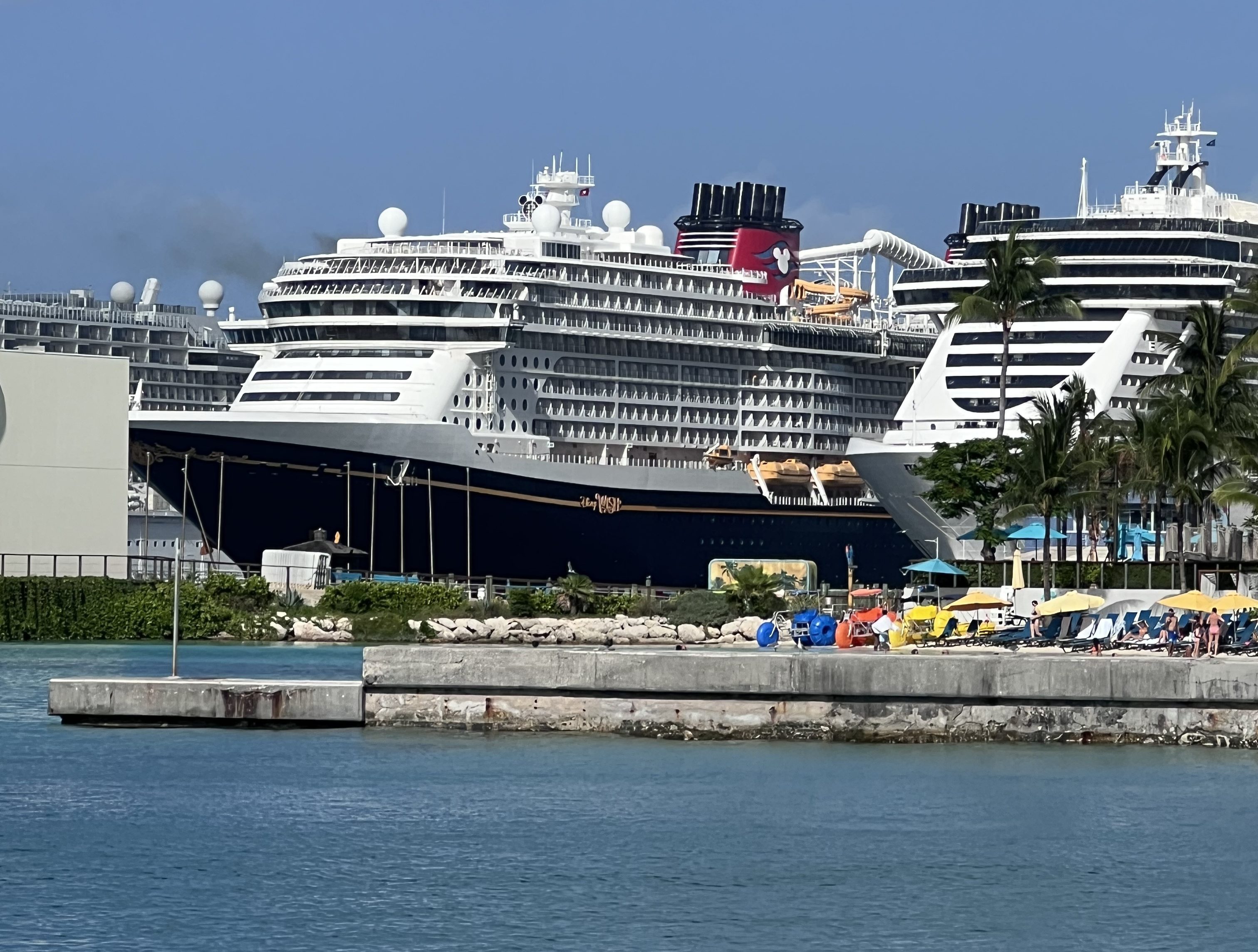
    This past week, the ships I saw in port in Nassau were many times the size of this Carnival ship of the mid-90s, a ship that felt enormous at the time.

    Disney and another mega-ship in port in Nassau August 2026

    Side Quest: I found a photo of the Dolphin IV online. I also learned that it was decommissioned shortly after our trip. It was built by Germany in 1956 as war reparations for Israel. In 1978, it was acquired and operated by Cape Canaveral Cruise Lines for 3 and 4 day cruises to The Bahamas. But in 2000, it was holed up in Freeport because of “wastewater corrosion issues” and it never sailed again. It was a fabulous classic ship with so much mahogany and brass. It felt like we were on the Titanic.

    Now back to this week. I spoke with local business owners about how downtown Nassau has changed since the 1990s. More cruise passengers come today, but a much smaller percentage of them actually leave the ship and visit Nassau. Many prefer to stay on the ship – and the cruise operators like it that way. Cruise ships of the 1990s had pools and buffets; now they have water parks and endless entertainment. And while cruise lines offer more choices, the ports themselves are starting to look similar, filled with the same T-shirt shops, jewelry stores, and less local culture. In the 90s, going into port was an exotic adventure. Today. it’s viewed by many as a hassle. How can the Bahamian citizens benefit from all these cruise ships visiting their islands if the passengers won’t leave the ship and experience the rich and beautiful culture of the country? That’s a problem that I believe can be solved.

    I recall when we were last in the Bahamas in the 1990s, there was a resort being built that the locals were very excited about. They said it was going to be bigger than anything anyone has ever seen. Mitch and I thought it would be too bougie (and too expensive) for our taste, but we were happy for the impact it would have on the local economy.

    Mitch and our friends Kathy and Pierre at the fort in the mid-90s.

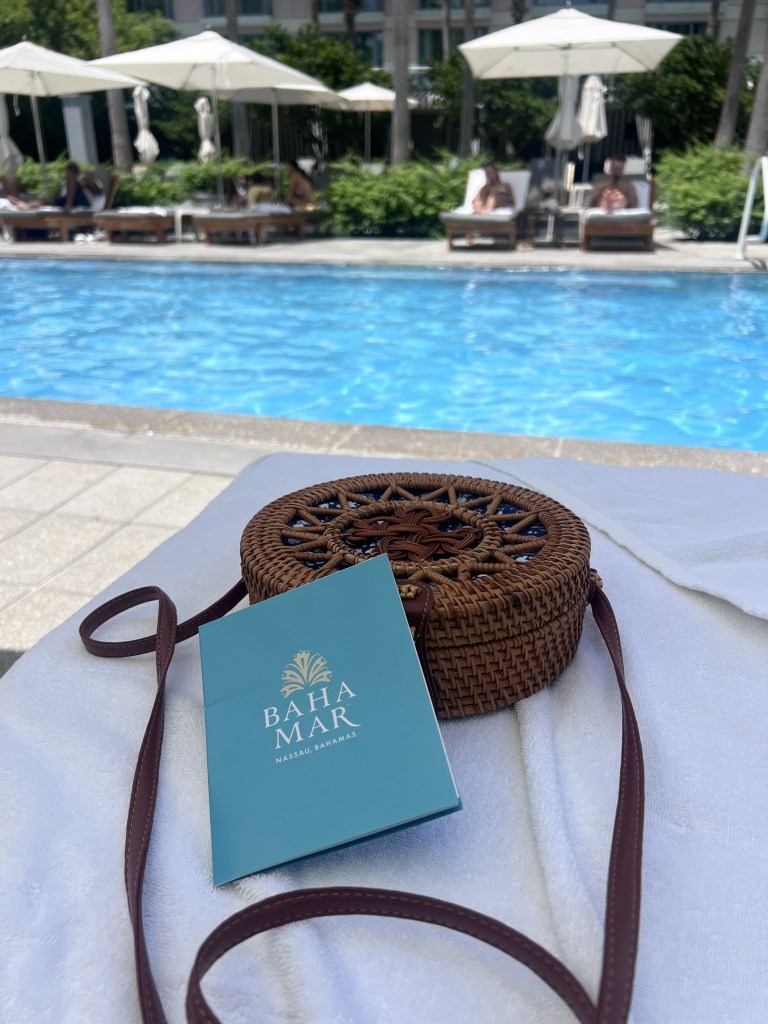
    I have never stayed at Atlantis. I still have not seen it since it was completed. But this past week, I stayed at a new resort that dwarfs Atlantis like the ships of today dwarf that Carnival ship of the 90s: Baha Mar. I got to Baha Mar before check in and sat by the pool working on cases for a few hours.

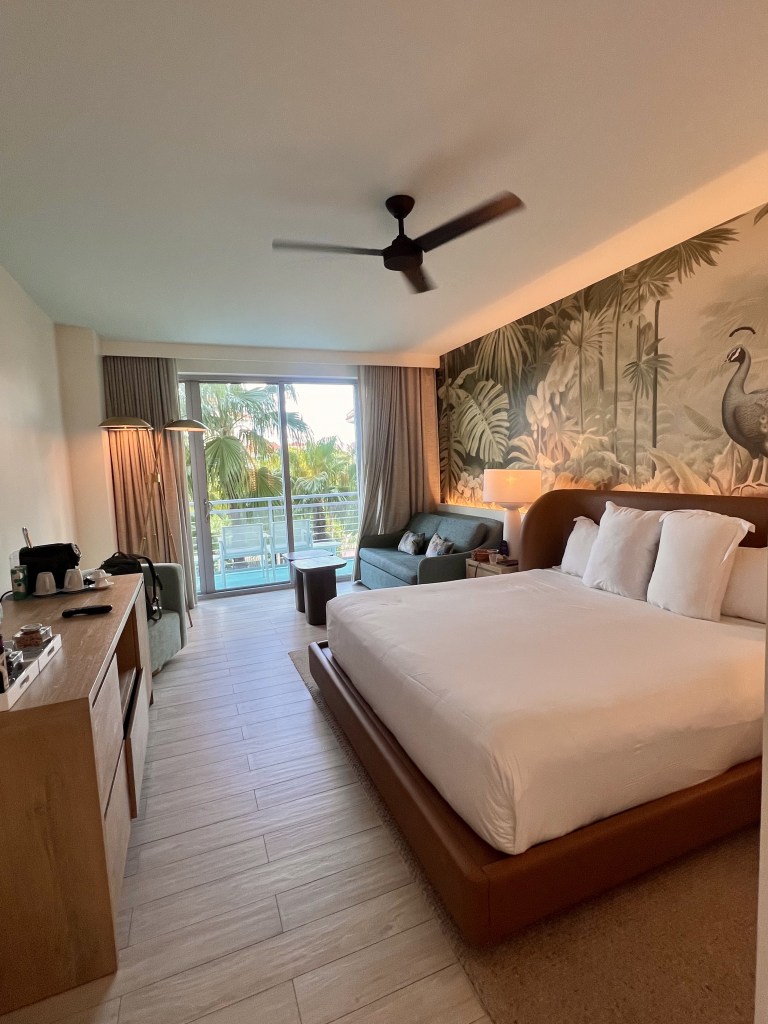
    And, while I normally prefer the residential feeling of a place much more than a resort, I also love a nice relaxing hotel room and not having to think about much. I didn’t have to think about much at all at Baha Mar, and that felt very good.

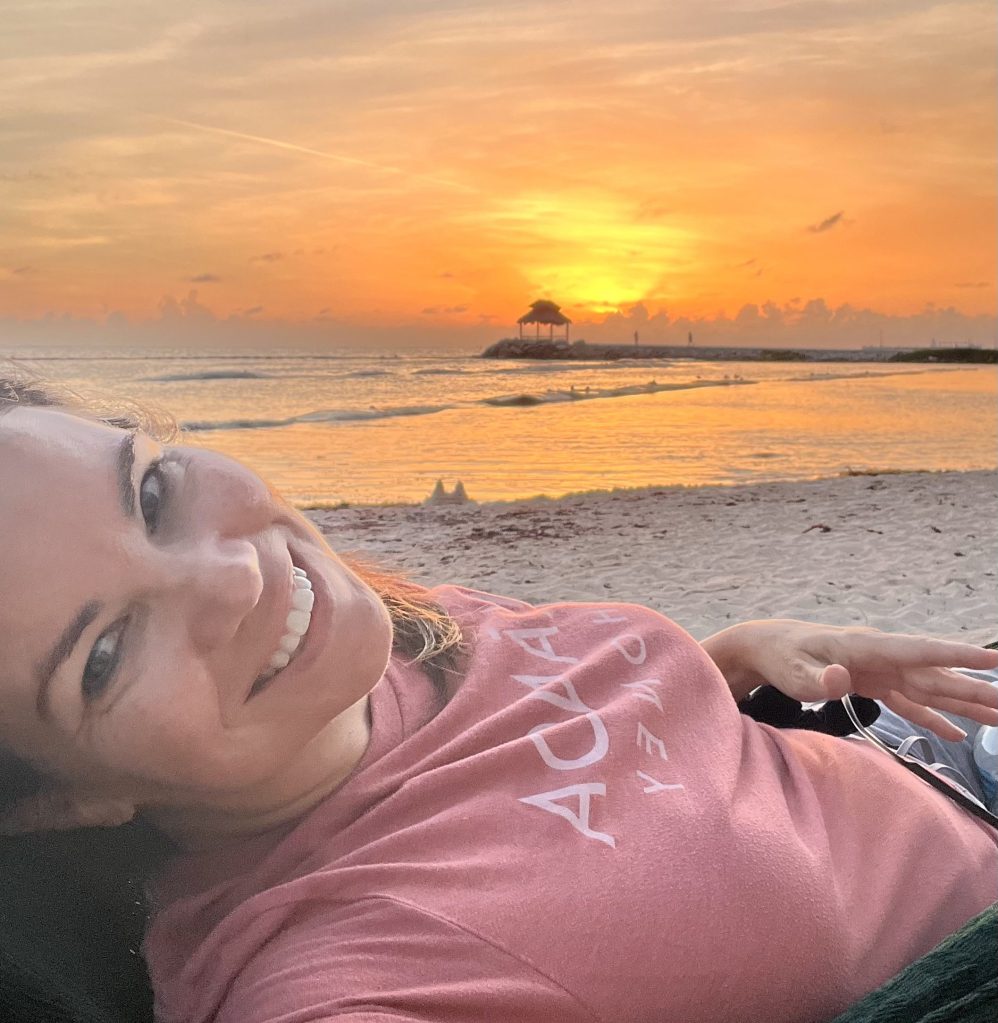
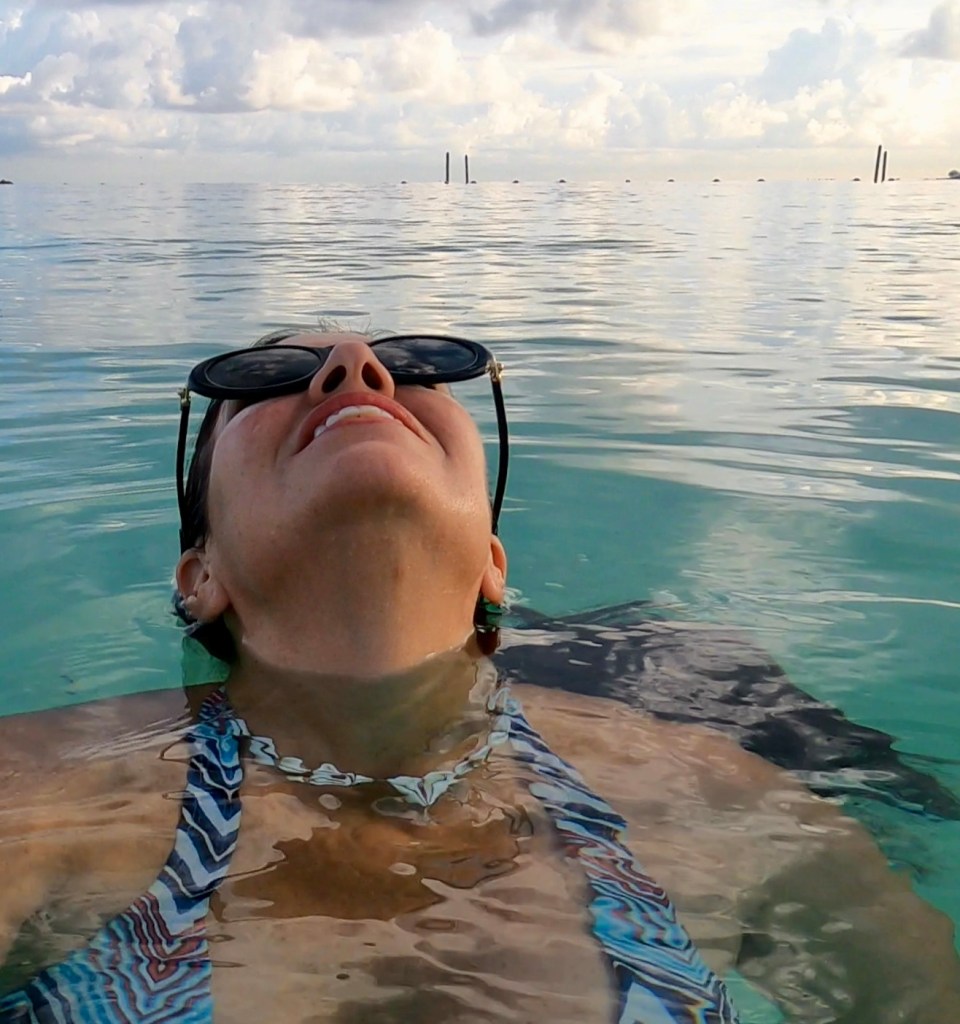
    I relaxed. I have had some water fears that surfaced in adulthood on a scuba diving excursion in 2010. Since then, I try to get into the water when I can to reassure myself that it’s okay. I also love sunrise. Here is a photo of me in the ocean at sunrise this week. I took morning walks each day and almost no one was out. I had the place to myself. Just a few hours later, the beach would be crowded.

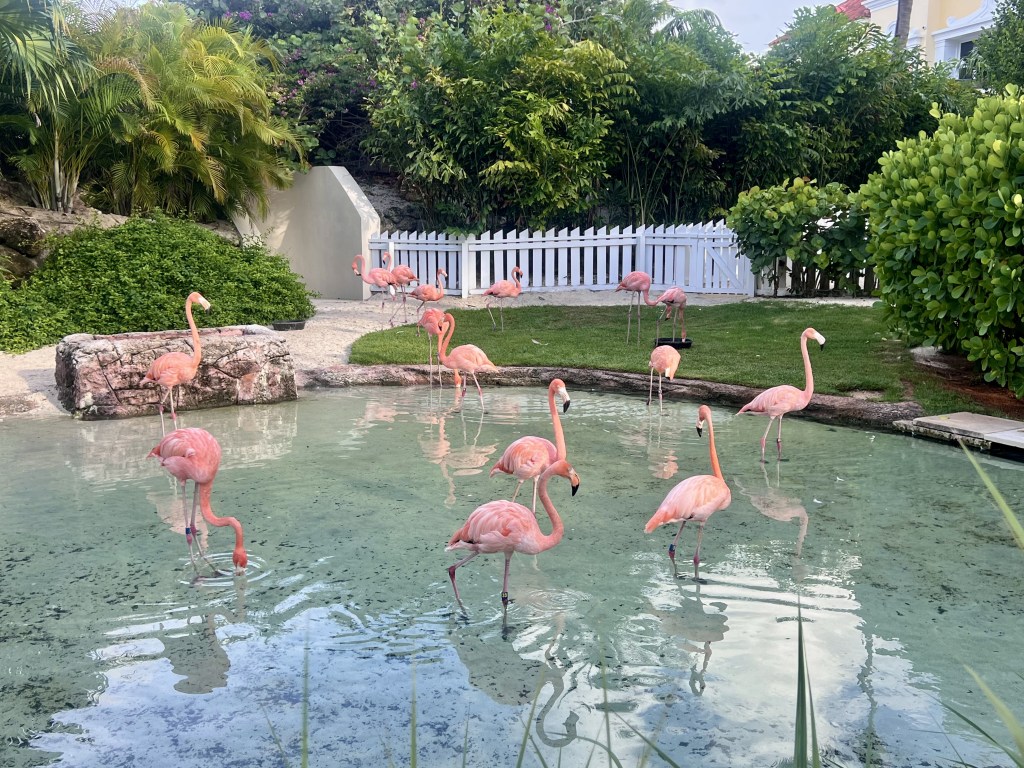
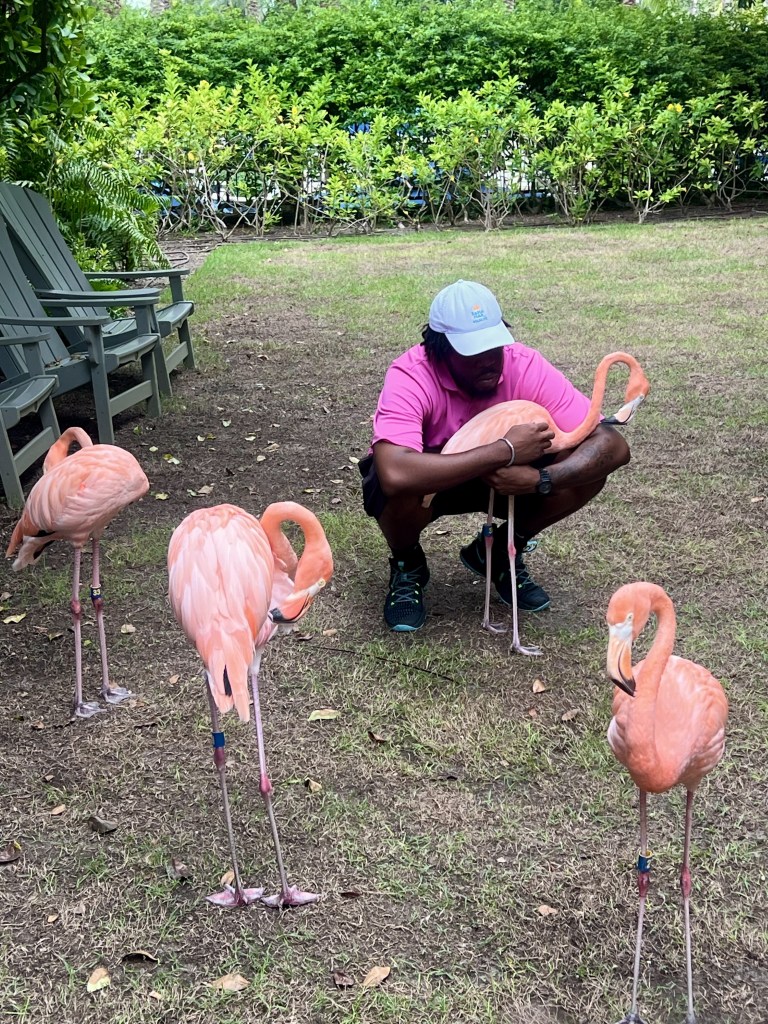
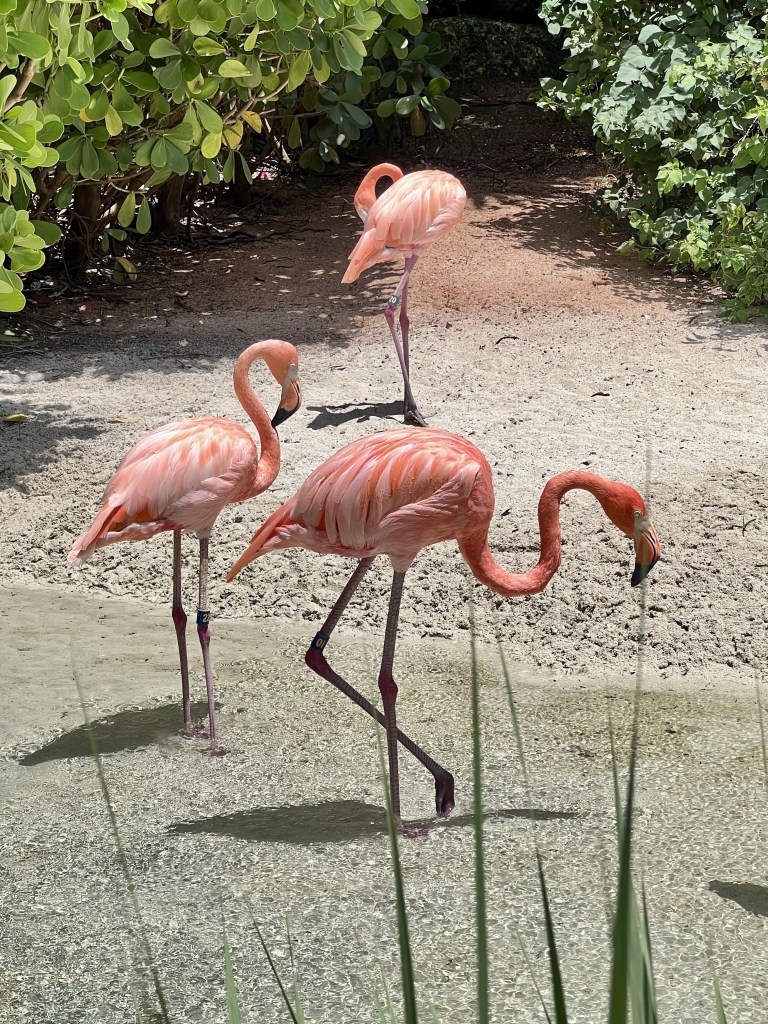
    But my favorite experience on this trip was my daily (even multiple times a day) visits with the flamingos.

    Flamingo Cay
    Flamingo Cay

    I have loved flamingos since I was a kid. These beautiful pink birds get their color from the brine shrimp they eat. They are born white and gradually turn pink as they eat the shrimp. Flamingos were once endangered, but thanks to efforts of the Bahamian government and the Audubon Society, the flamingo population is now in excess of 80,000! The flamingo is the national bird of the Bahamas and it is obvious how much they are beloved and protected by the Bahamian people.

    Each morning at Baha Mar, weather permitting, several “avian specialist” employees lead the ambassador flamingos on a short parade through the sidewalks to a clearing where they educate the guests about these amazing birds. Did you know that flamingos can fly very high and for long distances? And sometimes they leave their area of the resort and the employees set out to find them.

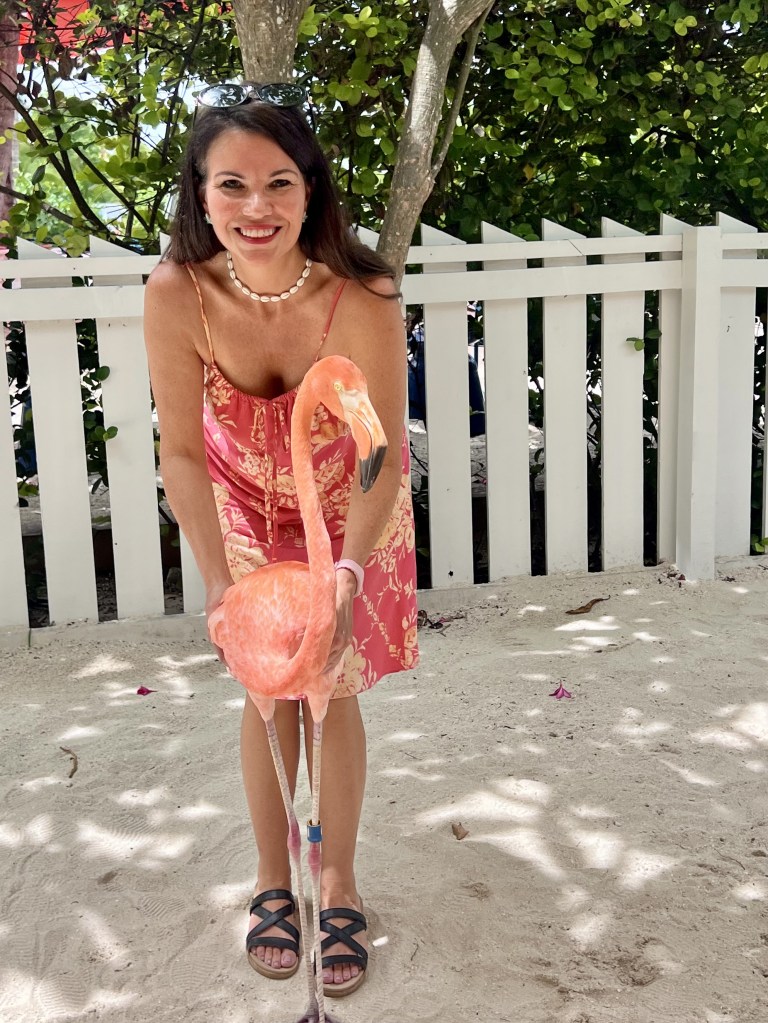
    When I found out that I could have a personal encounter with flamingos for just $110, I raced to book it. I consider that to be a lot of money, but I have had dinners that cost more and were not nearly as memorable. Meeting those flamingos could not have been more special.

    I wore a pink dress and they tried to fluff my feathers for me!

    So how are these wild animals so friendly? Well, not all of them are wild. Wild flamingos were raised by flamingos. But in Baha Mar, there are several flamingos known as “ambassador flamingos.” Ambassador flamingos were raised from eggs by humans. Ambassador flamingos socialize like pets. They are curious and can be goofy and mischievous. They have become accustomed to humans loving them and protecting them, so ambassador flamingos have grown to be very friendly and interactive.

    I am in love with the ambassador flamingos of the Bahamas.

  • Road to Hana

    Mandy’s Recommendations on The Road to Hana

    I have dear friends driving the Road to Hana this week and I prepared this quick blog for them. Maybe others will find it and it can help them too.

    Take:

    Hiking shoes and socks

    Swimsuits and towels

    Snacks

    Water

    Bug Spray

    Cash

    Cell phone charger

    As you’re making your plans, see if you can get a reservation to visit the black sand beach at Waianapanapa State Park. If not, no worries. There’s plenty of beautiful things to see on the Road to Hana. 

    Expect to lose cell service about 1/3 of the way into the Road to Hana. It will come and go, but you mostly won’t have it. Once you lose cell service, you may want to switch to airplane mode to save your battery.

    There are mile markers, but they are hard to see. Put these stops into your GPS app. If you forgot snacks, you can stop off in Pai’ia and get some before going too deeply into the wild. 

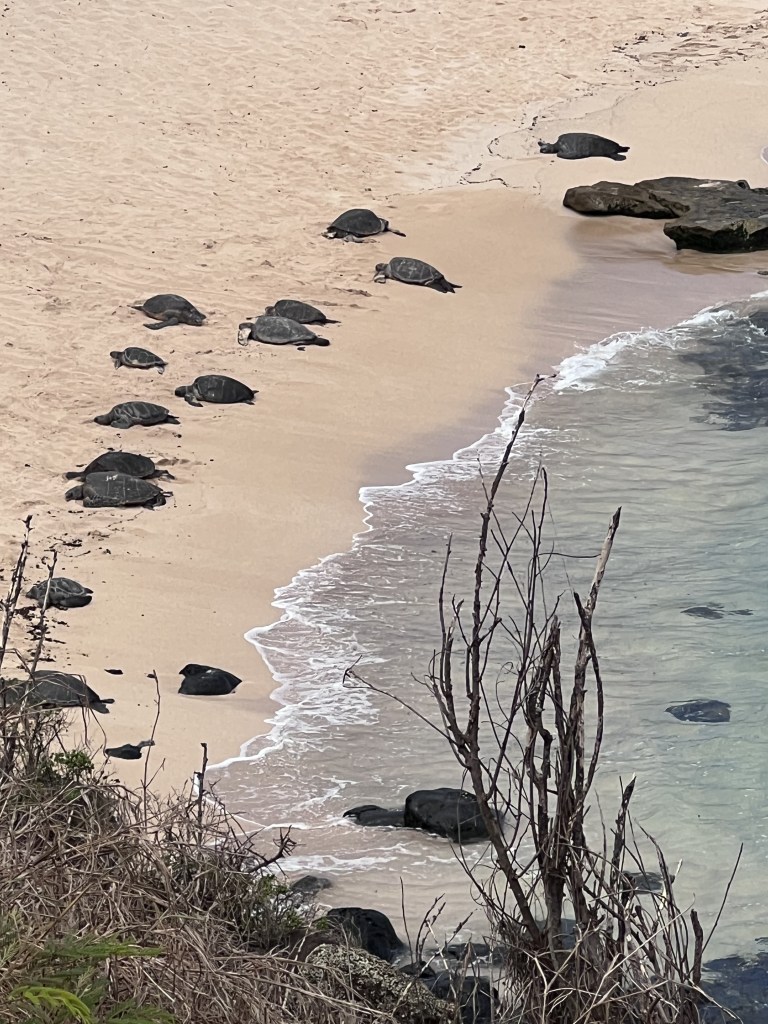
    Ho’okipa Beach Park – Go here first to see so many turtles sunning themselves on the beach. You can buy a young coconut from a vendor  who’ll cut a hole in it with a machete and add a straw. This hydration will do you well.

    Turtle beach

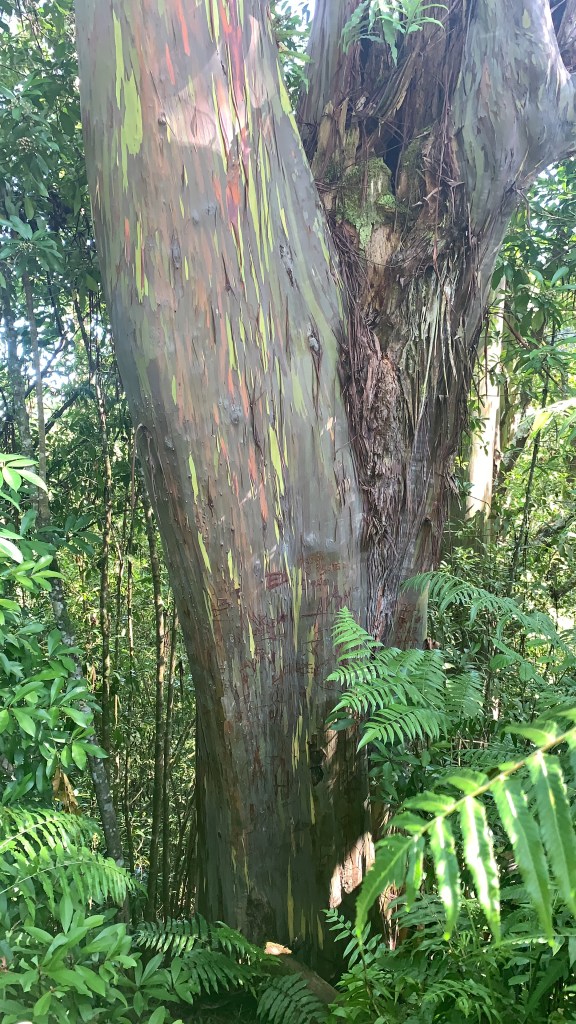
    Kailua (around Mile 6) – You will drive a while before you get to the first “official” stop on the Road to Hana – the Rainbow Eucalyptus Trees. Get out sea see them. Venture beyond the trees you can see from the roadway. There are some very large gnarled ones just a short walk into the woods. The pathway will be obvious.

    Rainbow Eucalyptus Trees
    Rainbow Eucalyptus Trees

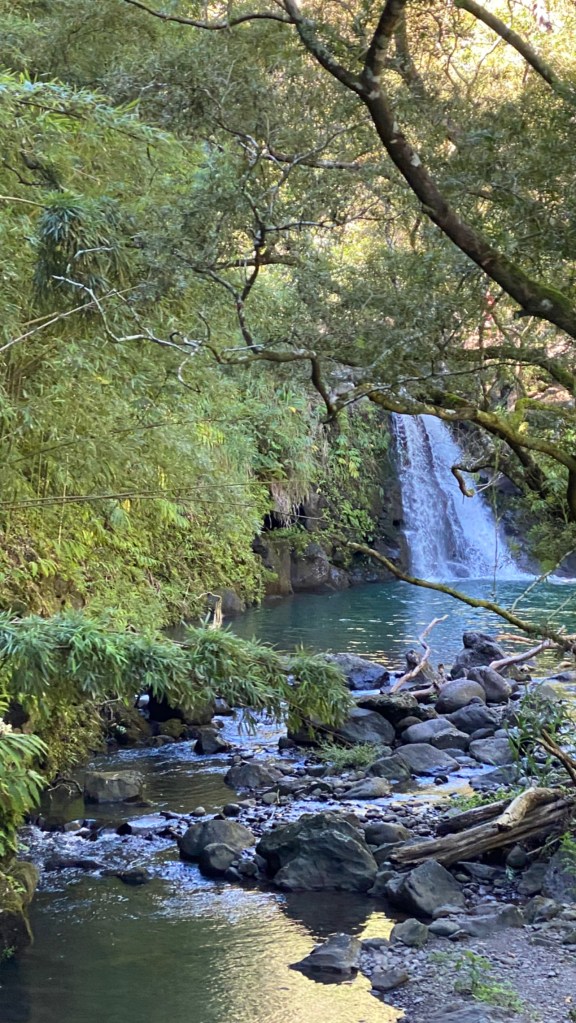
    Waikamoi Stream (around Mile 9) – A lovely waterfall and stream

    Waikamoi Stream
    Waikamoi Stream

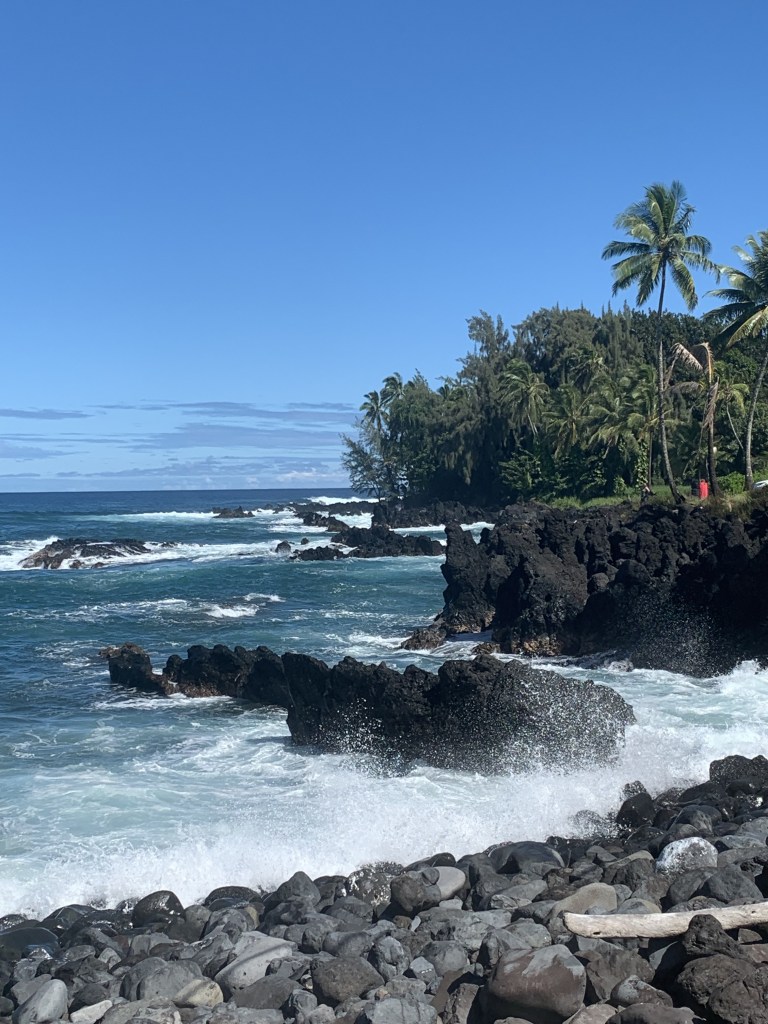
    Ke’anae Park (between Mile 16 and 17) – This is not on the official Road to Hana, but you do NOT want to miss this place! Put Ke’anae Park into your GPS and as soon as you see the beautiful bright blue water, park and get out and walk around and take it in. This is my favorite stop on the Road to Hana and most people miss it because it’s not actually on the Road to Hana. This place is picnic-worthy.

    Ke’anae Park
    Ke’anae Park

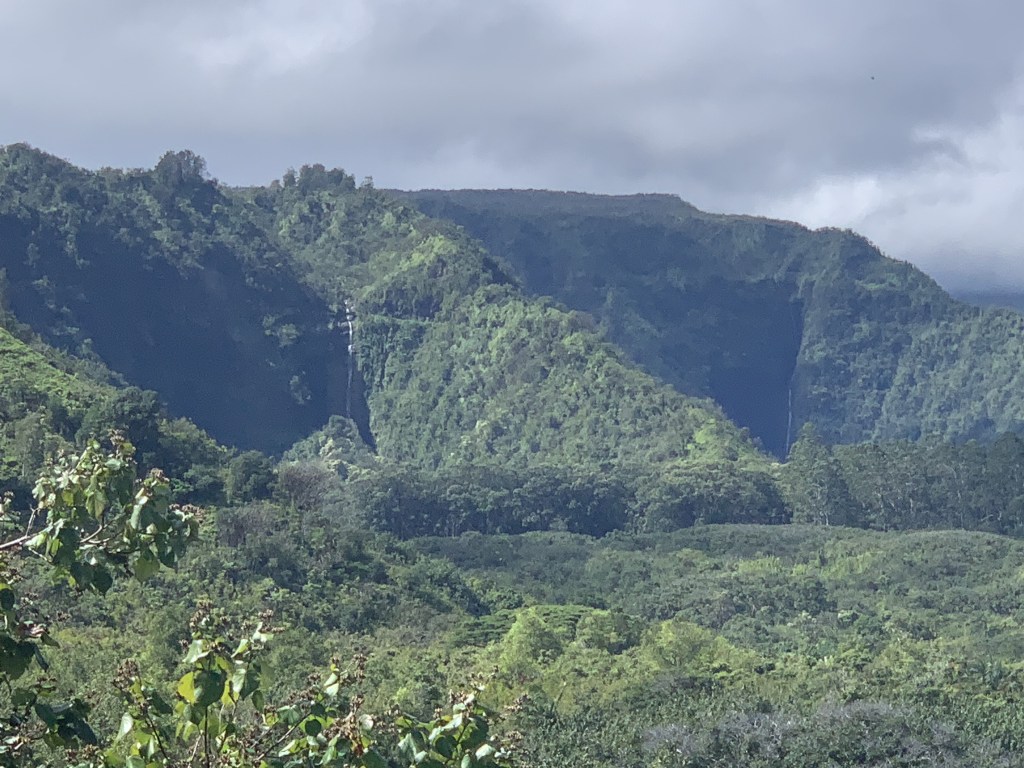
    Wailua Valley Lookout (around Mile 19) – Park and walk up to the lookout. If there’s been a recent rainfall, in the distance, you can see some very high waterfalls. Otherwise, you’ll get a beautiful bird’s eye view of the area – mountains one side, ocean on the other. 

    Wailua Valley Lookout
    Wailua Valley Lookout

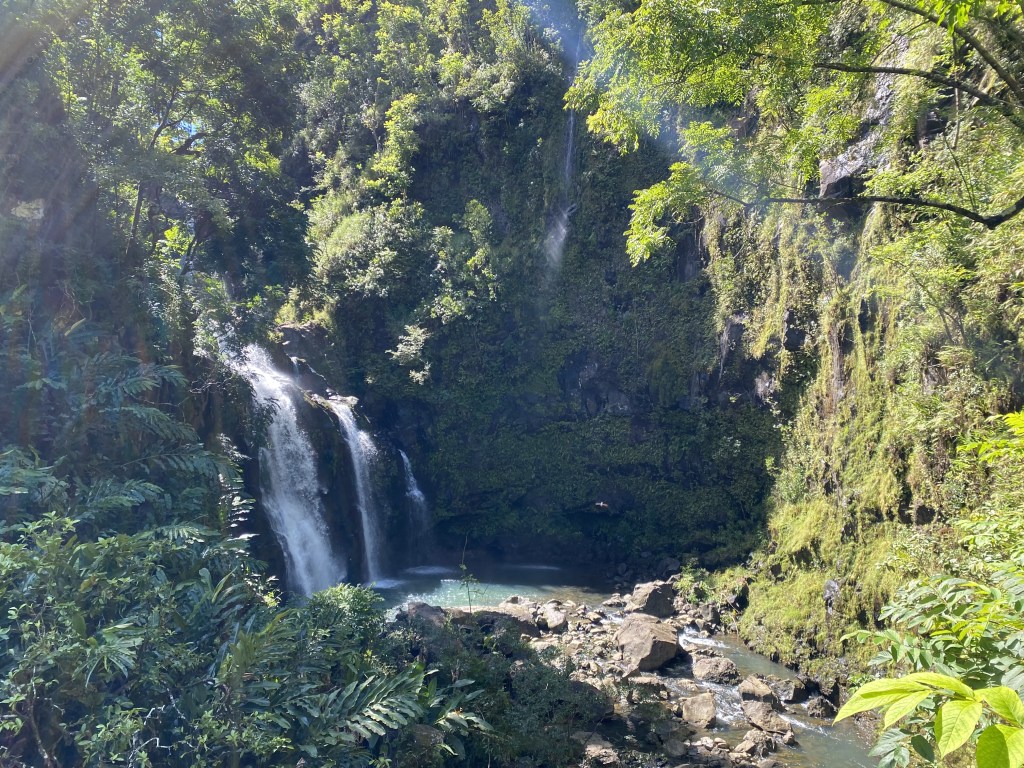
    Haiku-Wailuanui (around Mile 21) – You will cross a bridge with amazing waterfall views. Parking is almost impossible around here, so just try to get a photo to the right as you cross the bridge. There will be more to see, so don’t be sad that you can’t get out and walk to it.

    Haiku-Wailuanui
    Haiku-Wailuanui

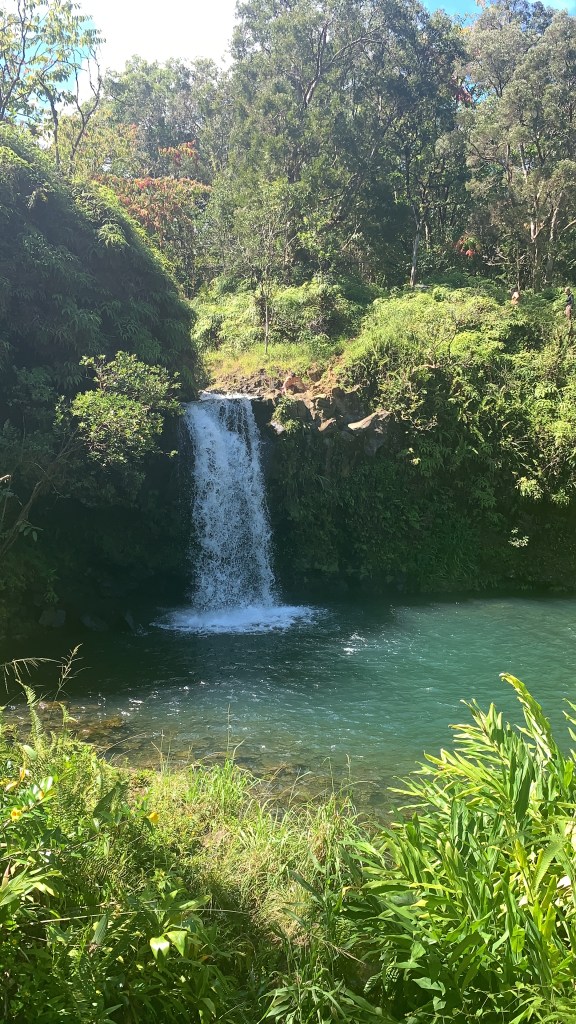
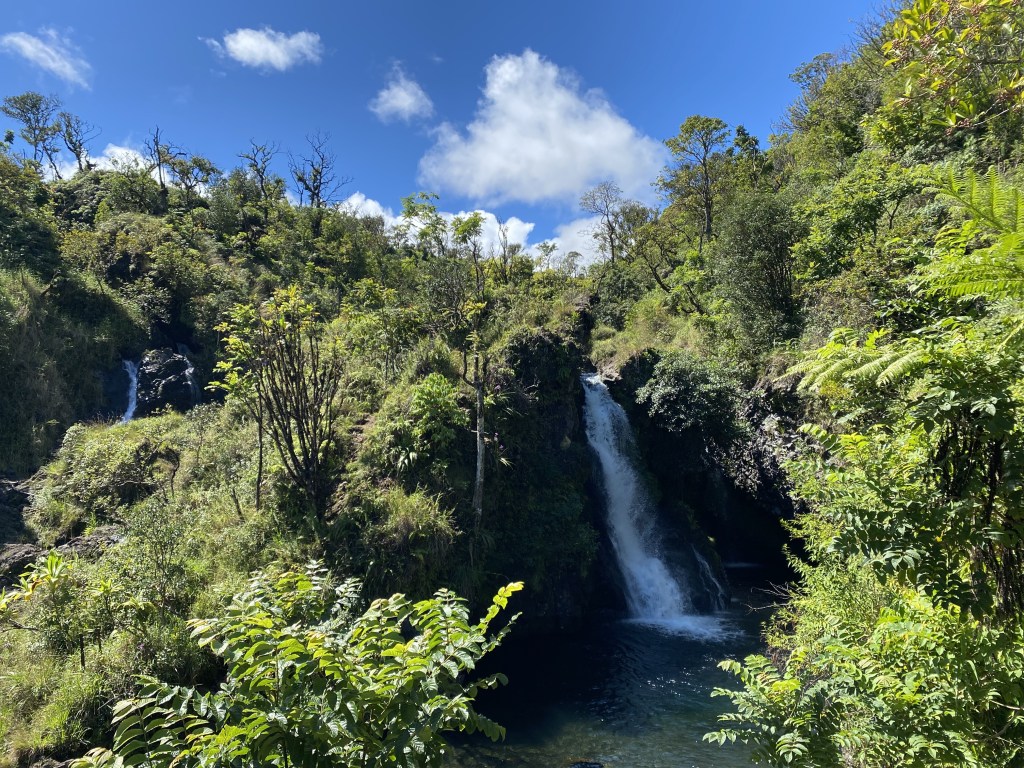
    Pua’a Kai State Wayside / Ko’olau Forest Reserve (around Mile 23) – Park here and get out and walk to the falls. You may even want to swim in the falls. Some people jump from the rocks into the base of the falls, but I don’t recommend it because (1) you could get hurt, and (2) waterfall pools in Hawaii are known for leptospirosis (a bacterial infection with flu-like symptoms that comes from the feces of rats upstream of the falls). Rat feces notwithstanding, this is a beautiful site worthy of a little picnic if you didn’t have one at Ke’anae Park.

    Pua’a Kai State Wayside
    Pua’a Kai State Wayside

    Haiku – where the Mo-olino Stream crosses the Hana Hwy (around Mile 24) – There will be another set of waterfalls that you will probably drive past because there is nowhere to park safely and walk to them. Just have the passengers take a quick photo from the car and trust that you will see more. 

    Haiku - where the Mo-olino Stream crosses the Hana Hwy
    Haiku – where the Mo-olino Stream crosses the Hana Hwy

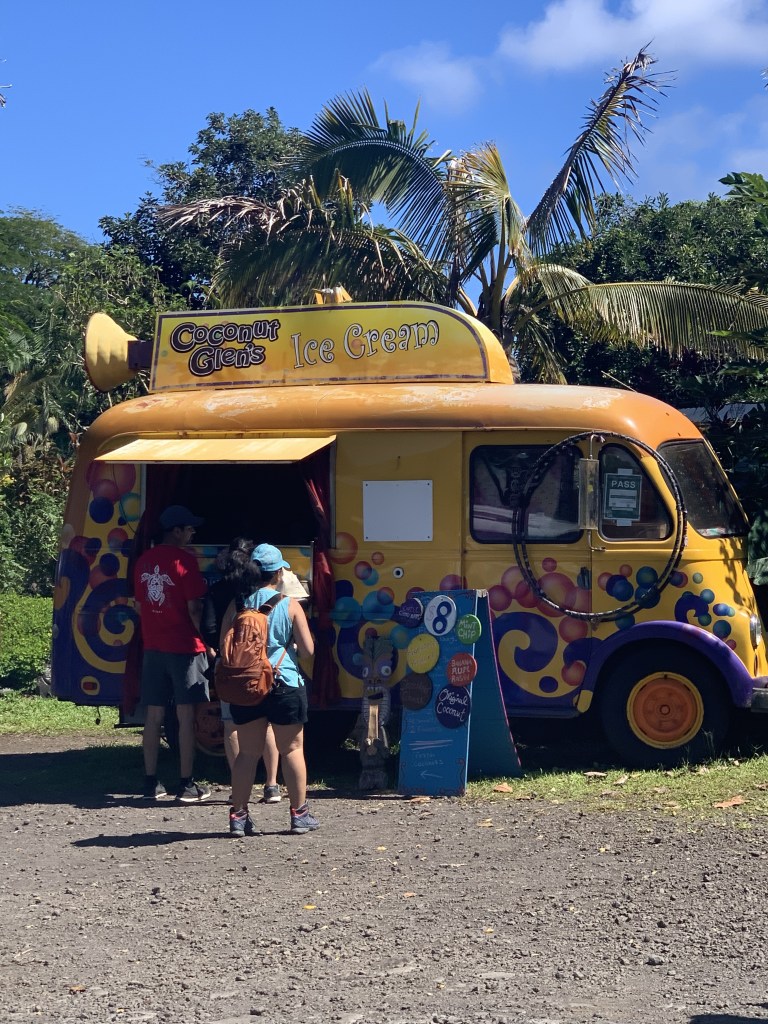
    Coconut Glen’s Ice Cream in Ko’olau – This little ice cream truck is along the way here if you’re hungry for ice cream. But there will be many more opportunities for food – both sweet and substantial – along the Hana Hwy. Not far from here is a pizza stand and there are many food trucks in Hana.

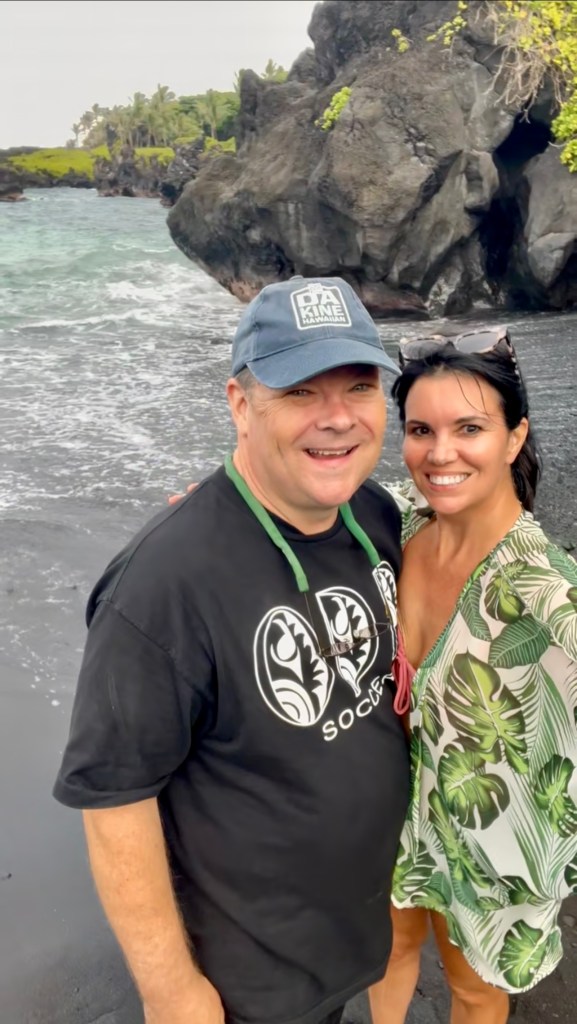
    Waianapanapa State Park / the Black Sand Beach – This park is not officially on the Road to Hana, but it’s a short drive off the Hana Hwy. The park is restricted to those lucky people who have been able to get reservations. IF you have been able to get reservations to the black sand beach at Waianapanapa State Park, it is worth spending an hour or so out here at your appointed time. The park closes at 6pm daily. The final time slot for reservations is 3pm-6pm. If you arrive after 30 minutes into your reservation period, you may be denied access and/or parking. A horn will sound around 5:30 and people start to clear the beach. Walk-Ins without a reservation are turned away – except for Hawaii residents. Click here for the link to request a reservation at Waianapanapa State Park. Non-Hawai residents must buy a parking pass as well as an entry ticket.

    Black Sand Beach
    Black Sand Beach

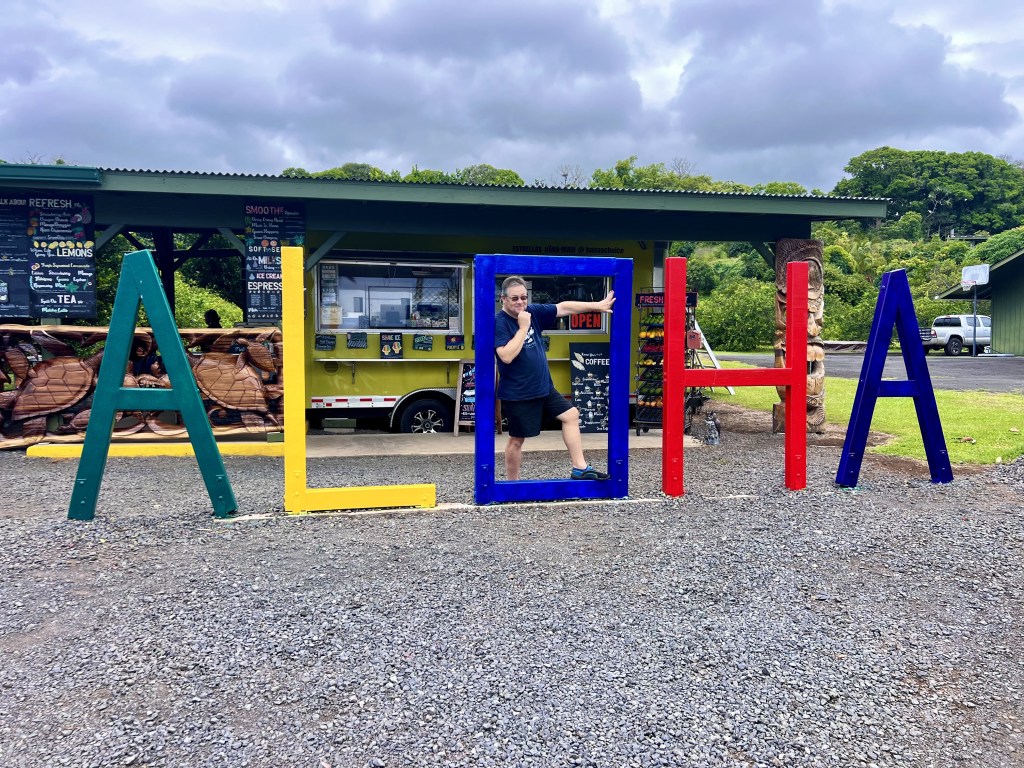
    Hana – Wakiu — This place has a very large colorful ALOHA sign that’s great for a little phot shoot. You can also get some coffee, shave ice, espresso, milk shakes, and even a cacao pod to snack on.
    Hana - Aloha Sign
    Hana – Aloha Sign

    Hana Proper – And then you’re in Hana proper. You’ll see that – just like in life – the journey has been better than the destination. There are beach parks and restaurants and food trucks and a General Store. But I recommend continuing on toward Haleakala National Park and hiking to the beautiful waterfalls.
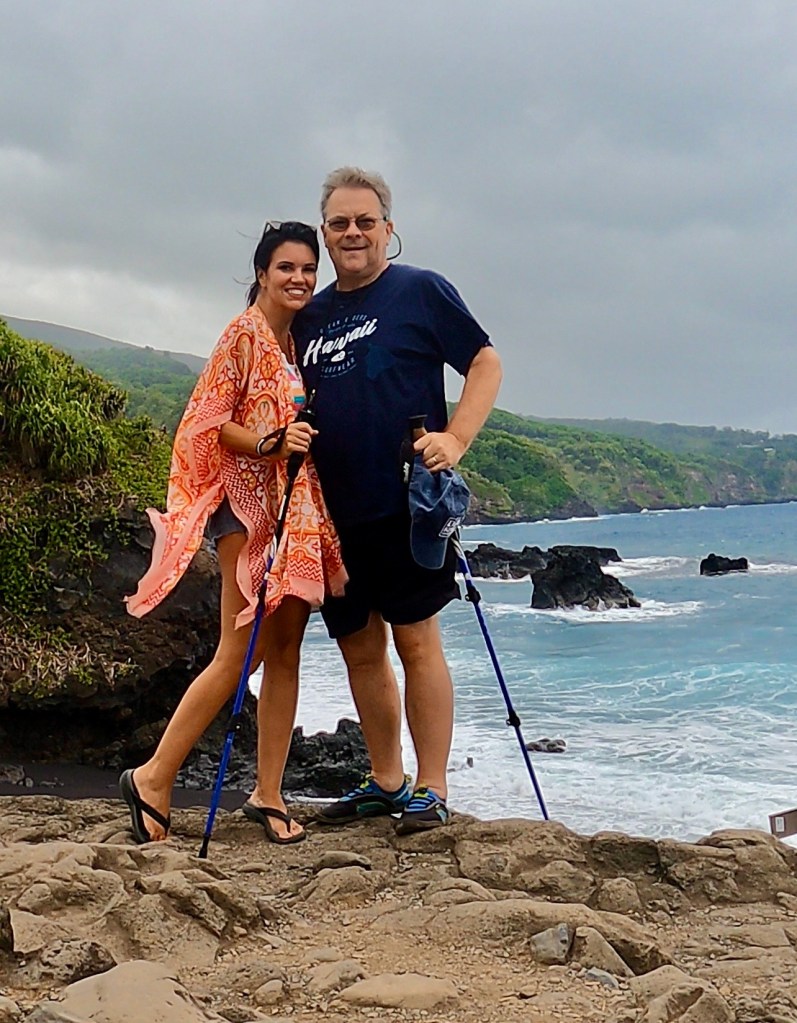
    Hana – Pu’uhaoa — There’s a beautiful tall waterfall here and some likely parking available so that you can get out and walk to it. 

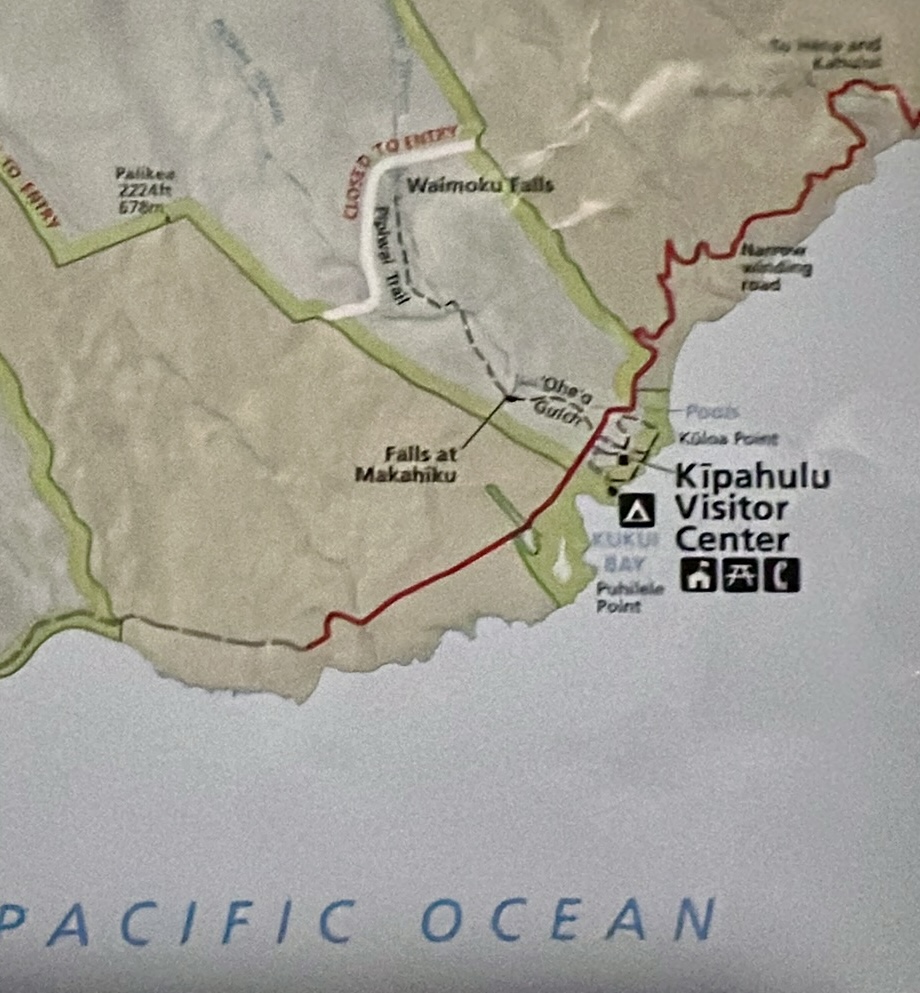
    Haleakala National Park – The Haleakala National Park is beyond Hana and as far as you should travel on the Hana Hwy in this direction. Your rental car is probably not even insured for the roads beyond the National Park entrance because they become treacherous very fast (one lane roadway on the side of a cliff). There are several important sites you’ll want to see when you get here, and they are detailed below (Kuloa Point, the banyan tree, Makahiku Falls, the bamboo forest, and Waimoku Falls). The entire hike is 3.7 miles round trip and completely worth it! Take water, bug spray and snacks.

    map
    map

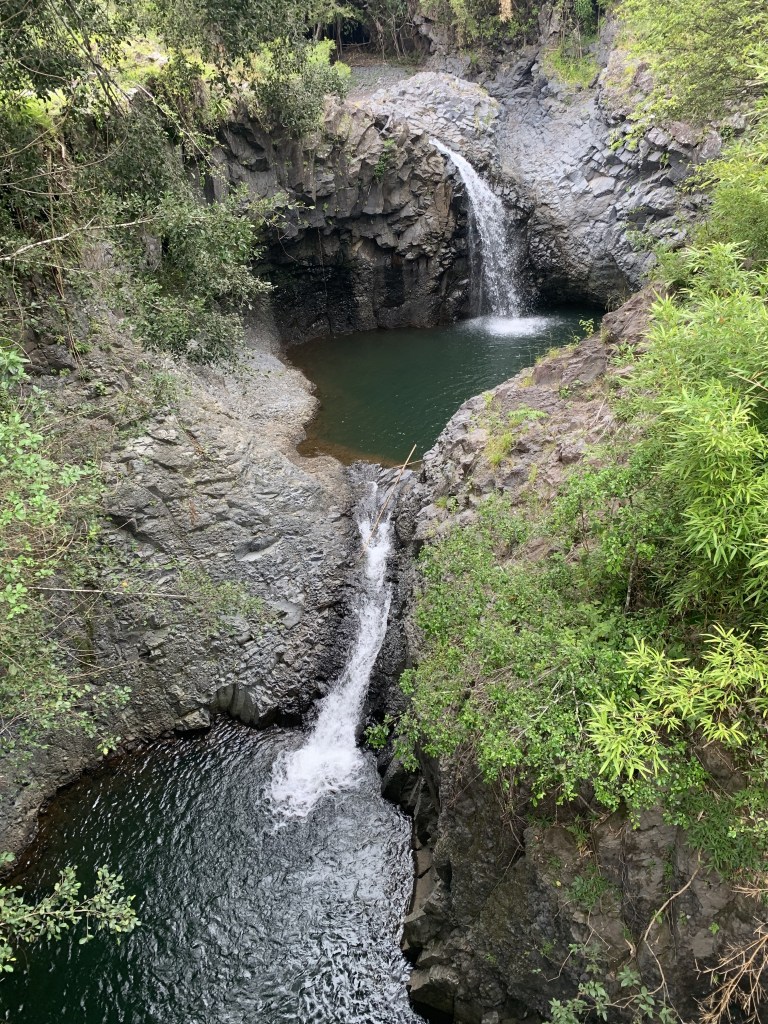
    1 – Walk to Kuala Point to the right and see the ocean and the two small waterfalls and pools that you likely saw from the bridge as you crossed over. 

    Kuala Point
    Kuala Point

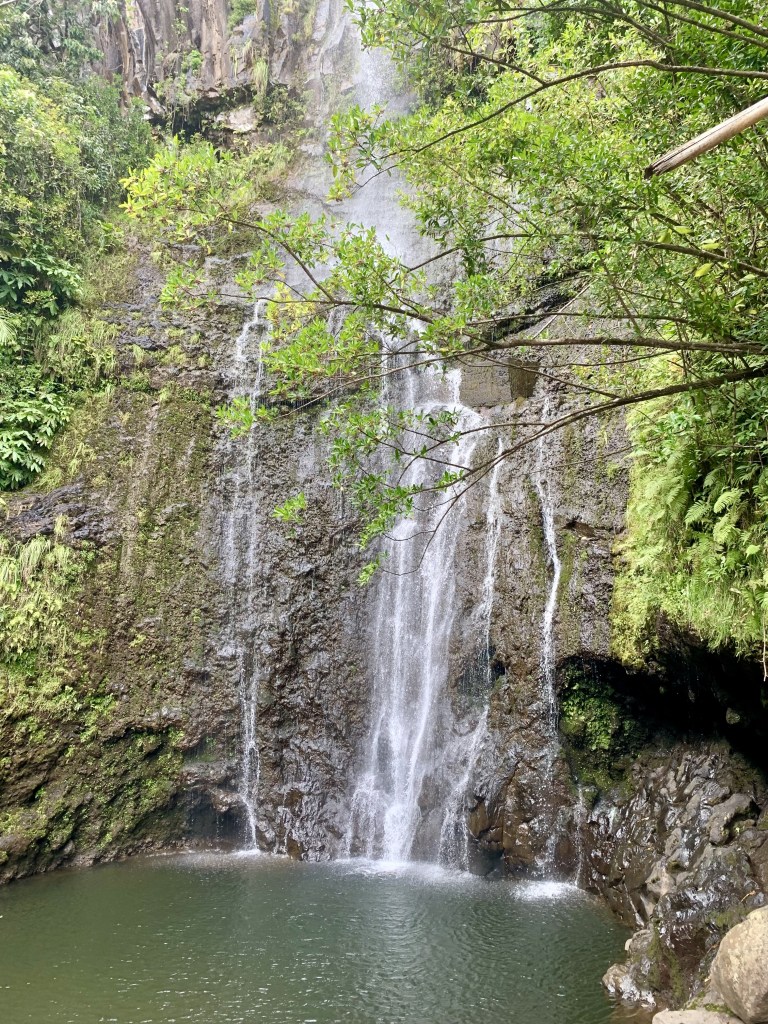
    2 – Pipiwai Trail — Walk back toward the way you came in and take the Pipiwai Trail to your left. Pass by the amazing banyan tree, the bamboo forest (list to the enchanting sounds of the bamboo), and stop at at the  Makahiku Falls – a 184ft waterfall. Makahiku means “water that recognizes no friend.” 

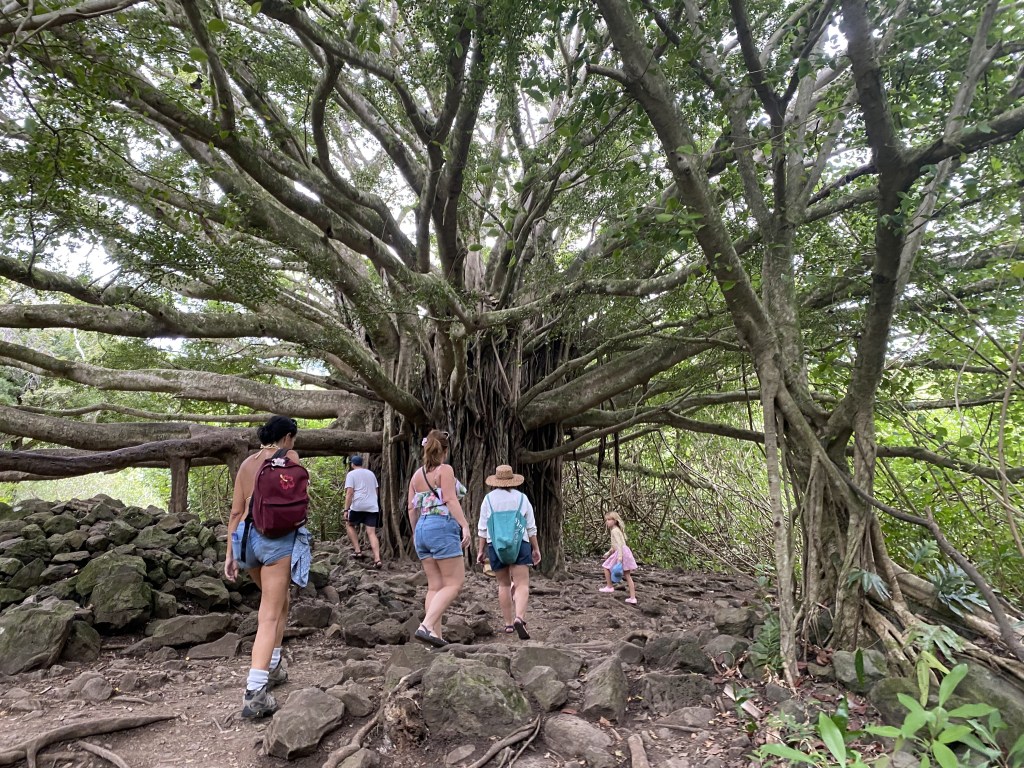
    Banyan Tree Hike
    Banyan Tree Hike

    You will get to the banyan tree very early on this longer hike. This is my besties and me arriving at the banyan tree. There’s something really magical and peaceful about banyan trees.

    Makahiku Falls
    Makahiku Falls

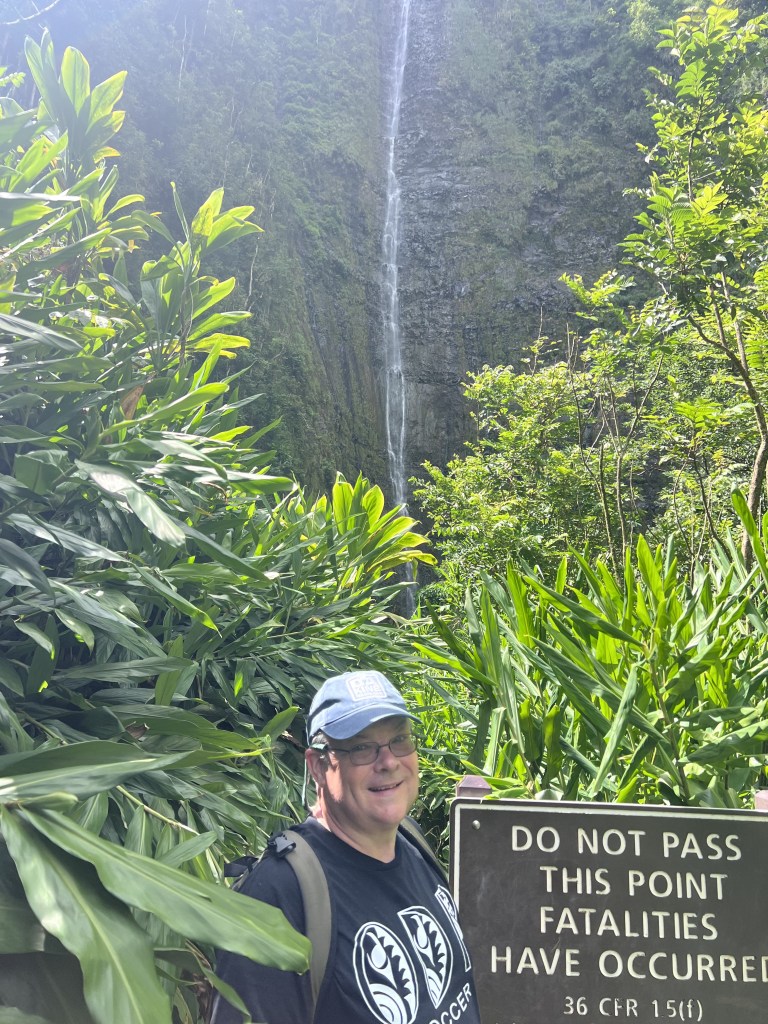
    3 – Continue the Pipiwai Trail to the Waimoku Falls. This is a massive 400ft waterfall. It can be dangerous beyond the signs and the park rangers patrol it strictly for violators. When you get to the Waimoku Falls, you’ll be glad you made the hike.

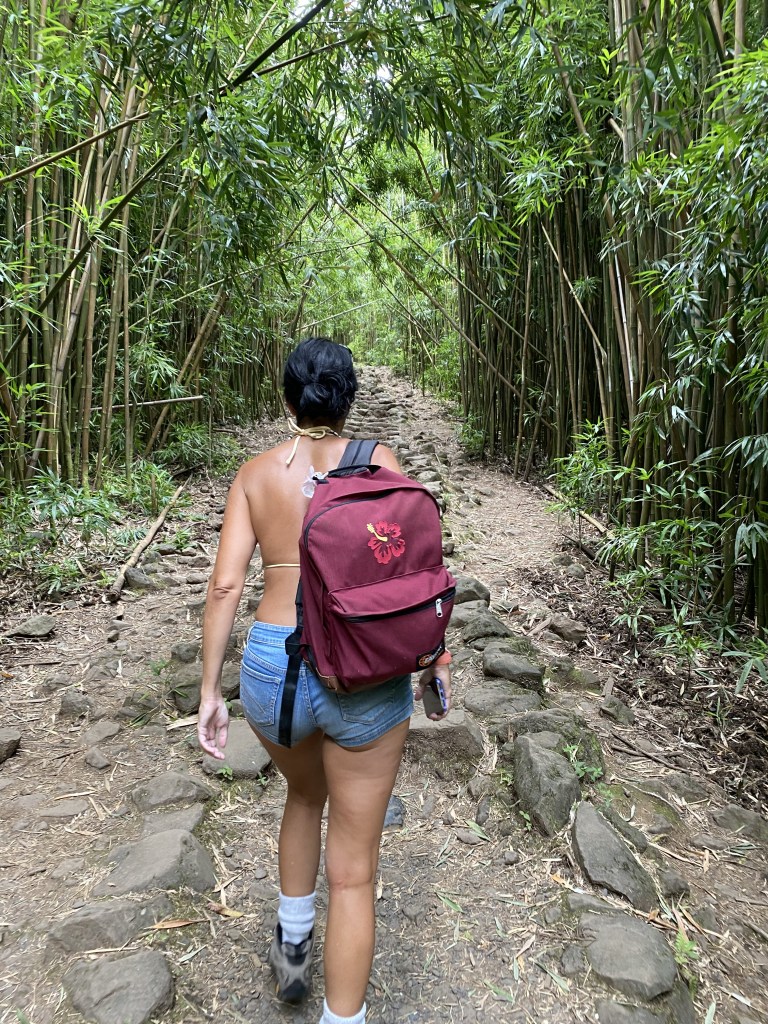
    Bamboo Forest Hike
    Bamboo Forest Hike

    This is me hiking through the bamboo forrest. Expect to sweat. But it’s worth it.

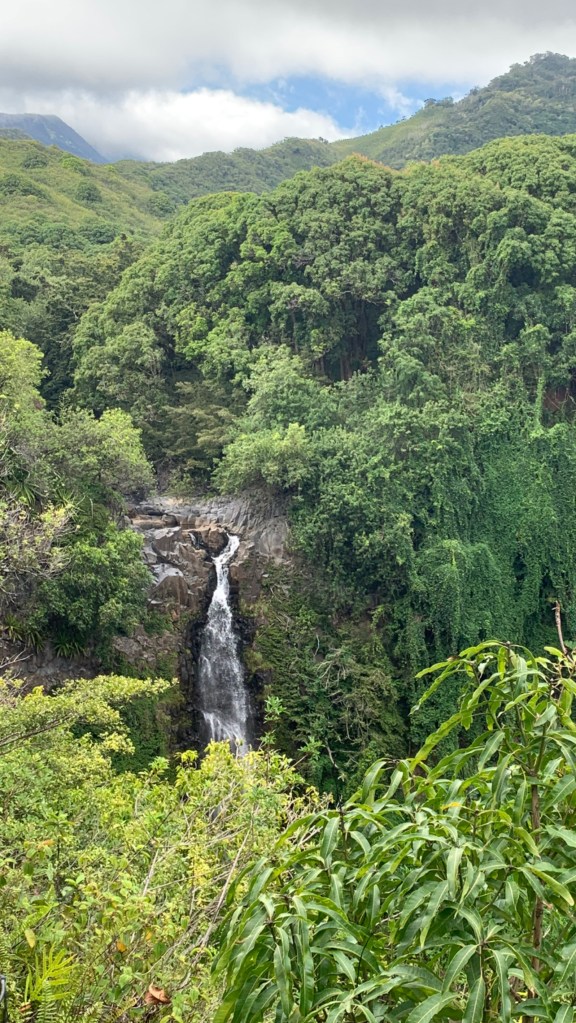
    Waimoku Falls
    Waimoku Falls

    Mitch with a PSA: Do not go past this sign.

  • Kayaking the Black Water

    Congaree National Park

    One of my biggest fears is that a snake will fall into the hull of my kayak. I am also very afraid of alligators. People love to send me videos of kayakers encountering alligators who slap their boats around with their big tails. So until this year, I had avoided kayaking the beautiful black water swamps where poisonous snakes sleep overhead in the canopy of trees and alligators sun themselves on the muddy banks. I casually suggested to my best friends since childhood that we do it, thinking that they would decline and say that I was a cool and adventurous fool – and that affirmation would further secure my role in our group as the fun one. Surprisingly, though, they jumped at the idea.

    Photo Credit Mandy Powers Norrell 2023

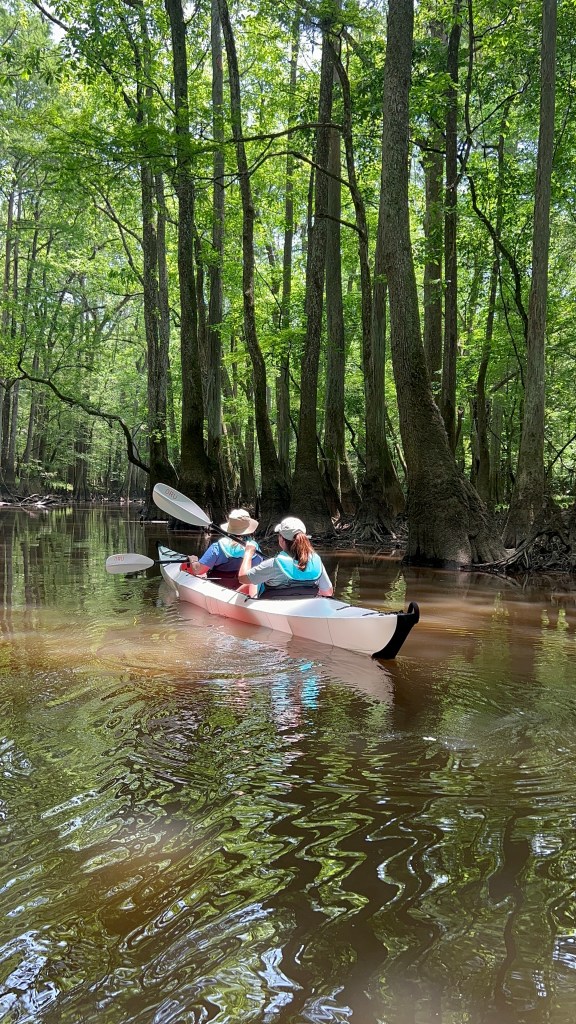
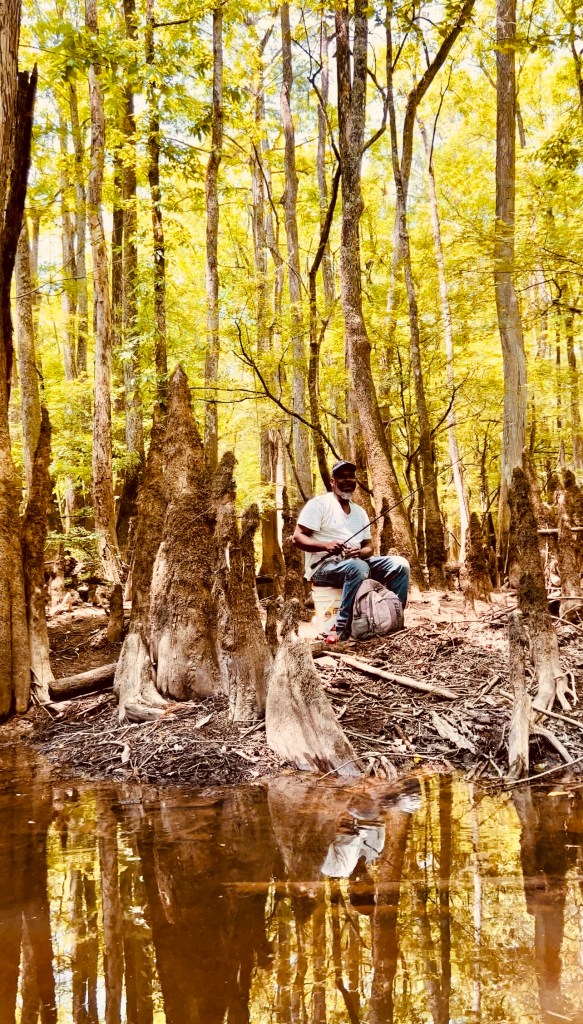
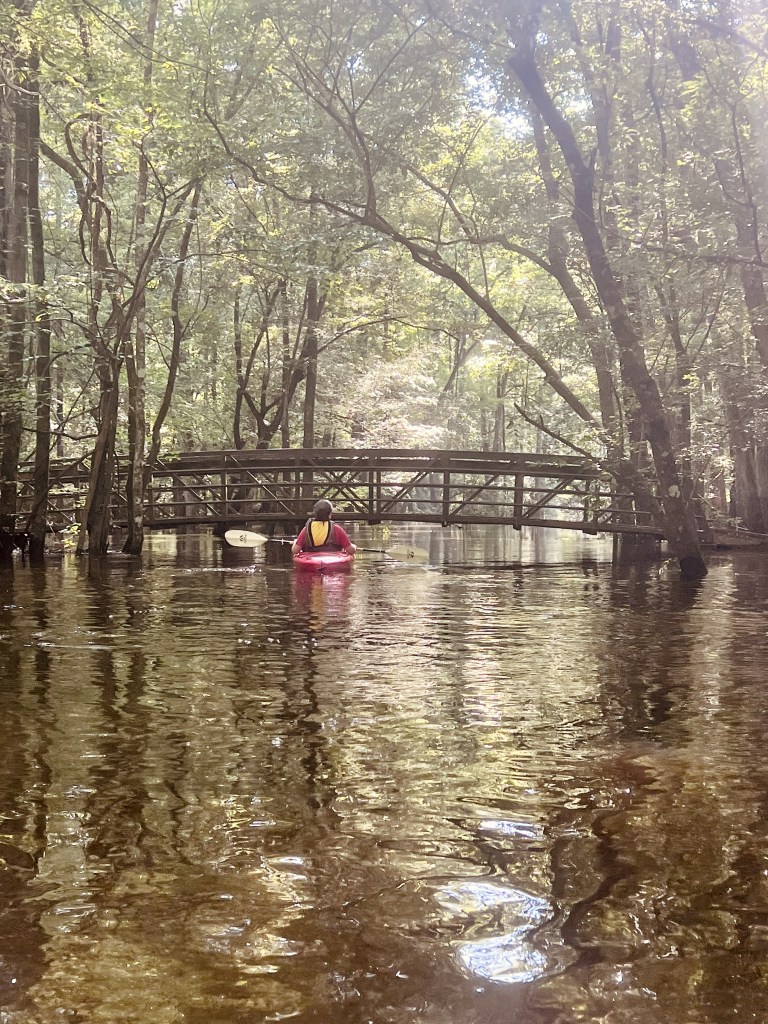
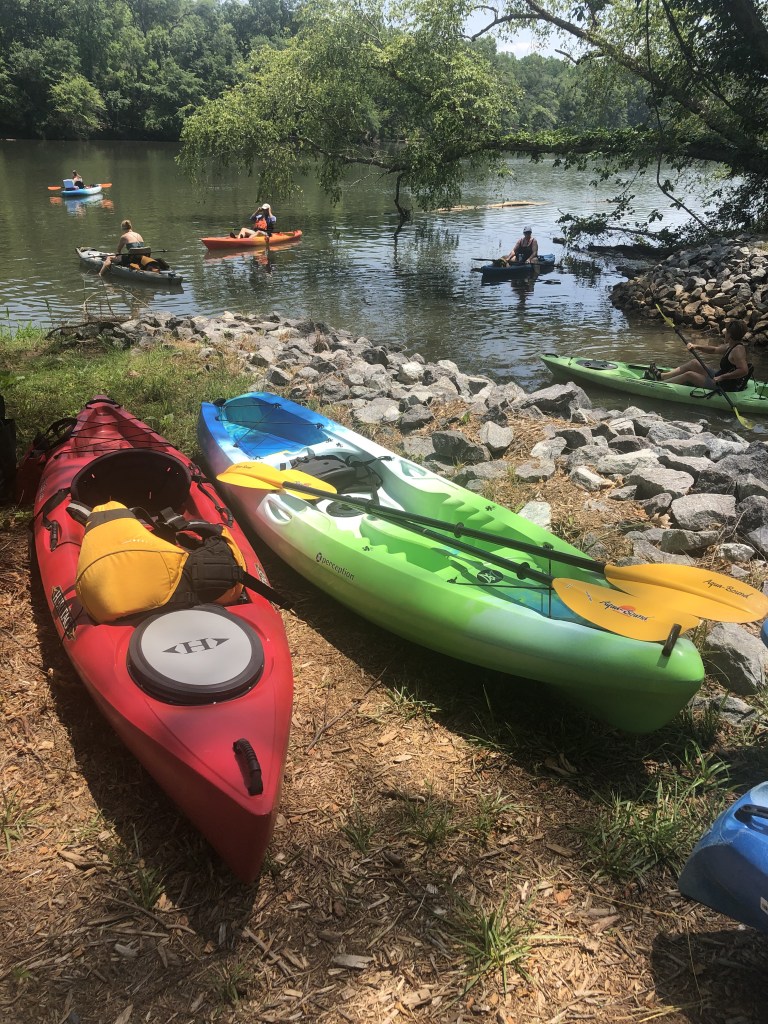
    So in the heat of late June, we met at Congaree National Park, camped at Longleaf campground, packed up our tents, made coffee over a fire, and then took kayaks out to the Cedar Creek Boat Landing for a slow water paddle through the majestic cypress trees. We encountered a few canoers, a couple of adventurous women (one of whom had a hole in her boat and was taking on water – and we had nothing that could help), and we had a few short conversations with fishermen on the banks who seemed to have life pretty much figured out.

    Photo Credit Mandy Powers Norrell 2023 (with subject’s permission)

    It felt like we were padding through a magazine advertisement for South Carolina. It was beautiful, peaceful, and calming. I wondered why it had taken me so long to visit this place – and I also decided to become a regular. Even snakes and gators can’t keep me away. The way the sunlight filters through the leaves on the canopy of trees is impossible to capture in a photo. Being immersed in that scene creates a feeling of well-being that is indescribable. A few weeks later, I was ready to go back, and I asked another friend to join me in this majestic paddle.

    Photo Credit Mandy Powers Norrell 2023

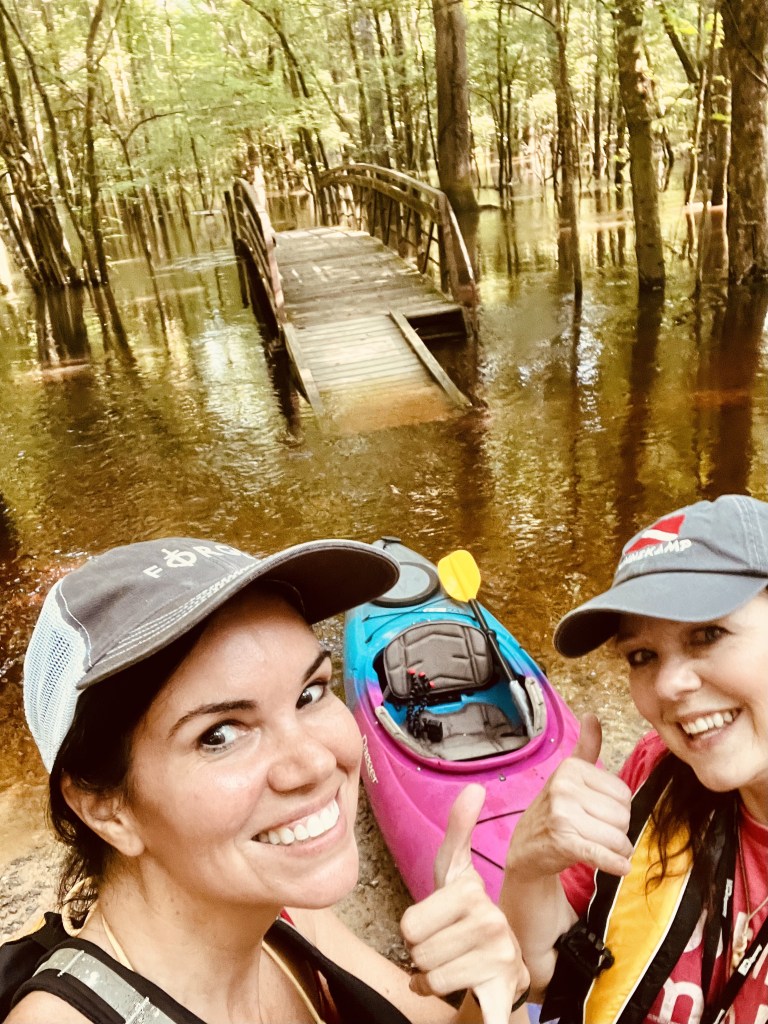
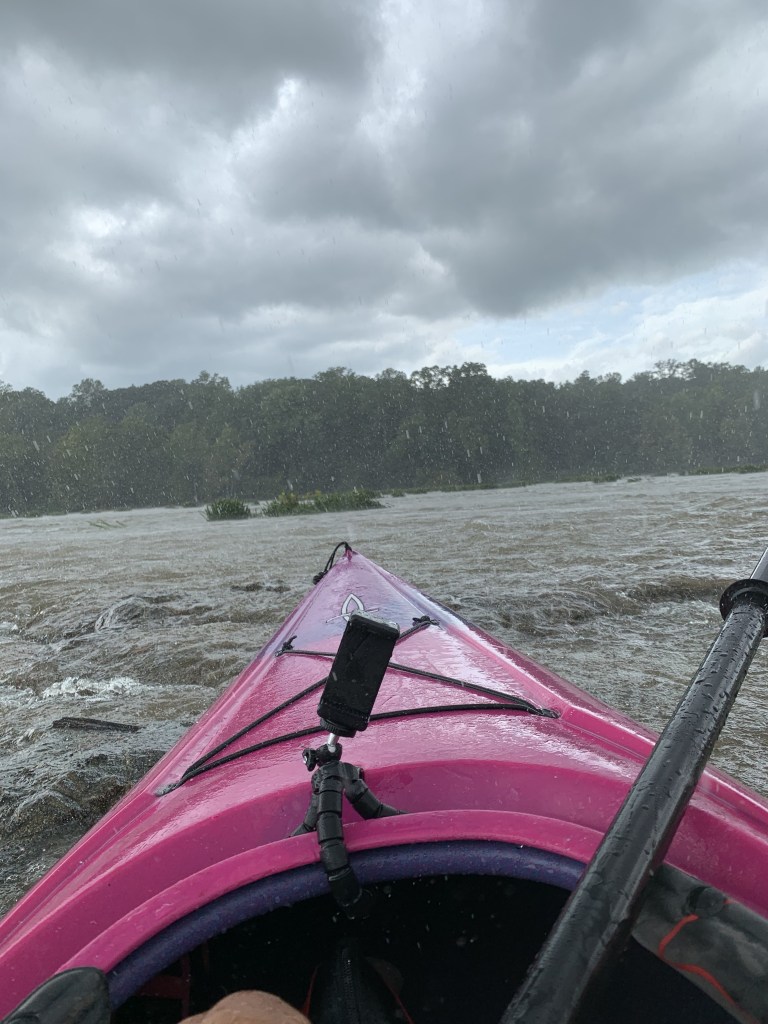
    This time, I made the mistake of going out after a big rain. The water was well over the banks and we could barely discern where the original waterway was. The distinctively bulbous bottoms of the cypress trees were covered by the flood waters, as were the trail signs and most of the pedestrian bridge. There was a temptation to explore the flooded pedestrian trial by boat, but we would occasionally hear the unmistakable sound of white water, and we couldn’t tell where it was coming from. We soon figured out that it was not safe for us to stay out there in water that high, and so we made our way back to the put it and took our boats out.

    Photo Credit Mandy Powers Norrell 2023

    One of the big lessons I have learned in kayaking is how to read the water. And when I can’t read the water, I know I better get out – even if a lot of planning and driving and lifting and prepping went into the excursion. As a former colleague used to say in committee meetings, “when in doubt, don’t.” People who drown in situations like this generally meet their fate because of fast water and strainers. Strainers are fallen or low trees, brush, debris, or anything that water can pass through but you can’t. Your boat follows the water into the strainer and you get tangled and pulled under. If you’re new to padding, be on the lookout for strainers and avoid them.

    Photo Credit Mandy Powers Norrell 2023
    (This is me and my amazing adventurous friend Robin, who has a PhD in Nursing and who made a splint for my paddle from branches and duct tape when I realized I brought the same ends of the two different paddles and couldn’t fit them together!)

    And even if unforeseen circumstances cause you to shorten your trip, I’m betting it will still be more memorable than sitting at home would have been.

    Want to go? Click here to learn more about Congaree National Park. We accessed the black water swamp through the South Cedar Creek Canoe Launch, which is located south of the main entrance to the park. The address for GPS is just South Cedar Creek Road and you’ll be driving for a while, bound to think you’ve missed it. On normal days, there are several stairs down to the launch. You’ll also have to carry your kayak down some uneven, although mostly gravel, terrain. There are also vault toilets near the put in. Always bring a life vest and water. Put on bug spray before arriving because this is home to one of only three species of synchronous fireflies in the world and bug spray threatens their habitat. And try not to bang into trees because snakes like to sleep in them and you just don’t want to startle them awake – especially when they’re above your head!

  • Reconnecting

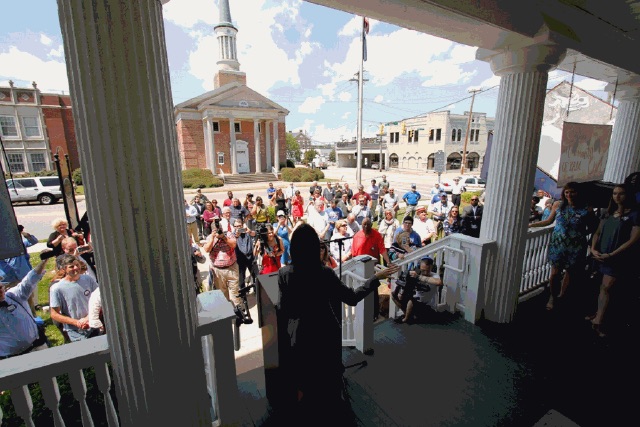
    Not long ago, I was being chauffeured around the state by an amazing deputy political director, while campaigning for Lieutenant Governor. My and my running mate’s daily schedules were being crafted by a team of incomparable campaign professionals. And when we arrived at each of the many events of the day, an enthusiastic crowd was there waiting to meet us and hear what we had to say. The kindest ladies would bring me a plate of food afterwards and say in a motherly voice, “you need to eat” – and they already knew exactly what I liked. When I got home each evening, I sat in my truck and read so many encouraging messages on social media from people I had never met. That was a good season in many ways.

    I don’t have that life anymore. I have lost two elections back to back – the 2018 campaign for Lieutenant Governor and then, in 2020, I lost the State House seat I had held for eight years – a job I loved and was good at. The move to the right in South Carolina and in my House district probably means that it will be a while before a Democrat like me could be elected again.

    Photo Credit Travis Bell

    One evening late in the 2018 campaign, my childhood best friend, Carrie, came to a fundraiser we had in her city. I made my way to her as a campaign worker brought me a drink made exactly the way I like it. I thanked him and turned to see Carrie amused in that way that childhood friends know you better than anyone knows you. “Don’t get used to this,” she said. “This is not real life.” I gave her a big grin, “Isn’t it crazy?”

    Photo Credit Scott Harriford

    It was crazy. And it also gave me a nearly endless supply of adrenaline and dopamine as I spent my days traveling the state with my running mate, having hundreds of brief and beautiful connections with individuals and talking about big policy ideas to masses. It is so tempting to want that back. But it came with a cost. I didn’t realize it in the moment, but in the process of becoming so incredibly busy at the task of trying to convince masses of people to like us enough to vote for us, I had started to derive my own self worth by the ways in which I was perceived by an audience of potential voters.

    In the height of campaigns I didn’t realize it, but I was becoming addicted to affirmation and adrenaline. At times, it was as if I believed that the thing that kept me alive was other people knowing that I was alive. If they forgot about me, then I would no longer exist. That sounds so strange to me now, but it was very real to me then – even if I didn’t acknowledge it. The fear of being forgotten, of no longer being relevant, was one of the strongest fears I had ever experienced.

    But you know what happens when the thing you fear the most comes to pass? You stop fearing it. One of my former colleagues is fond of saying “there’s nothing deader than a former politician.” When my involuntary retirement from politics came, it was like being thrown from a train that had been going faster and faster – until suddenly, it was moving, but I wasn’t. It didn’t slow down or stop; I was just thrown off. That coincided with the isolation of the pandemic, so my options for finding footing again – at least among masses of people – were limited.

    I retreated to nature. At first, it was difficult to be still. I’ve heard that when soldiers return from war, they have a hard time with things most people consider to be a part of daily life – like sitting in a restaurant. I’ve never been to war, but I think maybe the same brain chemical is produced in campaigns. It was difficult to will my body to be comfortable in stillness and silence. But when I did, I started to get glimpses of what being alive felt like. It wasn’t dependent on affirmation of the masses. That was an awareness I used to have – long before politics – but had lost. It is an authentic connection with others, without being dependent on them for acceptance and approval. And it’s a recognition of the constant flow of energy connecting us all to each other and to this living earth. I had lost this awareness somewhere in my busyness, and I am working diligently to get it back. This project is about that journey to find it again.

  • Landsford Canal State Park

    And the Rocky Shoals Spider Lilies

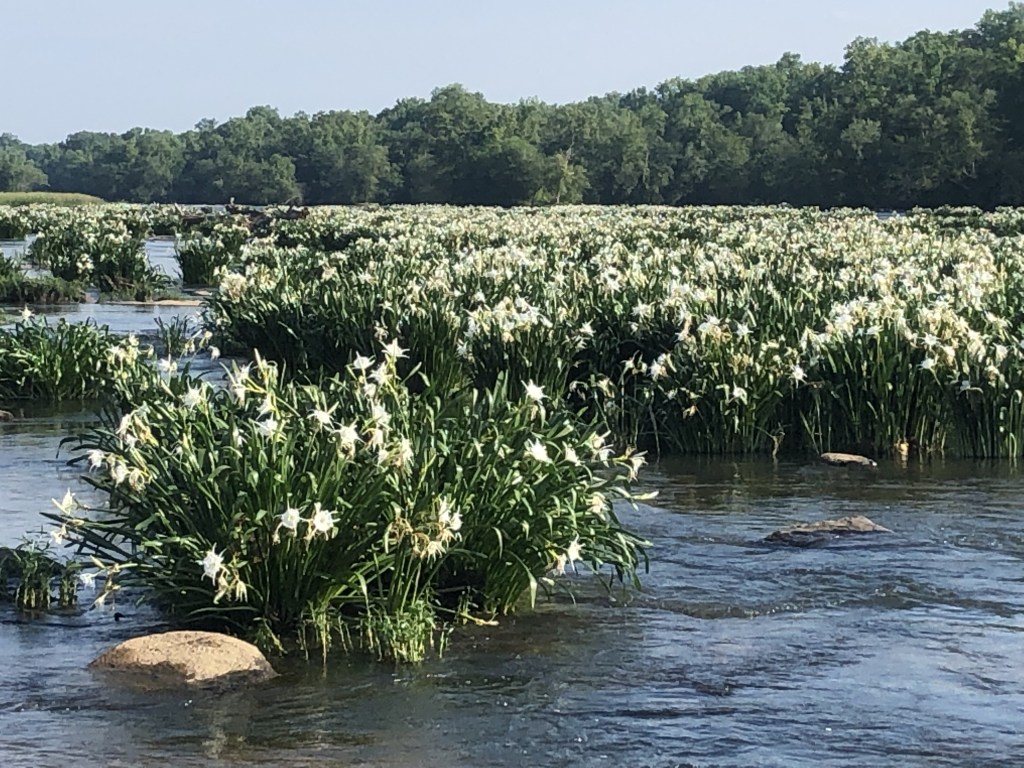
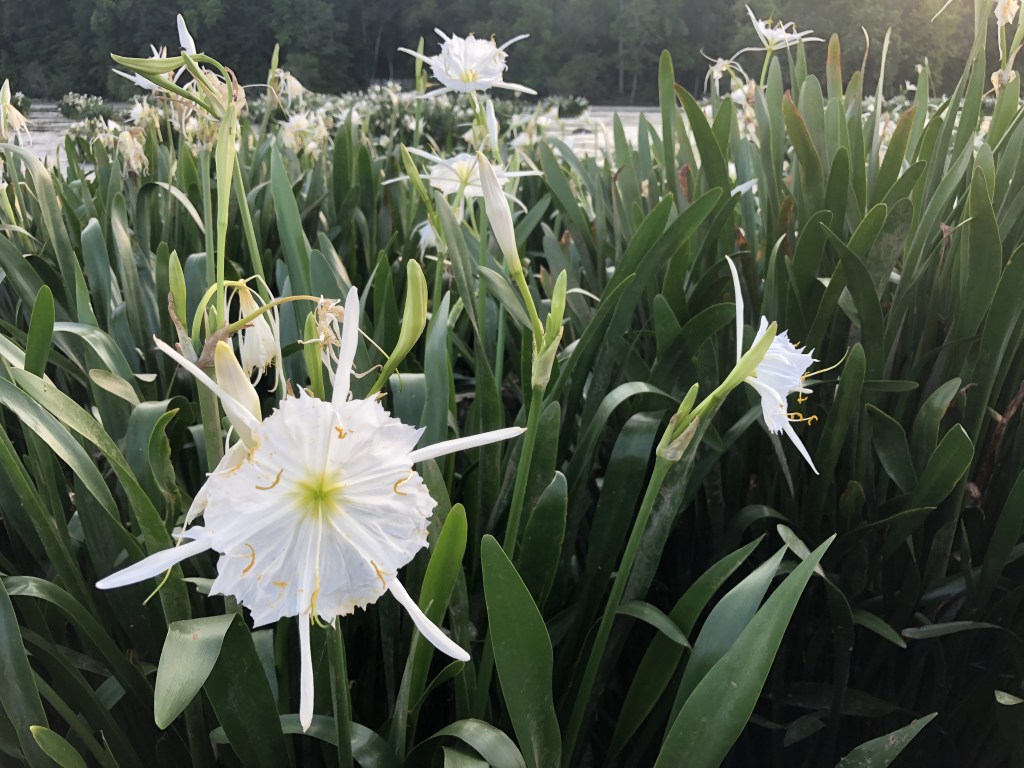
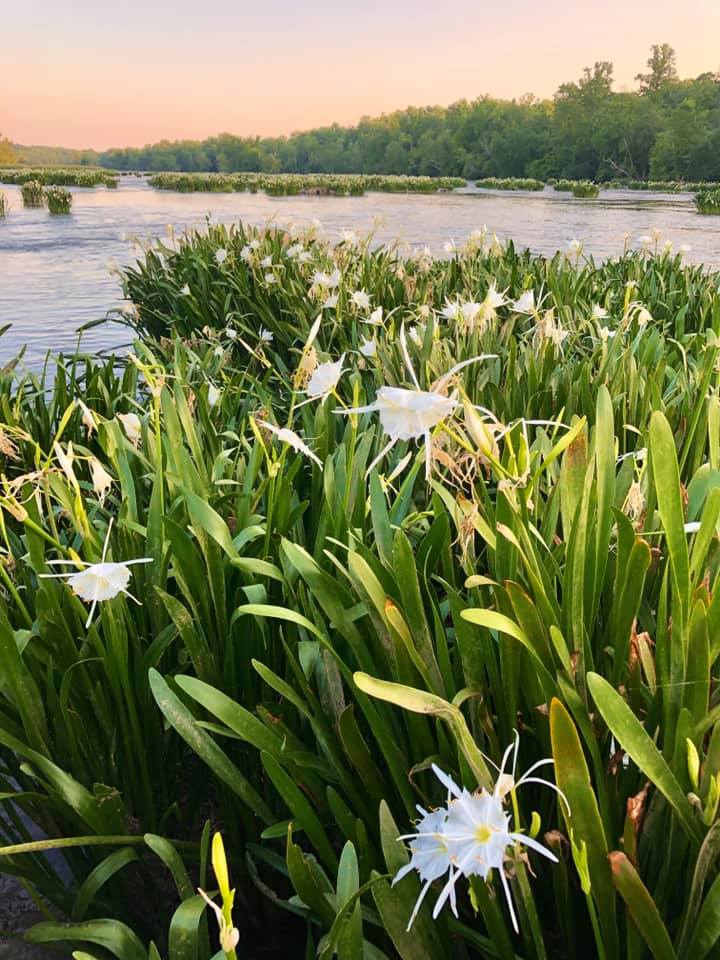
    Between the months of May and June – roughly from Mothers Day to Fathers Day each year – one of the most amazing things I’ve ever experienced happens: the rocky shoals spiders lilies bloom. Landsford Canal, in the Catawba River between Chester and Lancaster Counties, has the largest outcropping of these hearty but endangered spider lilies in the world!

    Photo Credit John Frick. Maybe my favorite picture ever because I’m in my favorite place!

    You can view the lilies from the trail at Landsford Canal State Park, where park admission is just $6 per adult, $3.75 for a senior citizen, and $3.50 for a child (as of 2023). It’s on the honor system. You put your money in an envelope and leave it in a drop box at the entrance. Karma is real, y’all. Pay your park admission honestly. Then just park and start walking south, or to your right as you face the river. You can choose the nature trail, the canal trail, or the eagle point trail. All are very easy hikes. The canal trail is the longest and most popular, especially in lily season, as it takes you to the lookout for the lilies.

    Photo Credit Mandy Powers Norrell 2021

    A second option for viewing the lilies involves more adventure – and sometimes more danger, so take stock of yourself before you embark – and that option is to kayak to the lilies. My favorite springtime excursion is to take friends who’ve never seen the lilies on a leisurely kayak trip to see them. We pack a picnic and have our lunch or dinner on the rocks and then head to the takeout. There’s something sublime and majestic about floating among those beautiful flowers – especially when they’re at their peak bloom. Mitch and I have been known to do office work out there in the rocks because I want to be there every day possible during the season and I’d rather do work in my kayak than work in the office!

    Photo Credit Mandy Powers Norrell 2020

    If you choose to kayak to the lilies, I recommend going with a guide, especially if it’s your first time. I take many friends who are first-timers (if the flows are below 5,000 cubic feet per second) and give them a kayak lesson as we go. Local guides know what the differing flows mean for the rocky shoals. My favorite local guide (maybe the only truly local guide) is Great Falls Adventures. It’s a small business run by a lifelong resident of the area who loves this part of the river as much as I do. And he knows the river. Rapids are not the same in this area as you may have experienced them in other places. They’re often milder, but don’t let that make you too comfortable. The rock outcroppings can be difficult for inexperienced paddlers to maneuver and you really don’t want to broadside a rock in heavy flows, or take a route that gets you continually stuck on rocks in lighter ones. One positive is that in most – but not all – parts of the Landsford Canal area, you can stand up if you fall out. But I’ve seen people sink their boats or lose their paddles in such circumstances – and several friends (including me) have had to replace their phones. Also, NEVER paddle without a life vest. And take some water.

    Photo Credit Mandy Powers Norrell 2020

    The spring of 2022 had several days of exceptionally fast water. And it also seemed to have a large percentage of elderly and otherwise inexperienced kayakers who seemed to have been told that they could just “float” to the lilies. A friend and I did several impromptu water rescues that spring. I recall one day at the height of the season where we saw about a half dozen sinking boats and their former occupants hanging onto tree branches they had grabbed as their kayaks went on without them. As much as I want people to experience the wonder of this phenomenon, it’s important to consider whether the trail may be a better fit. It’s equally important that no matter if you’ve been planning the paddle for weeks, that you not get on the river if the flows are higher than your skill level – and you must evaluate that based on USGS data and not by eyeballing the water at the put in. It always looks relatively calm.

    Photo Credit Mandy Powers Norrell 2021

    Now that I’ve given context and warnings, let’s talk about the beauty of the place…

    Photo Credit Mandy Powers Norrell 2022

    I am not a botanist, and what I know about the lilies is just what I’ve picked up – and maybe even unintentionally made up – over the years, but I think it’s essentially correct and its borne out by my experiences too. These lilies only grow in rocks in rushing waters. That’s why they’re so rare and endangered – even though they’re exceptionally hearty. Some years – like 2018 – they’re completely flooded out, but then they come back the next year. Dams and development have destroyed many of the habitats in which they thrive. Also DO NOT PICK THEM or try to take the bulbs home with you. Both of these are criminal offenses and these lilies will not grow in your yard! It’s also decidedly NOT cute to have an endangered lily in your hair!

    Photo Credit Mandy Powers Norrell 2020

    Each flower blooms for a day and each stalk has a yesterday, today, and tomorrow bloom. The yesterday bloom has wilted and is hanging. The tomorrow bloom is still closed. As we get closer to the end of lily season, these flowers seem to follow the life cycle of women. They look robust at their peak and they seem to follow the rules of the yesterday, today and tomorrow blooms. As they near the end of the season, fewer bloom, but many still do. They start to look more lacy and delicate. And the ones that bloom are more likely to have twins and triplets.

    I try to keep visiting them until the last of them has gone. It may be silly but I think of them like the elderly and fewer and fewer people come to see them towards the end, so I try to keep visiting until the end. See you next year, lilies.

  • Brookgreen Gardens

    The Largest Sculpture Garden in America

    I have had this blog domain for more than a year and had not yet posted anything. I am going to stop letting the perfect be the enemy of the good (or the “done”) and so this will be my first entry in a series spotlighting experiences that feed the soul in my beloved state of South Carolina.

    Photo Credit Mandy Powers Norrell 2023

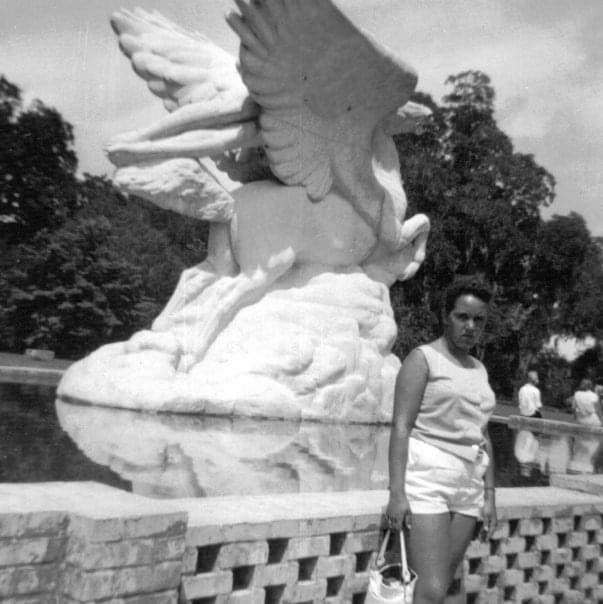
    I remember Brookgreen Gardens from my childhood as a hot and miserable place with a lot of walking and not much I wanted to do. I grew up in the 1970s and 80s and my mom loved flowers and trees and art and all things beautiful. My dad did whatever she wanted to do, so we would sometimes head to Brookgreen Gardens on our annual week-long vacation to Myrtle Beach in the summer. Ironic that I later found a picture of her in her 20s, shortly after she married my dad; she was at Brookgreen in front of the Pegasus statue, and on the back she had written “ugh…miserably hot.”

    Photo Credit Carl Powers circa early 1960s

    I know how lucky I am to live in circumstances such that mid-July is not my only option for travel as it was for my parents, who worked for the local cotton mill and had a very limited number of vacation days. Mitch and I have our own firm and much of our work can be done from anywhere we choose. And that means – among other things- that we can enjoy Brookgreen during the more temperate Spring and Fall months. We brought the kids when they were little and they loved the zoo! The park focuses on plants and animals that are indigenous to South Carolina and celebrates the unparalleled beauty of our state. Although many of the sculptures are created by artists from all over the world, the natural elements are strictly local – and they remind me (as I often become a bit cynical) that South Carolina is one of the most graceful and majestic places in the world.

    Photo Credit Mandy Powers Norrell 2023

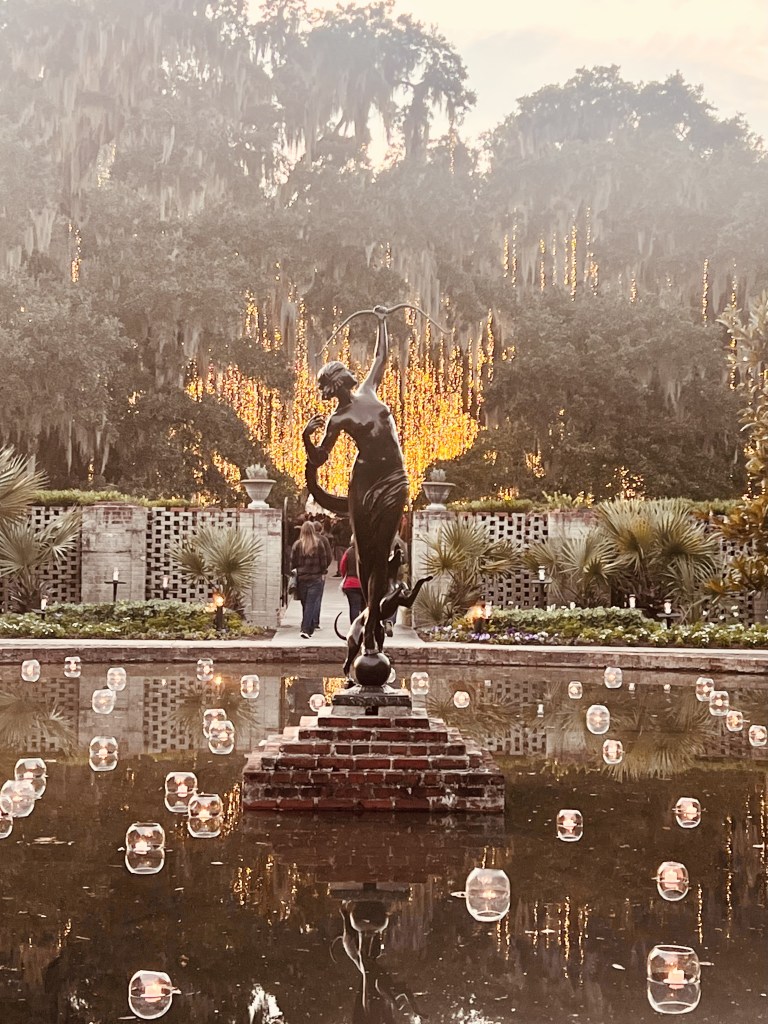
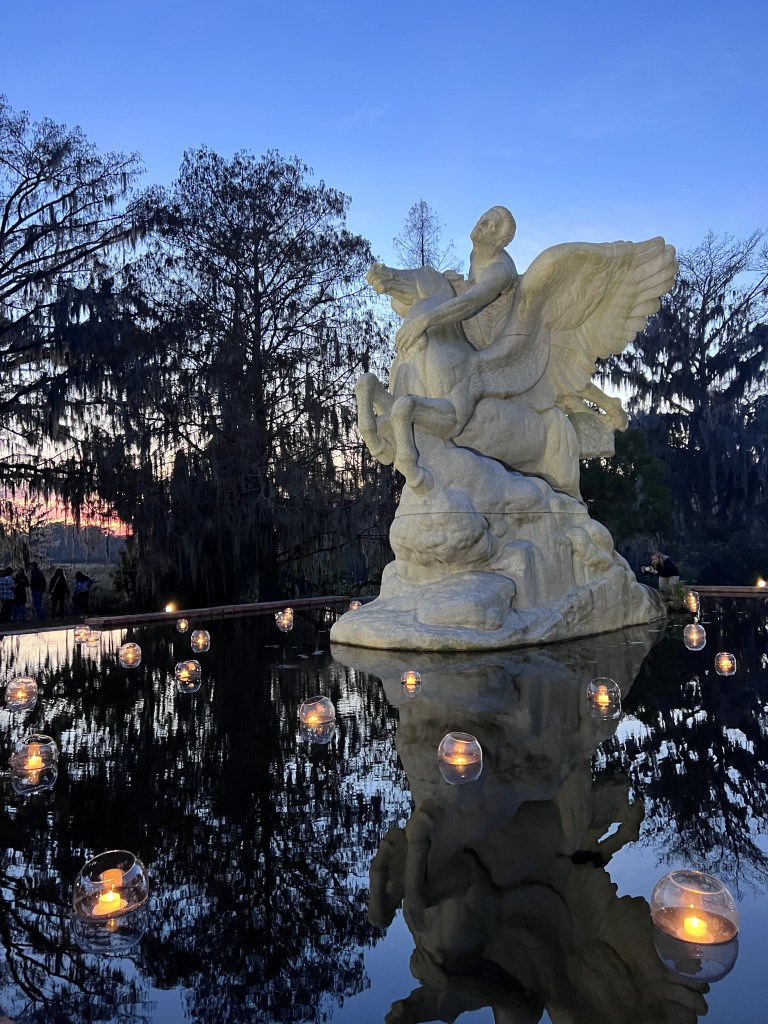
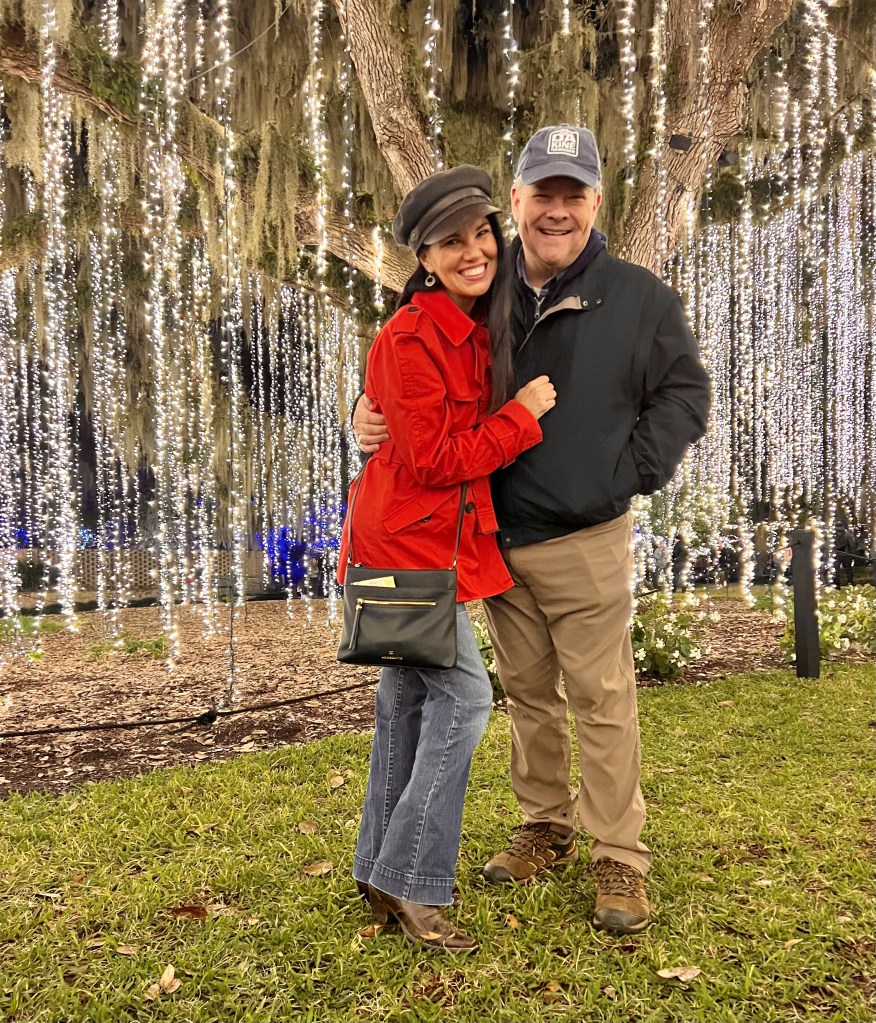
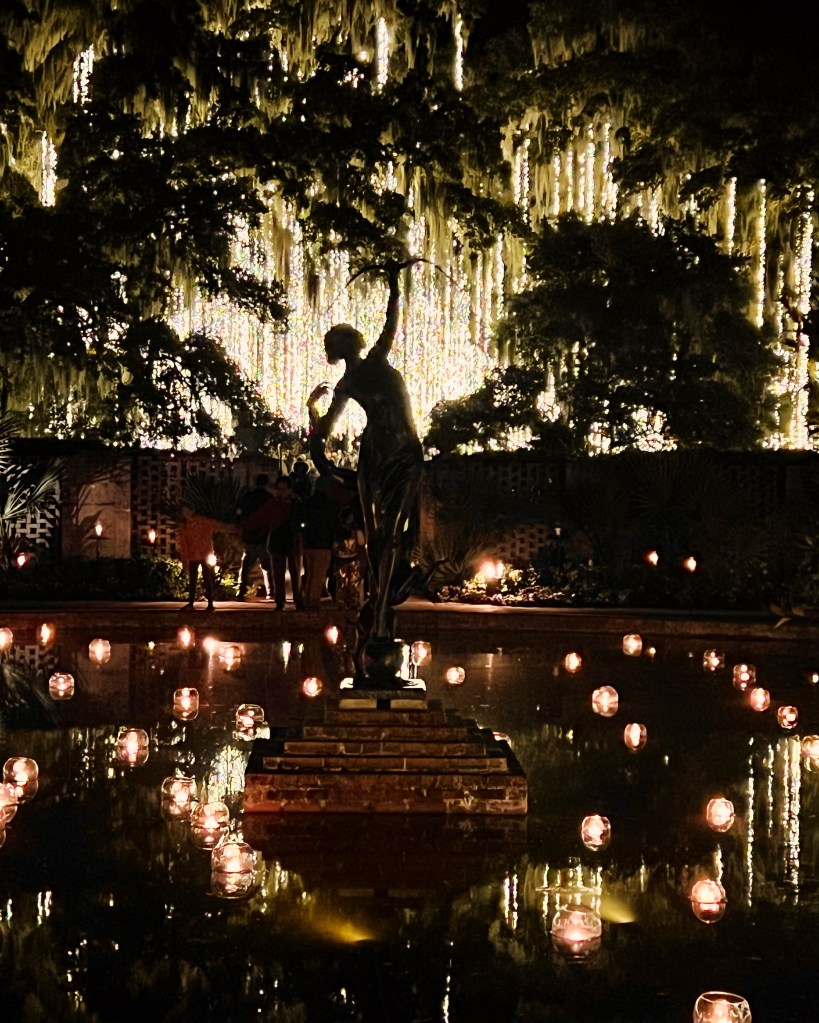
    Last night, Mitch and I had tickets to Brookgreen’s annual Night of a Thousand Candles for the first time. I have tried for years to get tickets, but am always too late. This year, I put an alarm on my phone for August 1st (and every day thereafter) and was able to buy two tickets for each of two nights – hedging my bets in case of rain or schedule conflicts. Last night was our first – and it was indescribable. There were maybe a couple thousand people there, but the atmosphere was not the hectic carnival feel that you get when a theme park lights up for the holidays. It was a combination of reverence and giddy joy . . . and I could feel the oxytocin pumping into my bloodstream as soon as we entered that peaceful realm.

    Photo Credit Kind Stranger 2023

    So today, I told Mitch that I wanted us to become members of the Brookgreen President’s Council. With that, our family will get unlimited admission during regular hours year round, eight guest passes, and – my favorite part – eight complimentary tickets to Night of a Thousand Candles! We’re coming back once more this season with friends and then we’ll start planning for next year! Even the kids are getting excited about returning to the park with our new membership – and that makes me even happier! If you’re interested in Brookgreen Gardens and all it has to offer, click here to explore their site.

    Photo Credit Mandy Powers Norrell 2023

    The history of Brookgreen Gardens is – as most historic things involving massive amounts of manicured land and daily maintenance – rooted in industrialism, with predictable remnants of colonialism and significant wealth gaps. Problematic truths aside, though, it is undeniable that Archer and Anna Hyatt Huntington used their unfathomable wealth to create something sublime to share with the world. If you’re interested in this history of the Gardens, click here for a video or here to read about the Huntingtons. Anna Hyatt Huntington was an amazing artist and inspirational woman. I learned about her when I was a child in school and she sculpted the massive statue of Andrew Jackson on a horse for Andrew Jackson State Park. I had never known of a woman doing something on such a massive scale as that huge sculpture and I remember being inspired by her. She was also in her 90s when she did it. Several of the sculptures in the park were created by her.

    Brookgreen Gardens is located off Highway 17 Bypass between Murrells Inlet and Pawleys Island in the area known as South Carolina’s Hammock Coast. The park’s hours are generally 9:30am to 5pm Monday through Friday. Pets are not allowed. I think you can bring outside food in but I know you can’t bring pets. Adult admission is $22, Seniors $20, and kids (12 and under) $12. Of course that’s as of November 2023 and could change. More good news: when you buy a ticket, it’s good for seven consecutive days.

    Video Credit Mitch Norrell 2023

    Hope you enjoy Brookgreen Gardens like we did!

  • Mid-Life Reassessment

    What is a mid-life crisis? Many psychotherapists say that it comes when you get to a point in life where you believe your best days are behind you. Maybe you’ve reached the pinnacle of your career and you struggle with the belief that you’ll never be as good as you once were. Maybe you haven’t accomplished all that you wanted and you look at the time you have left and begin to feel unworthy, thinking that you never will. Or maybe you have gotten everything you ever wanted . . . and feel unfulfilled, realizing you wanted the wrong things.

    I don’t know that it means anything at all, but I am a little fascinated by the fact that the concept of the mid-life crisis has only appeared in our lexicon in the past hundred years . . . about the time our life expectancy moved from 50 years to 80-ish. It seems to seize people at the point that their lives would have otherwise ended had we not had such advances in nutrition, medicine, and safety. And it is for that reason that I like to think of any years following that point to be the extra years, the gifted years, the bonus life. I know it’s not that simple. It costs money to live the bonus life, but it comforts me to think of it as “bonus” – without expectation and with nothing to prove.

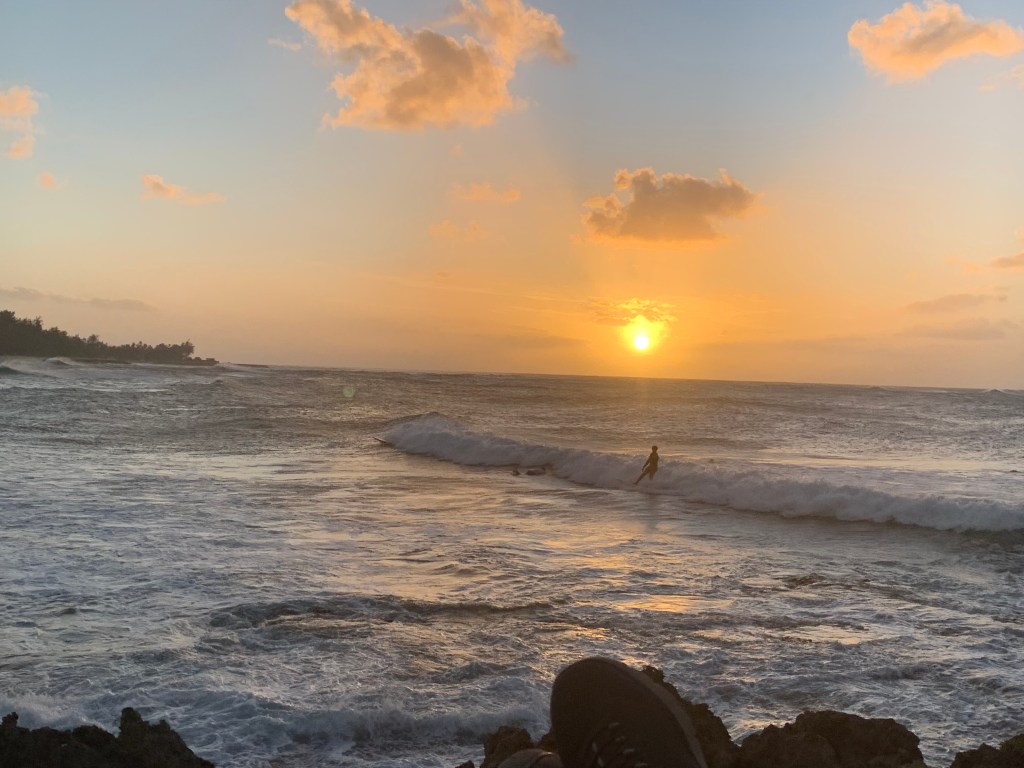
    I have a friend in Hawaii who sleeps in his van. I say it like that because he lives in the ocean. He surfs all day and makes his money sharing with others the joy of surfing. He and I were having dinner together one evening at a picnic table outside a food truck and the conversation went like this:

    “Mandy, I’m 52 years old. Maybe I should get my shit together.”

    “Jon, (not his real name), I know a lot of 52 year olds in the business world saying the same thing, but they’re picturing a life like yours.”

    Every day, Jon (not his real name) puts two bare feet on this earth and is connected to the greatest source of transcendent energy any of us could ever have. He is living his bonus life with intention. He hears the whispers of the universe without even realizing that other people don’t. I am trying to draw from his energy to do the same.